 Pin this
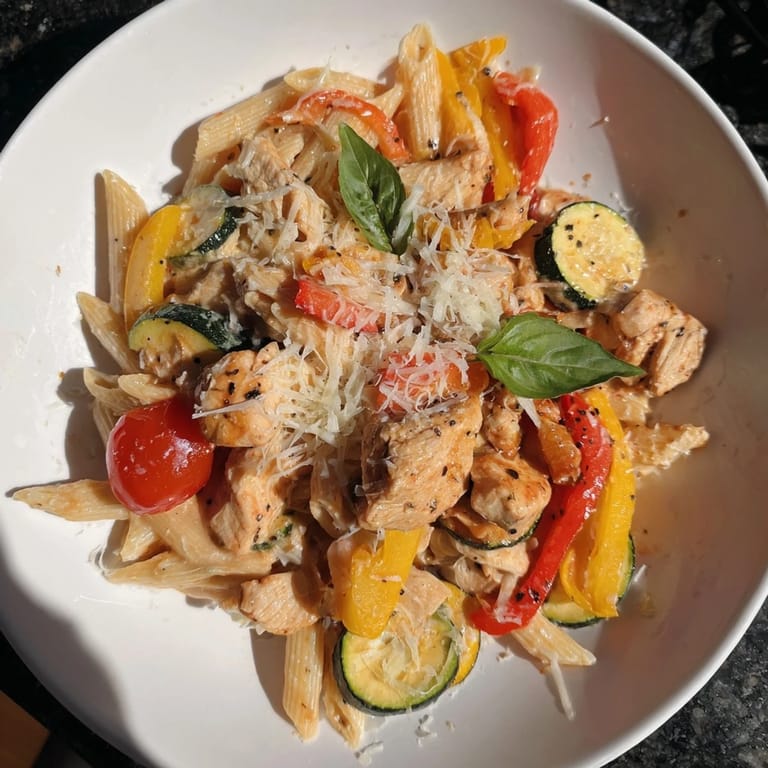
 I started making this pasta on a Tuesday when my fridge was half-empty but my farmers market bag was overflowing with vegetables. The colors alone made me smile—red, yellow, green, all jumbled together on the counter. I had no plan, just chicken thawing and a hunch that something good could happen. That night, my kid asked why dinner looked like a rainbow, and I realized I'd stumbled onto something worth keeping.
The first time I served this to friends, I panicked because I thought it was too simple. But they kept going back for seconds, scraping their plates with bread to catch the creamy bits. One of them asked if I'd trained in Italy, and I just laughed. Sometimes the best meals are the ones you don't overthink, the ones that let the ingredients do the talking while you just stand there and stir.
Ingredients
- Boneless, skinless chicken breasts: I cut them smaller than I think I should, because tiny pieces cook faster and catch more of the garlic and cream. If theyre uneven, just flatten them gently with your palm first.
- Red bell pepper: This one adds sweetness and a pop of color that makes the whole dish feel alive. I slice mine thin so they soften quickly without losing their shape.
- Zucchini and yellow squash: Half-moons cook evenly and look pretty on the fork. I learned to avoid cutting them too thick or they stay crunchy in a weird way.
- Cherry tomatoes: Halving them lets their juice mingle with the cream, creating little pockets of tang. Sometimes I leave a few whole just for fun.
- Broccoli florets: I break these smaller than the bag suggests, because nobody wants to wrestle a giant tree on their plate. They soak up the sauce beautifully.
- Penne or farfalle pasta: Both hold onto the vegetables and sauce in different ways. I go with whatever I have open, and it always works.
- Heavy cream: Just a splash transforms the pasta water into something silky. I used to skip this, and the dish felt naked without it.
- Parmesan cheese: Freshly grated melts into the sauce and adds a salty, nutty backbone. The pre-shredded stuff clumps up and never tastes the same.
- Garlic: Minced fine and sauteed until it smells like comfort. I add it after the chicken so it doesnt burn and turn bitter.
- Olive oil: I use more than the recipe says because a little extra helps everything brown and prevents sticking. No shame in a generous pour.
- Dried Italian herbs: This is my shortcut to depth when I dont have fresh on hand. A good pinch makes the whole pan smell like a trattoria.
- Fresh basil: I tear it with my hands right before serving, because the aroma that releases is half the magic. It wilts into the hot pasta and tastes like summer.
Tired of Takeout? 🥡
Get 10 meals you can make faster than delivery arrives. Seriously.
One email. No spam. Unsubscribe anytime.
Instructions
- Boil the pasta:
- Get your water rolling with a generous pinch of salt, then drop in the pasta and set a timer. Before you drain, scoop out half a cup of that starchy water—it will save your sauce later if things get too thick.
- Cook the chicken:
- Heat the olive oil until it shimmers, then add the chicken in a single layer so it browns instead of steams. Season it now with salt and pepper, and resist the urge to move it around too much. Let it get golden, then set it aside on a plate.
- Saute the garlic:
- In the same skillet, toss in the garlic and let it sizzle for just thirty seconds. You want fragrance, not color—burnt garlic is the fastest way to ruin a good mood.
- Add the vegetables:
- Toss in the bell pepper, zucchini, squash, and broccoli all at once. Stir them often so they cook evenly and pick up all the browned bits from the chicken. They should soften but still have a little bite after four or five minutes.
- Bring back the chicken and tomatoes:
- Slide the chicken back into the pan along with the cherry tomatoes. Stir everything together and let it cook for two minutes so the tomatoes start to burst and release their juice.
- Combine with pasta and cream:
- Lower the heat, then add the drained pasta, heavy cream, Parmesan, and Italian herbs. Toss everything together with tongs or a wooden spoon, adding splashes of pasta water until the sauce clings to every piece. It should look glossy, not dry or soupy.
- Taste and adjust:
- This is when you fix anything that feels off. More salt, more pepper, maybe another handful of Parmesan if you are feeling it.
- Serve:
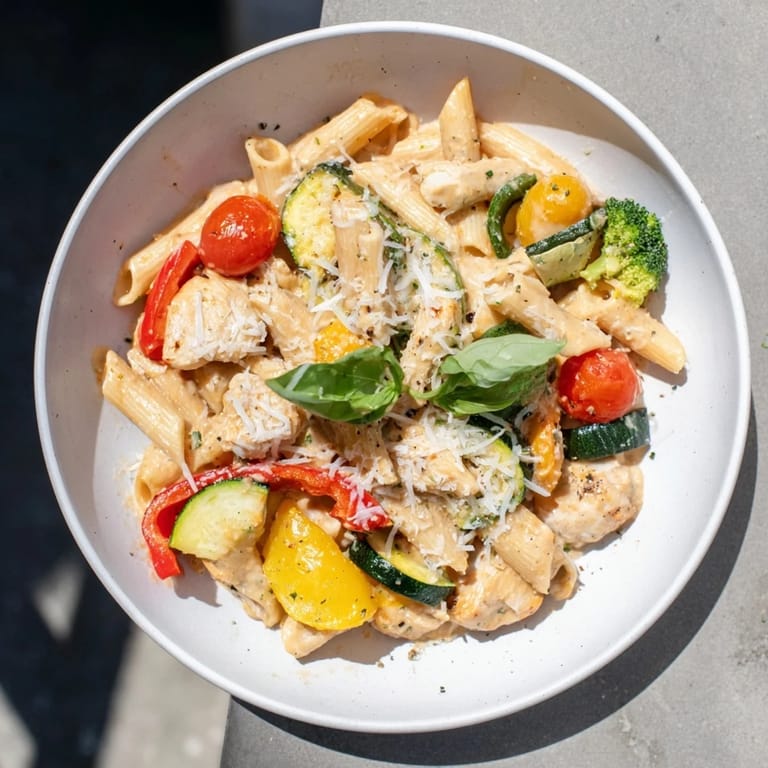
- Pile it into bowls while its still steaming, then scatter torn basil and extra Parmesan on top. Eat it right away, because this dish is best when its hot and the vegetables still have their color.
 Pin this
 One night, my partner came home late and reheated a bowl of this in the microwave. He stood at the counter eating it cold in the dark, and when I asked why he didnt heat it longer, he said it tasted good either way. That is when I knew this recipe had earned its place in the rotation—it is flexible, forgiving, and somehow still satisfying even when life gets in the way.
Swaps and Variations
You can replace the chicken with tofu cut into cubes and crisped in the same skillet, or toss in a can of drained chickpeas for a plant-based version that still feels hearty. If you want more greens, spinach or kale wilts right into the sauce in the last minute. Sometimes I add a squeeze of lemon juice at the end for brightness, or a pinch of red pepper flakes if I want a little heat sneaking through the creaminess.
What to Serve It With
I usually keep it simple with a hunk of crusty bread and a green salad dressed in olive oil and lemon. If I am feeling fancy, I will open a bottle of Sauvignon Blanc or pour sparkling water with a fat slice of lemon. The pasta is rich enough that it does not need much backup, but the bread is non-negotiable for mopping up every last bit of sauce.
Storage and Leftovers
Leftovers keep in the fridge for up to three days in an airtight container. The pasta absorbs some of the sauce as it sits, so when you reheat it, add a splash of water or broth to loosen things up. I microwave it in short bursts, stirring in between, or warm it gently in a skillet over low heat. It will never be quite as silky as the first night, but it is still delicious enough to eat standing up at the counter.
- You can freeze portions for up to a month, though the vegetables may soften a bit more after thawing.
- Reheat frozen pasta in a covered skillet with a little extra cream or pasta water to bring it back to life.
- If the sauce looks separated, a quick stir over heat usually pulls it back together.
 Pin this
 This is the kind of meal that reminds me why I love cooking—it is fast, flexible, and full of color, and it makes people happy without asking too much of you. I hope it becomes one of those recipes you turn to on a busy night when you want something that feels like home.
Recipe Questions
- → Can I substitute the chicken for a vegetarian option?
Yes, you can replace chicken with tofu or chickpeas for a satisfying vegetarian alternative while keeping the protein content balanced.
- → What type of pasta works best for this dish?
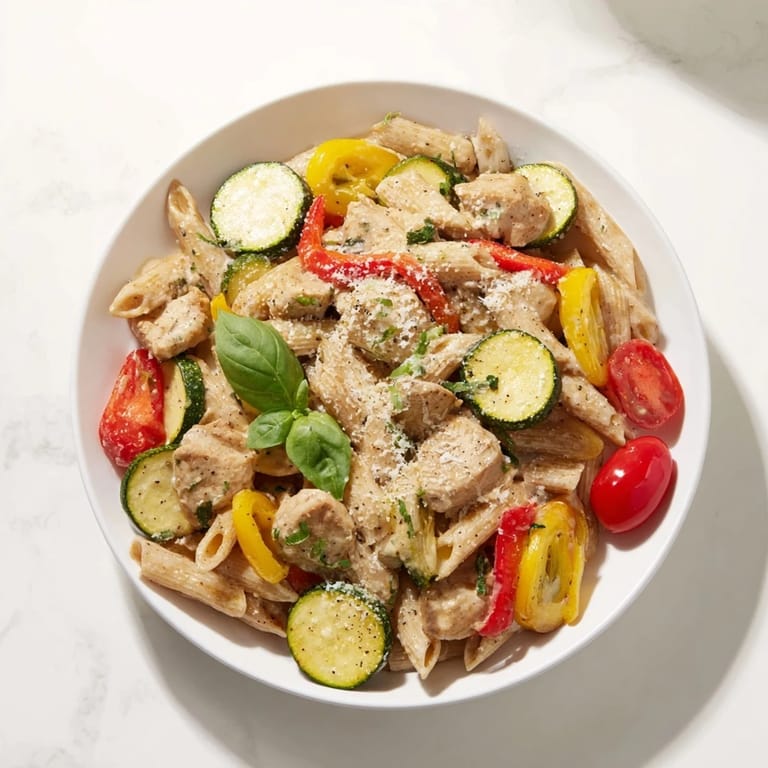
Penne or farfalle pasta hold the sauce well and complement the veggies, but whole wheat pasta can be used for added fiber.
- → How can I make the sauce creamier without heavy cream?
Try using Greek yogurt or a cashew cream substitute for a lighter yet creamy texture without altering the flavor significantly.
- → What herbs enhance the flavor in this dish?
Dried Italian herbs blend beautifully here, especially basil and oregano, to amplify the fresh vegetable and chicken notes.
- → Is it necessary to reserve pasta water for the sauce?
Yes, adding reserved pasta water helps create a light, silky sauce by loosening the cream and cheese mixture for even coating.