 Pin this
 Last summer, my neighbor brought over a bowl from this trendy spot downtown, and I watched her demolish it in about five minutes flat. The salmon had this glossy, caramelized exterior that caught the light, and she kept raving about how the ginger hit differently when it was fresh. I decided that night I wasn't going to pay those prices anymore, so I started experimenting in my own kitchen with what turned out to be this exact combination of flavors.
My daughter watched me make this the first time and asked if we were having a "fancy restaurant night at home." That question stuck with me because it's true—this bowl has a sophistication that makes an ordinary Tuesday feel special, even when you're eating at the kitchen counter in your normal clothes.
Ingredients
- Salmon fillets (4, about 150 g each): Look for bright color and firm flesh; wild-caught tends to have more depth of flavor than farmed, though both work beautifully here.
- Soy sauce (3 tbsp): This is your umami anchor, so don't skimp on quality or you'll notice the difference immediately.
- Honey (2 tbsp): The sweetness cuts through the saltiness and creates that glossy, sticky finish on the salmon that makes it irresistible.
- Fresh ginger (1 tbsp, grated): Use a microplane or fine grater because the texture matters; pre-ground ginger tastes dusty by comparison.
- Garlic (2 cloves, minced): Fresh and pungent, it mellows beautifully once baked, adding warmth without overpowering.
- Rice vinegar (1 tbsp): The subtle acidity brightens everything and keeps the glaze from becoming cloying.
- Sesame oil (1 tbsp): A small amount goes a long way; it's the nutty backbone that makes people ask what your secret ingredient is.
- Cornstarch (1 tsp, optional): Use this only if you want a glossy, sauce-like consistency rather than a thin glaze.
- Jasmine rice (2 cups uncooked): Its subtle floral sweetness pairs perfectly with everything else, though sushi rice works too if that's what you have.
- Carrot, cucumber, red bell pepper (1 cup each, julienned): The crunch against the soft salmon creates an eating experience that feels complete and balanced.
- Edamame (1 cup, shelled and cooked): These little green pockets of protein add earthiness and make the bowl feel more substantial.
- Toasted sesame seeds (2 tbsp): Buy them already toasted and store them in an airtight container; they lose their charm once they go stale.
- Scallions (2, thinly sliced): These are your last-minute brightness, sharp and oniony in the best way.
Tired of Takeout? 🥡
Get 10 meals you can make faster than delivery arrives. Seriously.
One email. No spam. Unsubscribe anytime.
Instructions
- Rinse and cook the rice:
- Run cold water over your rice while swishing it around with your fingers until the water runs nearly clear; this removes excess starch and prevents gumminess. Combine with water in a saucepan, bring to a boil, then cover and reduce to a gentle simmer for 15 minutes—you'll hear the occasional quiet bubble, and that's exactly right.
- Build your glaze:
- Whisk together soy sauce, honey, ginger, garlic, rice vinegar, and sesame oil in a small bowl until it smells absolutely intoxicating. If you want a thicker glaze, dissolve cornstarch in 1 tablespoon of water and stir it in, though I often skip this step and just accept the looser version.
- Prepare and season the salmon:
- Line a baking sheet with parchment paper and arrange your salmon fillets skin-side down, then brush generously with glaze, making sure to coat every visible surface. Save at least half the glaze for later drizzling or sauce-making.
- Bake until just cooked through:
- Pop the sheet into a preheated 200°C (400°F) oven for 12 to 14 minutes; the salmon is done when it flakes gently with a fork and the edges are just starting to brown. Don't overcook it or it becomes dry, so set a timer and check it at 12 minutes.
- Finish the glaze if thickening:
- Pour remaining glaze into a small saucepan and bring to a simmer over medium heat, stirring gently until it thickens to your liking, about 1 to 2 minutes. Remove it from heat and let it cool slightly so it coats beautifully without sliding off your bowls.
- Prepare your vegetables:
- Julienne your carrots, cucumber, and bell pepper into thin, uniform sticks using a sharp knife or a vegetable julienne peeler; uniform sizes make the bowl look intentional and eat better too. Do this while the salmon bakes so everything comes together at once.
- Assemble with intention:
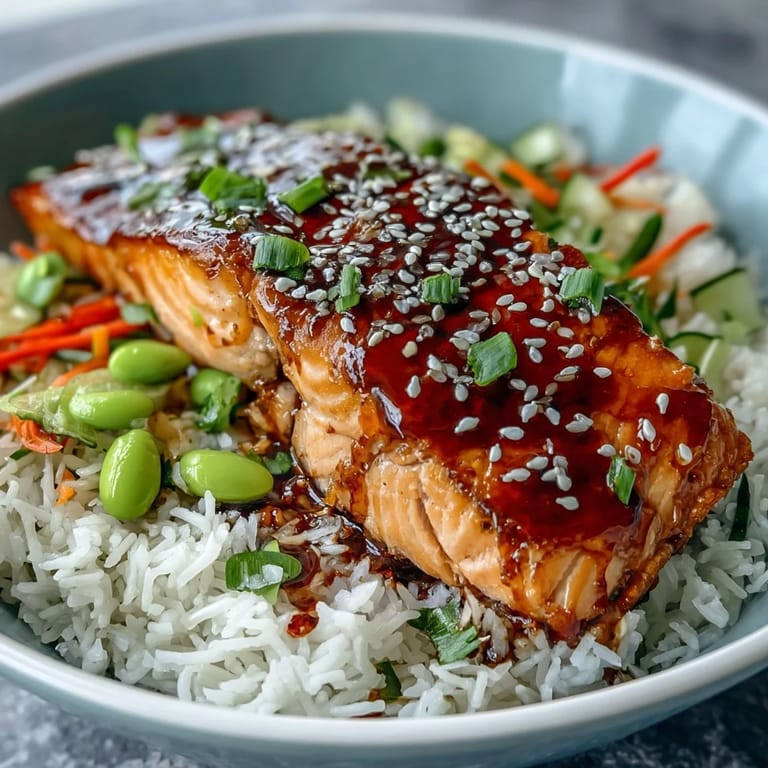
- Divide fluffy rice among four bowls, then nestle a salmon fillet in the center of each. Arrange your vegetable sticks and edamame in colorful sections around the salmon so it looks as good as it tastes.
- Garnish and serve:
- Drizzle extra glaze over everything, then scatter toasted sesame seeds and sliced scallions across the top like you're finishing something beautiful. Serve with lime wedges on the side so everyone can squeeze their own brightness in.
 Pin this
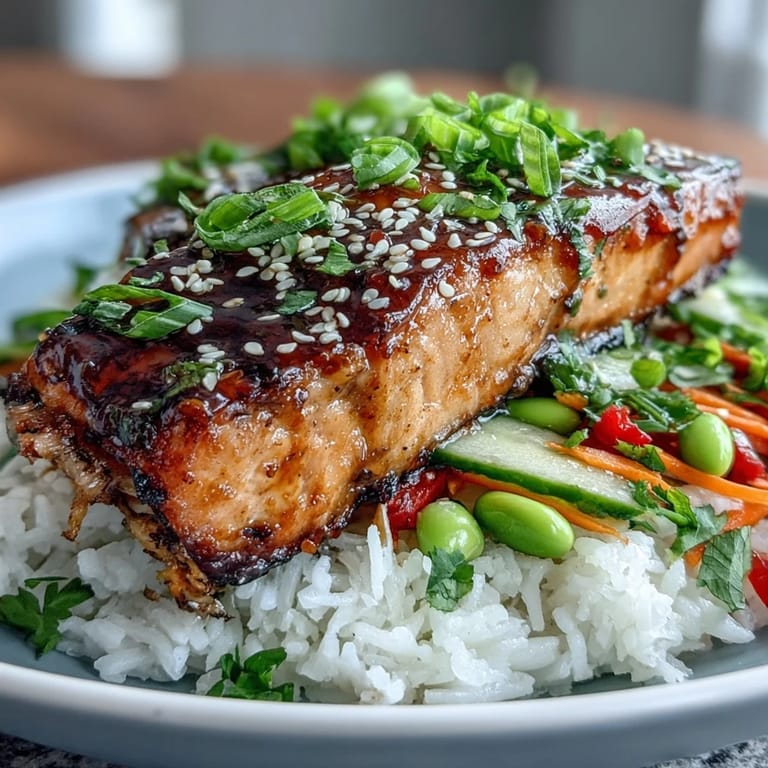
 There was this one evening when my partner came home early and caught me in the middle of plating one of these bowls, and he just stood there watching until I finished. He said it looked too nice to eat, which made me laugh because then he immediately ate the whole thing while standing up at the counter, making those satisfied mmm sounds. That's when I realized this wasn't just a healthy meal—it had become our thing.
The Secret to Perfect Salmon
Salmon is forgiving but only if you respect it. I used to cook it at higher temperatures thinking I'd save time, but that just gave me dry, chalky fish that no glaze could rescue. The moderate oven temperature and shorter cooking time are non-negotiable—they keep the inside tender and almost buttery while the glaze creates a caramelized exterior that catches light. Starting with a cold oven and watching the clock is honestly more important than fancy techniques.
Why Fresh Ginger Changes Everything
Ground ginger tastes like a ghost of the real thing, all dusty and flat. Fresh ginger, grated right before you use it, brings this sharp, almost citrusy punch that wakes up your entire palate. I learned this the hard way after making this bowl with ground ginger once and wondering why it tasted so muted, then switching to fresh the next time and suddenly understanding why the original bowl had grabbed me so completely.
Vegetable Prep as Meditation
Julienning vegetables feels tedious until you realize it's actually meditative—the repetitive motion, the sound of the knife hitting the board, watching raw vegetables transform into these perfect little sticks. My hands know this motion now, and it's become one of my favorite parts of making this bowl, even though it used to feel like a chore.
- A sharp knife makes this exponentially easier and safer than a dull one that slips around.
- Cut vegetables earlier in the day and store them in a container of water in the fridge if you need to save time before dinner.
- Uniform sizes mean everything cooks and eats evenly, plus your bowl looks intentional and polished.
 Pin this
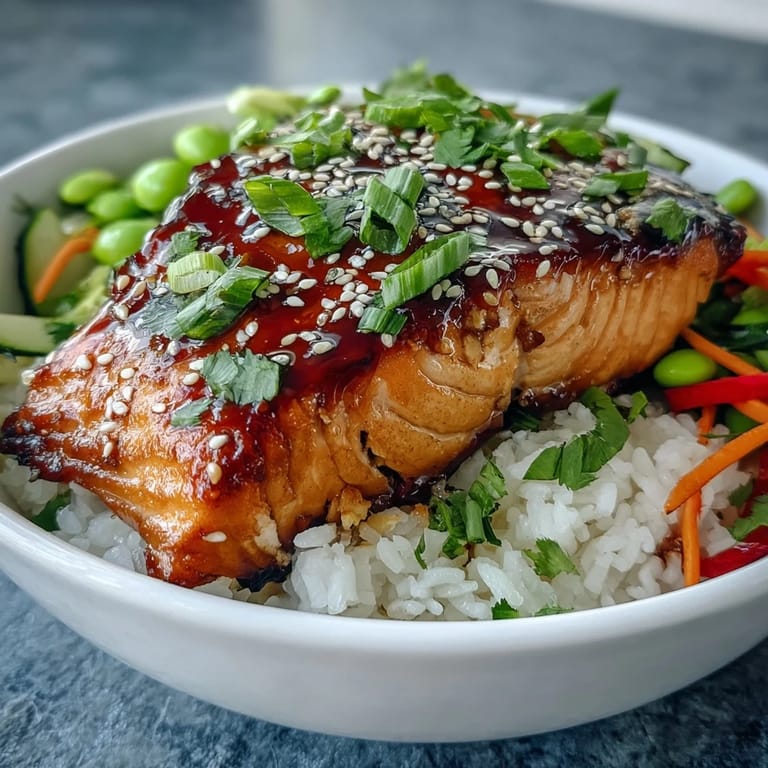
 This bowl reminds me that good food doesn't need to be complicated, just intentional and made with ingredients you actually care about. Every time I plate one, I'm a little proud of how something so simple ended up being something I genuinely look forward to eating.
Recipe Questions
- → Can I use frozen salmon fillets?
Yes, thaw frozen salmon completely in the refrigerator before preparing. Pat dry thoroughly to ensure the glaze adheres properly during baking.
- → What other vegetables work well in this bowl?
Try shredded cabbage, snap peas, steamed broccoli, or roasted sweet potato. Avocado adds creaminess while pickled ginger provides tangy contrast.
- → Is the glaze spicy?
The glaze focuses on savory-sweet flavors from soy sauce and honey with aromatic ginger and garlic. It's not spicy, though you can add sriracha or chili flakes if desired.
- → Can I make this gluten-free?
Simply substitute tamari or coconut aminos for the soy sauce. All other ingredients are naturally gluten-free.
- → How do I store leftovers?
Keep components separate in airtight containers for up to 2 days. Reheat salmon gently and add fresh vegetables before serving to maintain texture.
- → Can I grill the salmon instead?
Absolutely. Grill over medium-high heat for 4-5 minutes per side, brushing with glaze during cooking. The result adds subtle smoky flavor.