 Pin this
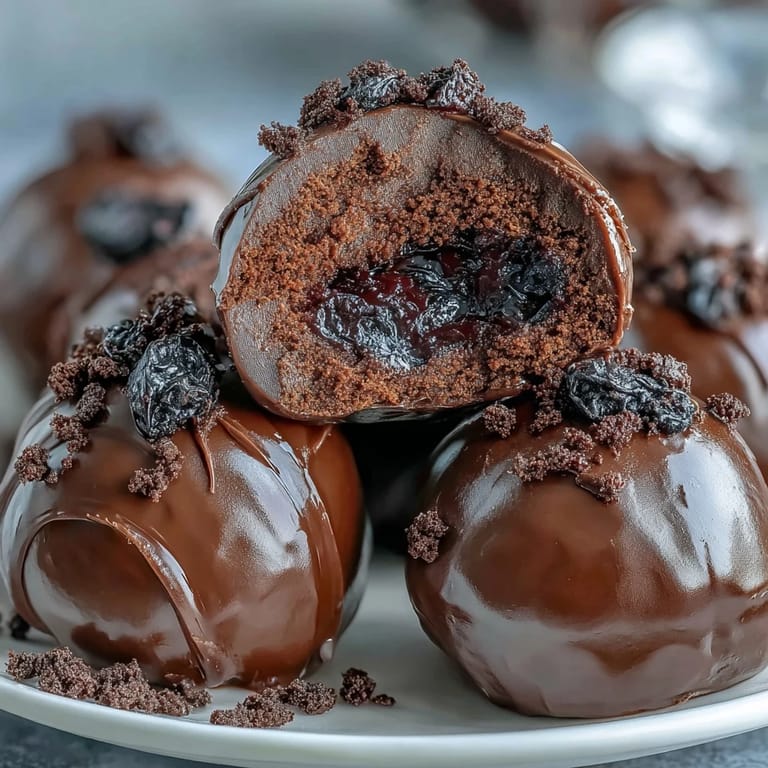
 A friend once handed me a black currant truffle at a dinner party, and I watched her face light up as I bit into it—that moment of quiet pleasure when something sweet and tart collides on your tongue is hard to forget. I went home that night determined to figure out how to make them, convinced they couldn't be as complicated as they seemed. Turns out, they're not, but they do require patience and a little respect for chocolate. Now whenever I make a batch, that same friend somehow finds out and shows up at my door.
I made these for my sister's book club last fall, and one woman ate three before anyone else had grabbed their first. She sheepishly admitted she'd been avoiding sweets for months, but something about the balance of flavors made her forget all her rules. That's when I understood these weren't just truffles—they were permission to enjoy something genuinely good without guilt.
Ingredients
- Dark chocolate (70% cocoa), 120 g: The backbone of your ganache—choose quality chocolate you'd actually want to eat on its own, because you will taste it.
- Heavy cream, 60 ml: This is what makes the ganache silky and forgiving; don't skip it or substitute.
- Unsalted butter, 2 tbsp: Adds richness and helps the ganache hold its shape without becoming dense.
- Black currant purée, 3 tbsp: Strain it well to avoid grittiness; the fruit flavor should whisper, not shout.
- Black currant liqueur, 1 tbsp: Optional, but it deepens the flavor in a way that feels almost elegant.
- Dark chocolate for coating, 200 g: Keep this separate—you need enough to create a proper shell without wasting chocolate through dipping.
- Freeze-dried black currants, 2 tbsp: A finishing touch that adds texture and announces what's inside.
- Cocoa powder, 2 tbsp: The classic dusting choice; use quality powder because it's visible.
Tired of Takeout? 🥡
Get 10 meals you can make faster than delivery arrives. Seriously.
One email. No spam. Unsubscribe anytime.
Instructions
- Heat the cream until it just whispers:
- Watch for the first tiny bubbles at the edges of the saucepan—that's your signal. You're not boiling it; you're just waking it up so it can melt the chocolate perfectly.
- Let the chocolate sit for a quiet moment:
- After pouring the hot cream over the chopped chocolate, resist the urge to stir immediately. Give it 60 seconds and the chocolate will soften on its own terms, then a few gentle stirs bring everything together into something glossy and smooth.
- Add the butter and fruit while the mixture is warm:
- The warmth helps everything incorporate without lumps. Stir until you can't see any streaks of color—the ganache should look unified and luxurious.
- Chill the ganache until it's firm but still workable:
- 1 to 2 hours in the refrigerator is the sweet spot. If you go too long, it'll be impossible to scoop without wrestling it; too short and your balls will be sad and slouchy.
- Roll each scoop into a ball with clean, cool hands:
- Work quickly so the ganache doesn't get warm from your hands. If it starts to stick, dip your hands in cold water and dry them.
- Freeze the ganache balls for 20 minutes:
- This step is non-negotiable. Cold ganache won't melt when you dip it into warm chocolate coating.
- Melt the coating chocolate slowly over simmering water:
- The double boiler prevents scorching. Stir often and let it cool to around 30°C before dipping—too hot and the ganache center starts to weep.
- Dip each ball with a fork, letting excess drip away:
- A single shake of the fork removes just enough chocolate so you get a thin, elegant shell instead of a thick blob.
- Add your garnish while the coating is still wet:
- Whether you choose crushed currants or cocoa powder, the moment matters. Once the chocolate sets, you've missed your chance.
- Let them set at room temperature or refrigerate:
- Room temperature takes 30 minutes and gives you a slightly softer interior; the refrigerator is faster but makes them almost too firm.
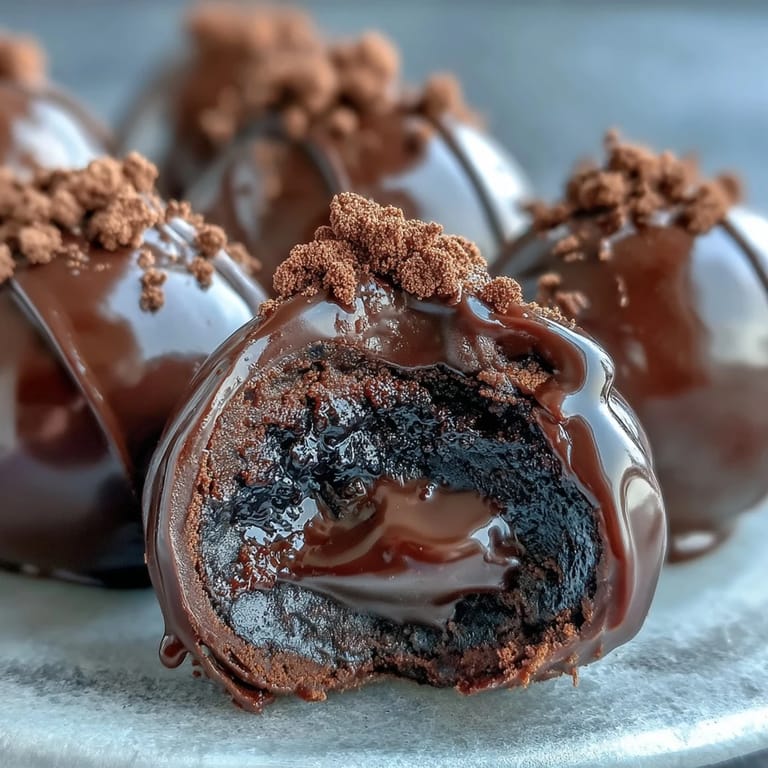 Pin this
 My neighbor stopped by while I was plating a batch for a gift, and we ended up sitting at my kitchen table talking for an hour, sharing one truffle between us and debating whether the black currant or the chocolate was doing most of the work. That's the kind of thing these truffles do—they slow people down.
The Black Currant Flavor Story
Black currants are underrated in American baking, probably because they're less common than raspberries or strawberries. But their flavor is assertive in a way that dark chocolate respects rather than overshadows. The tartness acts like a seasoning, pulling out deeper cocoa notes you might not otherwise notice. I've experimented with other fruits, and while they're lovely, something about currants feels right—almost like the chocolate was waiting for them.
Troubleshooting Common Missteps
If your ganache breaks or looks grainy, it's usually because the cream wasn't hot enough or you added something cold to something warm. Overheating the chocolate is another culprit—it becomes stiff and bitter. If your truffles are lumpy after rolling, your ganache wasn't cold enough. If the coating cracks, the chocolate was too hot when you dipped. None of these are failures; they're just feedback for next time.
Making Them Your Own
The template here is solid, but the joy is in playing with it once you understand the fundamentals. I've made batches with white chocolate coating over the dark currant ganache, which creates a striking visual contrast. Some versions use raspberry instead of currant, or a touch of cardamom in the ganache for a different kind of intrigue. The structure stays the same; only the details change.
- Always use quality chocolate—it's the main ingredient and there's nowhere to hide mistakes.
- Keep your kitchen cool while dipping, or the coating will be thin and inconsistent.
- Make these a day or two before you need them; they actually taste better after setting for a full day.
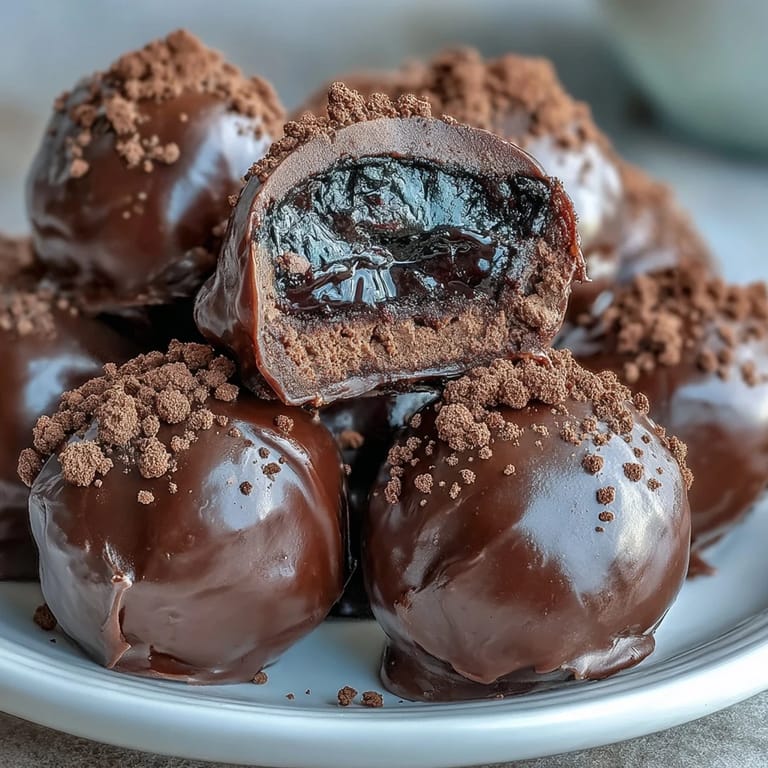 Pin this
 These truffles are proof that luxury doesn't require complicated ingredients or professional training—just respect for the process and the willingness to slow down. Make them when you want to remind yourself or someone else that good things are worth the wait.
Recipe Questions
- → What makes black currant and chocolate work well together?
The natural tartness of black currants cuts through the richness of dark chocolate, creating a sophisticated flavor profile. The fruity acidity brightens the intense cocoa notes while the buttery ganache provides a smooth, creamy bridge between the two bold flavors.
- → Can I make these without black currant liqueur?
Absolutely. The liqueur adds depth and enhances the currant flavor, but you can omit it entirely or substitute with a teaspoon of vanilla extract or additional black currant purée for a non-alcoholic version.
- → How long do these truffles stay fresh?
Properly stored in an airtight container in the refrigerator, these truffles maintain their quality for up to one week. The cold temperature keeps the ganache firm and prevents the chocolate coating from becoming soft or streaked.
- → Why must the ganache chill before shaping?
Chilling allows the ganache to firm completely, making it possible to roll into smooth balls without sticking to your hands. Warm ganache would be too soft to hold its shape and would melt the chocolate coating too quickly during dipping.
- → What's the best chocolate percentage for this confection?
Dark chocolate around 70% cocoa provides ideal intensity—bitter enough to stand up to the tart currant but still sweet enough to feel indulgent. Lower percentages may taste overly sweet, while higher percentages can become overwhelming when paired with the fruit's acidity.
- → Can I use fresh black currants instead of purée?
Fresh currants contain too much water and would disrupt the ganache's emulsion. Always use strained, unsweetened purée or reduced fruit compote to maintain the proper silky texture and prevent seizing in the chocolate mixture.