 Pin this
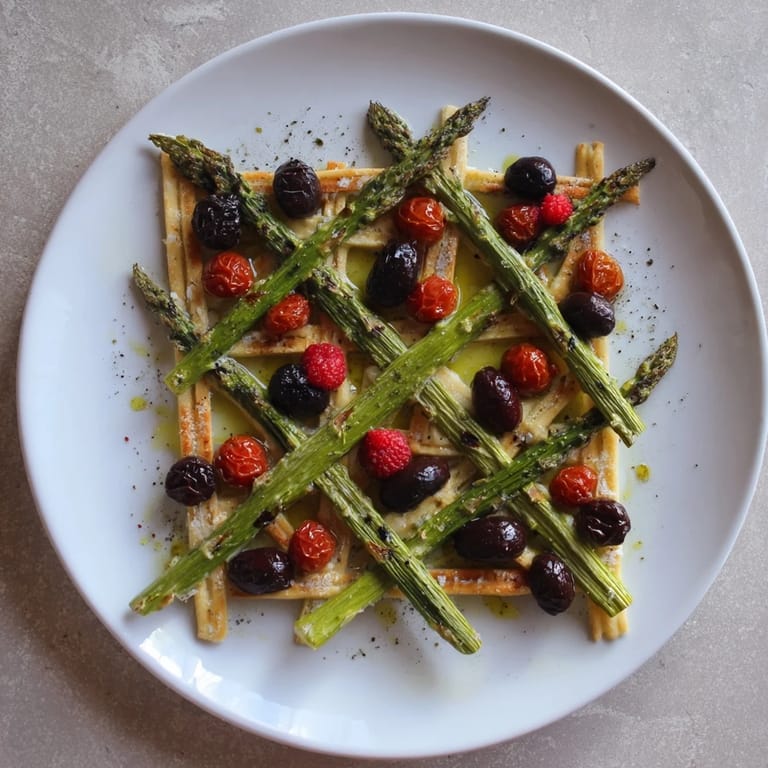
 I discovered this dish by accident at a farmers market in early spring, watching a vendor arrange vegetables like an artist. There was something about the way the asparagus caught the light, and I remember thinking how beautiful food could be before anyone even tasted it. That moment sparked an idea: what if I could build something edible that looked like stained glass? The first time I tried weaving asparagus, my hands felt clumsy, but once those chives pulled everything together, I understood why this appetizer stops conversations.
I made this for a spring brunch last year, and what I remember most isn't how it looked on the table—though several guests photographed it—but the moment my friend Sarah bit into one of the squares and her eyes lit up. She said it tasted like springtime felt, which I think is the best compliment any dish can receive.
Ingredients
- Asparagus stalks: Choose medium-thickness stalks that are flexible enough to weave but sturdy enough to hold their shape; thinner ones snap easily, and thicker ones become woody even when blanched.
- Fresh chives: The long stems are essential here—they soften just enough to tie without breaking, and they add an oniony whisper that balances the sweetness of the fruit.
- Mixed berries: Use what's in season and what feels fresh; blueberries add visual pop, raspberries bring tartness, strawberries give substance, and golden berries add unexpected honeyed notes.
- Extra virgin olive oil: This isn't just fat; it carries the grassy minerality that ties the whole composition together.
- Flaky sea salt and black pepper: These are your final whispers of flavor, applied only at the end so they don't dissolve into the fruit.
Tired of Takeout? 🥡
Get 10 meals you can make faster than delivery arrives. Seriously.
One email. No spam. Unsubscribe anytime.
Instructions
- Blanch the asparagus into submission:
- Boil salted water until it's rolling and aggressive, then add your asparagus for just 1–2 minutes—you want them bright green and tender but still with a slight bite underneath. Transfer them immediately to ice water to shock them back to life and lock in that color.
- Soften the chives with patience:
- Dip each chive stem into hot water for exactly 5 seconds; any longer and they start to lose their structure. Cool them in ice water right away, then pat them completely dry so they hold the weave.
- Build your edible grid:
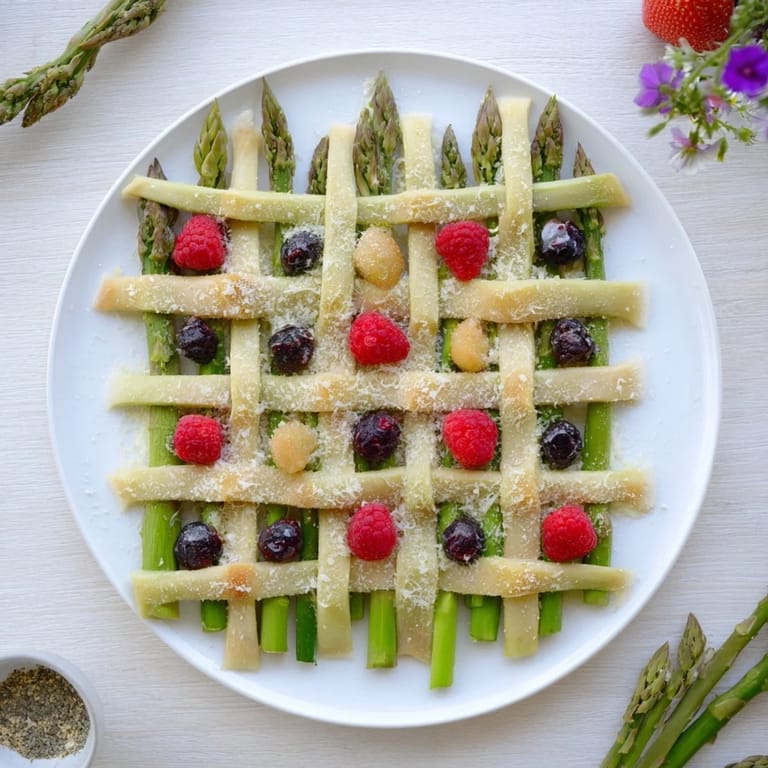
- Lay 8 asparagus stalks parallel on your platter, spacing them evenly as your foundation. Now comes the meditation: weave 8 more stalks perpendicularly, going over and under like you're creating something sacred.
- Anchor the intersections:
- At each crossing point where asparagus meets asparagus, gently wrap a chive stem around both stalks and tie it loosely. It should feel like you're giving the lattice a gentle hug, not strangling it.
- Tuck in the jewels:
- Fill each square of your lattice with a thoughtful mix of berries, letting different colors balance each other. Step back and look at it before you add anything else.
- Season with restraint:
- Drizzle olive oil around (not over) the berries, scatter salt crystals where they'll catch light, and finish with a grind of black pepper.
 Pin this
 What made this recipe truly mine was the moment I realized it didn't need to be complicated to feel special. Sometimes the most memorable meals arrive not from elaborate techniques but from simple ingredients arranged with intention and care.
Why This Works as a Starter
An appetizer should invite conversation rather than demand it, and this lattice does exactly that. It's light enough that it doesn't overwhelm the appetite for what comes next, yet substantial and beautiful enough to feel like the meal has already begun. The mix of temperatures—cool asparagus, chilled fruit—and the contrast between savory and sweet creates a moment of genuine delight on the palate.
The Art of Fruit Selection
The berries are your canvas, and their choice determines the entire personality of the dish. I've learned that golden berries add a floral sweetness that raspberries can't match, while blueberries bring visual weight and earthiness. The key is to taste everything before you build the lattice; a batch of berries can surprise you with unexpected tartness or richness, and you want that information beforehand.
Variations and Moments
I've played with this in different seasons, and each one has taught me something. In summer, I sometimes drizzle warm balsamic glaze around the edges just before serving; it creates a savory-sweet tension that feels sophisticated. Fresh mint scattered over the top adds an herbal brightness, especially if someone at your table loves cooling flavors. The base lattice stays the same, but the embellishments can shift with your mood and what's available.
- Try blackberries or red currants if you can't find all four fruits—they slot into the grid just as beautifully.
- A tiny pinch of lemon zest over the fruit minutes before serving adds brightness without overwhelming delicate berries.
- Make the lattice up to 2 hours ahead and add the berries only 30 minutes before guests arrive to keep everything crisp.
 Pin this
 This dish reminded me that cooking isn't always about feeding hunger—sometimes it's about feeding the eyes and the spirit. Serve it with the knowledge that you've created something people will remember.
Recipe Questions
- → How do you create the asparagus lattice?
Lay half of the asparagus stalks parallel, then weave the remaining stalks perpendicular over and under to form a grid. Tie the intersections gently with softened chives to hold the shape.
- → What is the purpose of blanching the asparagus?
Blanching softens the asparagus slightly while preserving its bright green color and crisp texture, making it pliable for weaving into the lattice.
- → Can other fruits be used instead of the ones listed?
Yes, you can substitute small, firm fruits like blackberries, red currants, or pomegranate seeds to suit your preference or seasonal availability.
- → How should the chives be prepared for tying?
Quickly dip the chive stems in hot water for a few seconds to soften them, then cool in ice water before using to tie the asparagus lattice securely.
- → What seasoning complements this dish?
A simple drizzle of extra virgin olive oil, flaky sea salt, and freshly ground black pepper enhances the fresh flavors without overpowering them.