 Pin this
 I discovered the magic of a great spread during a chaotic weekend when my sister called to say she was bringing the whole extended family over in three hours. No time for cooking, no budget for restaurant catering, just me and whatever was in my kitchen. I threw together some sliced meats, cheeses, and vegetables on my largest platter, and something beautiful happened—everyone gathered around it like it was the most elegant thing I'd ever made. That's when I realized that a well-arranged platter isn't about complexity or expense. It's about abundance, choice, and the simple joy of eating together without pretense.
I'll never forget my cousin's daughter, who was five at the time, carefully selecting one cherry tomato, one slice of cheese, and one cracker, assembling them into her own little creation with total concentration. She did this about fifteen times that afternoon, and my aunt and I just watched her, understanding in that moment that a spread like this gives everyone—regardless of age or preference—permission to build exactly what they want.
Ingredients
- Sliced cooked ham (200 g): Buy it pre-sliced from the deli counter to save yourself time, and choose one that's flavorful but not too heavily smoked—it's the bridge between the salty and savory elements
- Sliced turkey breast (200 g): This is your mild player, the one that lets other flavors shine and makes the platter feel balanced rather than meat-heavy
- Sliced salami (150 g): A little goes a long way with salami; its richness means people take smaller portions, stretching your budget further
- Mild cheddar, sliced (200 g): Cheddar is forgiving and universally loved—avoid pre-packaged slices if you can and ask the deli counter to slice a block for you; it melts better on a warm cracker
- Swiss cheese, sliced (150 g): The holes make it feel fancy and it has a subtle sweetness that people don't expect; it's the secret to making a budget platter feel special
- Cream cheese (100 g): Spread this on warmer crackers or bread and it becomes something transcendent; a little dollop transforms everything it touches
- Carrots, sliced into sticks (2 large): Cut them thick enough that they don't break easily in people's hands, and they'll stay crisp longer if you soak them in ice water for ten minutes before arranging
- Cucumber, sliced into rounds (1): Leave the skin on for color and nutrition, and slice it last so it doesn't weep water onto your platter
- Red bell pepper, sliced (1): The bright color is half the appeal here; its sweetness makes it popular with the younger crowd
- Cherry tomatoes (1 cup): These stay fresher than cut tomatoes and their small size makes them naturally portion-controlled; people eat more vegetables when they don't feel like they're being virtuous
- Assorted budget-friendly crackers (400 g): Mix different shapes and textures—some sturdy, some delicate—so people have options depending on what they're building
- Baguette, sliced (1): Toast some of the slices lightly if you have time; toasted bread holds up better under toppings and feels more intentional
- Hummus (1 cup): A good dip makes everything taste better, and hummus is filling enough that people feel satisfied eating less meat and cheese
- Green olives (1/2 cup): Their briny punch adds sophistication to the spread and their flavor is concentrated, so a little goes a long way
- Pickles (1/2 cup): The acid cuts through richness beautifully; slice larger pickles so they're easier to grab
Tired of Takeout? 🥡
Get 10 meals you can make faster than delivery arrives. Seriously.
One email. No spam. Unsubscribe anytime.
Instructions
- Prep your foundation:
- Before you arrange anything, get your platter, cutting board, and knife ready. Have everything sliced and on separate plates first—this takes the pressure off when you're actually building the platter and means you can see exactly how much space you need. It's oddly meditative, this prep work, like you're getting everything ready for a small party in your kitchen.
- Anchor with meats:
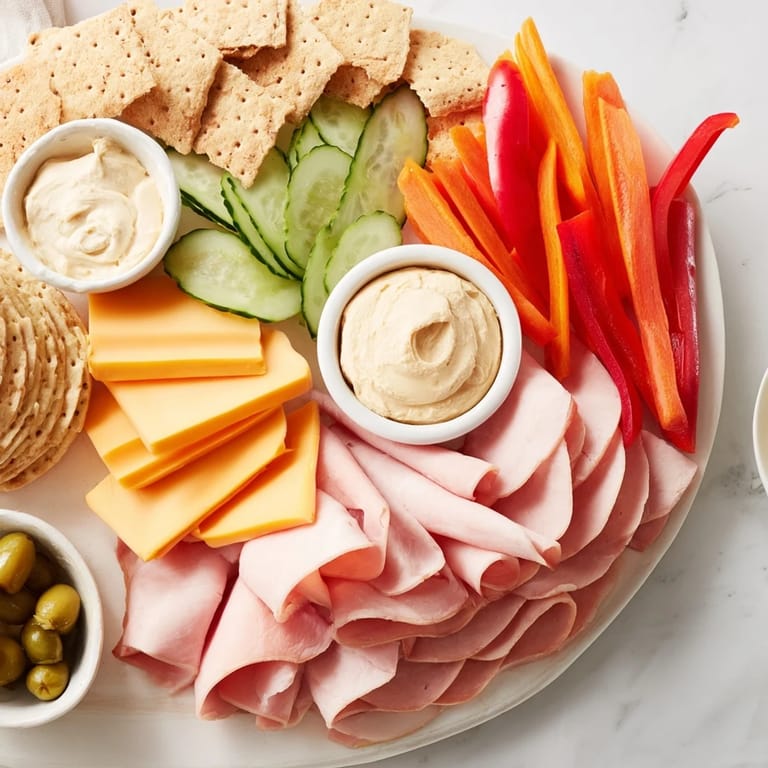
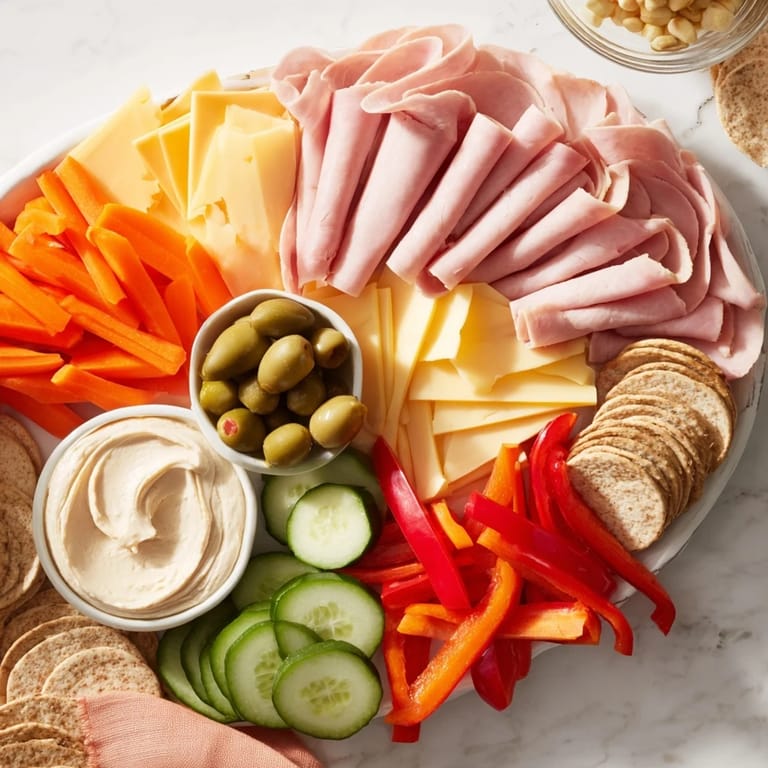
- Choose the spots that feel natural on your platter—usually corners or thirds—and pile your sliced meats generously there. Fold some pieces so they create height and visual interest; a flat platter feels sad, but one with peaks and valleys feels abundant. The ham can be rolled if you want to get fancy, but honestly, casual folds work just fine and take less time.
- Layer in the cheeses:
- Next to your meat piles, fan out your cheese slices slightly overlapping, like you're dealing cards. This makes them easier to pick up with one hand and looks intentional. Soften the cream cheese slightly by letting it sit out for five minutes, then dollop it in a small bowl right on the platter—people will use it as both a spread and a dip.
- Arrange vegetables by color:
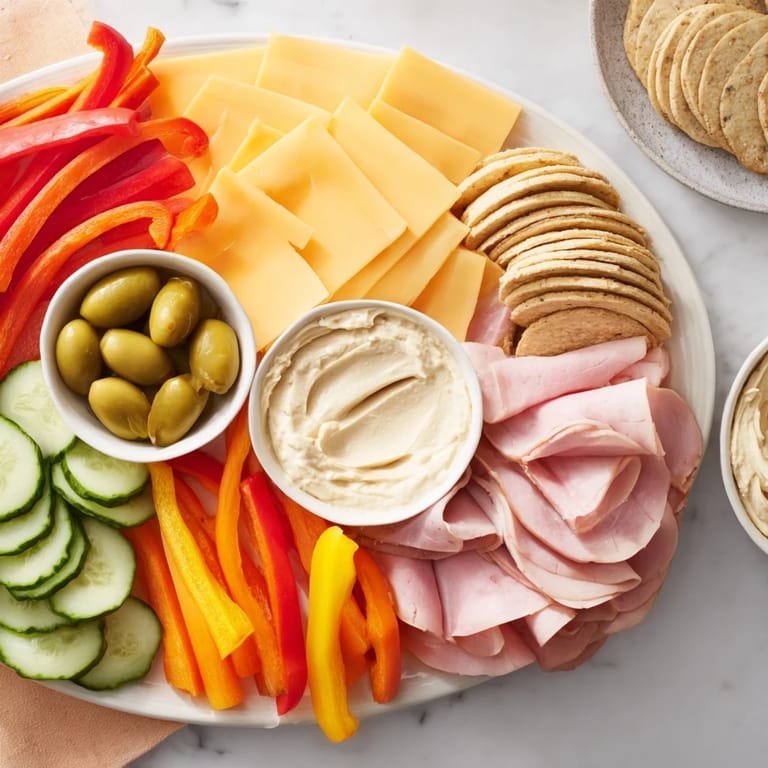
- Group your vegetables by type and color rather than scattering them. Put all the carrot sticks together, all the cucumber rounds in another spot, the bell pepper strips elsewhere. This organization makes the platter feel designed rather than haphazard, and it also helps people who are deciding what to eat—they see clear choices instead of a jumble.
- Nestle in the dips:
- Place small bowls of hummus, olives, and pickles around the platter. These should sit slightly elevated if possible—on the platter itself or on small ramekins—so they're part of the visual scene, not afterthoughts tucked in corners. Fill them generously; an empty-looking bowl signals stinginess, even if it's just waiting to be refilled.
- Stack the carbs high:
- Crackers and bread are the delivery vehicles for everything else, so they need to be abundant and easy to reach. Create two or three stacks in different areas so people don't all reach for the same spot. If you've toasted any bread, keep it separate from the untoasted so people know they have both options.
- Serve with confidence:
- Take a step back and look at your platter. Does it feel full and inviting? That's the goal. Serve it immediately while everything is fresh and crisp, and as people eat, refresh the items that get depleted. The constant small refills make the platter feel generous and keep it looking abundant throughout the gathering.
 Pin this
 One Sunday, my friend brought her elderly mother over, and this woman, who'd lived through depressions and rationing, spent twenty minutes just walking around the platter, touching her chest, saying 'Look at all this.' She made three small plates and took them home wrapped in napkins. That's when I understood that a spread like this isn't just food—it's a quiet statement about abundance and generosity, especially to people who remember times when such choices weren't possible.
The Art of Making Everyone Happy
The magic of a spread is that it removes the burden of choice from you and hands it to your guests. Nobody feels judged eating only crackers and cheese, or taking five cherry tomatoes and nothing else. There's something deeply relieving about a meal format where everyone is automatically catered to without you having to ask a million questions about preferences. It's permission to just eat what sounds good in the moment, which is honestly how food tastes best.
Feeding a Crowd Without Stress
What I love about this approach is that it scales effortlessly. Having eight people or eighteen? You just double the amounts and maybe get a second platter, but the concept stays exactly the same. There's no complicated timing, no dishes that finish at different moments, no one person stuck cooking while everyone else relaxes. You prepare, you arrange, and then you join the party. That's worth its weight in gold on a busy day.
Budget Wisdom and Quality Choices
I've learned that stretching your food budget doesn't mean boring people. A smaller amount of really good salami feels more luxurious than a giant pile of mediocre lunch meat. Buy from the deli counter when you can; talk to the people there about what's good that week. Sometimes a specific cheese is on sale, or they'll slice you something special. It's not just about saving money—it's about using your money smartly, choosing quality over quantity in the right places, and letting those excellent ingredients shine through arrangement and care. The vegetables are the volume; the meats and cheeses are the luxury; the crackers and dips tie it all together into something that feels abundant and thoughtful.
- Buy only what you'll serve that day; planning to use leftovers often means they'll dry out in the fridge
- Scout your grocery store's deli section a few days before; sometimes managers mark down quality items slightly if they're near closing
- One really excellent cheese beats three mediocre ones every single time
 Pin this
 A platter spread is one of those rare meals where everyone walks away happy, satisfied, and feeling like they were part of something special. There's kindness in the arrangement, hospitality in the abundance, and joy in the simplicity of it all.
Recipe Questions
- → What meats are included in the family spread?
The platter includes sliced cooked ham, turkey breast, and salami, arranged in generous piles for easy sharing.
- → Can this platter be adapted for vegetarians?
Yes, simply omit the meats and increase the amount of cheese, roasted vegetables, or plant-based deli slices.
- → What cheeses complement the meats in the spread?
Mild cheddar, Swiss cheese, and cream cheese for spreading provide a balanced and mild flavor profile.
- → How are the vegetables prepared for the platter?
Vegetables like carrots are sliced into sticks, cucumber into rounds, and bell peppers sliced, arranged in accessible heaps.
- → What extras enhance the flavor and texture variety?
Extras include hummus, green olives, and pickles, placed in small bowls to complement the main items.
- → What types of crackers are recommended?
Assorted budget-friendly crackers are used, along with sliced baguette, stacked in high volume for easy reach.