 Pin this
 There's something about the smell of onions hitting hot butter that makes you pause mid-afternoon and think about dinner. I discovered this sandwich on a random Tuesday when I had a wedge of Gruyère that needed using and a bag of onions sitting on the counter. What started as improvisation turned into the kind of lunch I now make on purpose, the kind where the caramelization alone teaches you patience.
I made this for a friend who was skeptical about onions in sandwiches, and watching her take that first bite—the cheese still oozing, the bread golden—changed something. She asked for the recipe before she finished eating, and I realized I'd accidentally created the kind of meal that converts people.
Ingredients
- Yellow onions, thinly sliced: The foundation of everything; slicing them thin means they cook evenly and caramelize into soft ribbons rather than chewy chunks.
- Unsalted butter: You need it for the onions and for spreading on bread—use the good stuff, it makes a real difference in how golden your bread gets.
- Kosher salt and freshly ground black pepper: Season as the onions cook, not all at once; you'll taste when they need it.
- Sugar and balsamic vinegar: These are optional but they're worth the reach; they round out the sweetness and add a whisper of complexity.
- Rustic sourdough or country bread: Choose bread thick enough to hold the weight of the filling without falling apart, and sturdy enough to crisp up nicely.
- Gruyère cheese, grated: Don't use pre-shredded if you can help it; grating your own melts smoother and tastes sharper.
Tired of Takeout? 🥡
Get 10 meals you can make faster than delivery arrives. Seriously.
One email. No spam. Unsubscribe anytime.
Instructions
- Melt the butter and start the onions:
- Set your skillet to medium-low—this is not a race. Add butter and let it foam gently, then scatter in your onion slices with a pinch of salt and pepper. You're coaxing them slowly into sweetness.
- Give them time to transform:
- Stir occasionally, maybe every five minutes, for 25 to 30 minutes. You'll watch them go from pale and crisp to golden and soft; that moment when you catch their smell is when you know it's working. This is the part where patience actually matters.
- Add the finishing touches:
- Once they're deeply caramelized, stir in the sugar and balsamic if you're using them, and cook just a few minutes more. Taste and adjust seasoning, then set them aside.
- Build your sandwich:
- Butter one side of each bread slice, then lay two slices butter-side down. Divide half your cheese on top of each, then spoon the warm onions over, then the remaining cheese on top. Close with the other slice, butter-side up, so both sides are ready to crisp.
- Toast until golden and melted:
- Heat your nonstick skillet over medium heat, then lay in your sandwiches and cook gently for 3 to 4 minutes per side, pressing down just a little with your spatula. The bread should turn golden before the edges burn, and the cheese should be flowing inside by the time you flip.
 Pin this
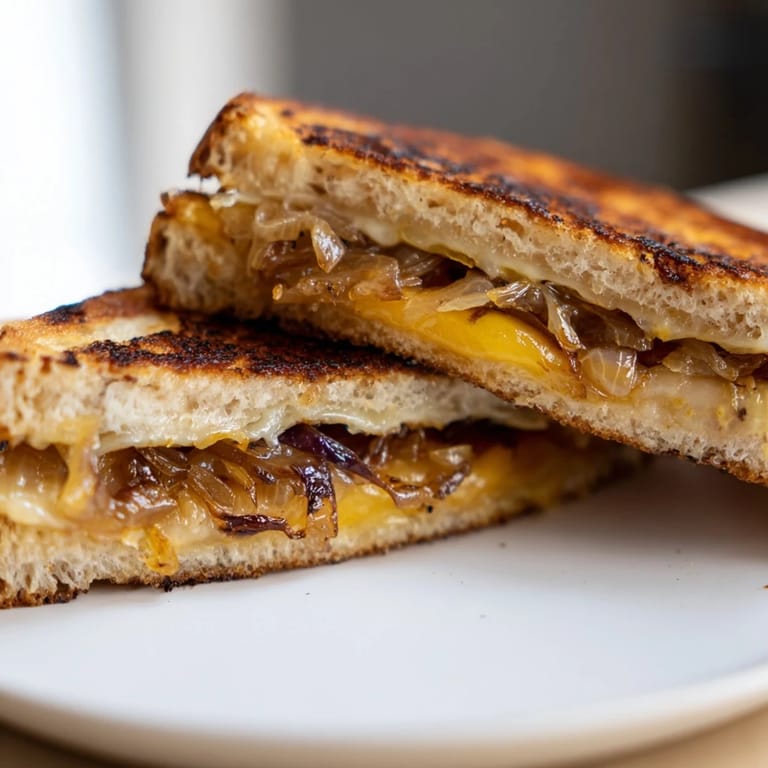
 The best part isn't even the eating, it's the moment when you cut into it and the cheese is still warm enough to stretch. That's when you know you did it right.
Why Caramelized Onions Change Everything
Caramelization isn't just cooking; it's a chemical conversation between heat and sugar that lives inside the onion. When you cook them slowly, their natural sugars break down and reorganize, becoming deeper, more savory, almost meaty. This is why the sandwich tastes nothing like a raw onion, and everything like something you'd order somewhere nice.
Cheese Choice Matters More Than You'd Think
Gruyère has a crystalline texture and a slightly sweet, nutty flavor that stands up to the sweetness of the onions without competing. If you use something too mild, the cheese disappears. If you use something too sharp, it fights the onions. Gruyère is the conversation partner these onions needed.
Bread and Butter Make the Texture
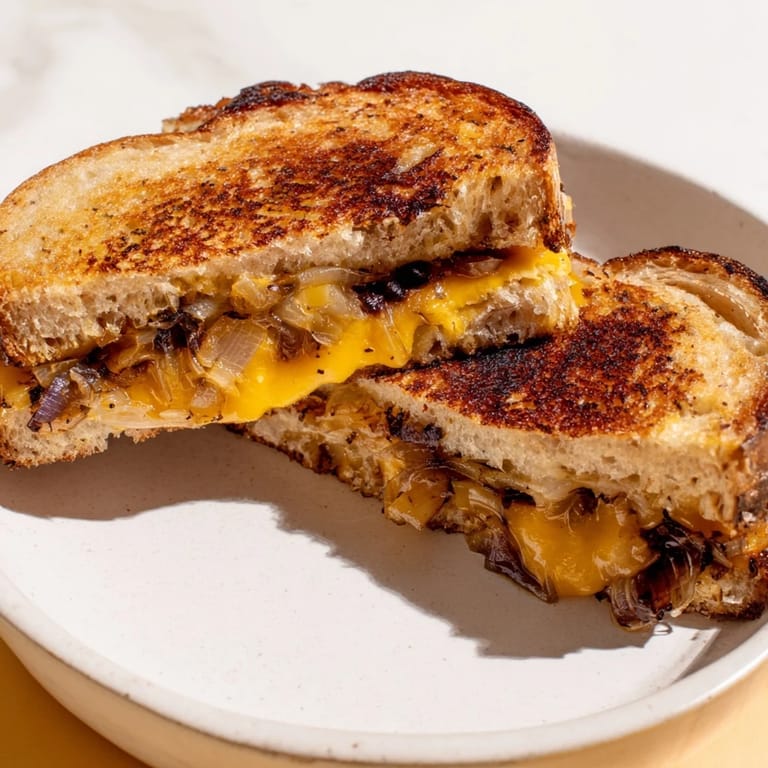
The crust is where the magic lives. Crusty bread toasts golden and stays crispy even with warm filling inside, and proper butter—not spread too thin—is what browns and crisps it. Soft bread will steam and never crisp; cheap butter burns before it browns.
- Toast your bread slices lightly before assembling if you want extra insurance against sogginess.
- Softened butter spreads without tearing the bread, so pull it from the counter ten minutes before cooking.
- A press of the spatula as it cooks helps the filling heat and the bread crisp at the same pace.
 Pin this
 This sandwich tastes like proof that taking time with simple things creates something worth remembering. Make it when you have an afternoon to yourself, or when you want to impress someone with how good kitchen patience can taste.
Recipe Questions
- → How do I get perfectly caramelized onions?
Cook thinly sliced onions slowly over medium-low heat with butter, stirring occasionally for 25–30 minutes until deep golden and soft.
- → Can I substitute Gruyère cheese?
Yes, Emmental or Swiss cheese work well as alternatives, providing similar meltability and flavor profiles.
- → What bread type is best for this sandwich?
Rustic sourdough or country bread with a firm crust holds up well and crisps nicely while grilling.
- → How can I add extra flavor to the onions?
Stir in a pinch of sugar and a splash of balsamic vinegar near the end of cooking, or add fresh thyme leaves for aromatic notes.
- → What’s the best way to cook the sandwich evenly?
Use a nonstick skillet over medium heat and press sandwiches gently to ensure the bread crisps and cheese melts without burning.