 Pin this
 There's a particular Tuesday evening that comes to mind—the kind where I had nothing planned for dinner but a container of leftover rice sitting in the fridge and about fifteen minutes before hunger struck. I tossed a couple of eggs into a hot pan, listened to them sizzle, and suddenly remembered how my neighbor had once mentioned that the secret to good fried rice isn't fancy ingredients but speed and confidence. That night taught me that sometimes the best meals come together when you stop overthinking and just let the kitchen sounds guide you.
I made this for my roommate on a night when she came home exhausted from work, and I watched her face soften as she took the first bite—that moment when someone realizes a simple dish has somehow become exactly what they needed. She asked for the recipe right then and there, and I realized it wasn't really about ingredients or technique; it was about how quickly care can show up in a bowl.
Ingredients
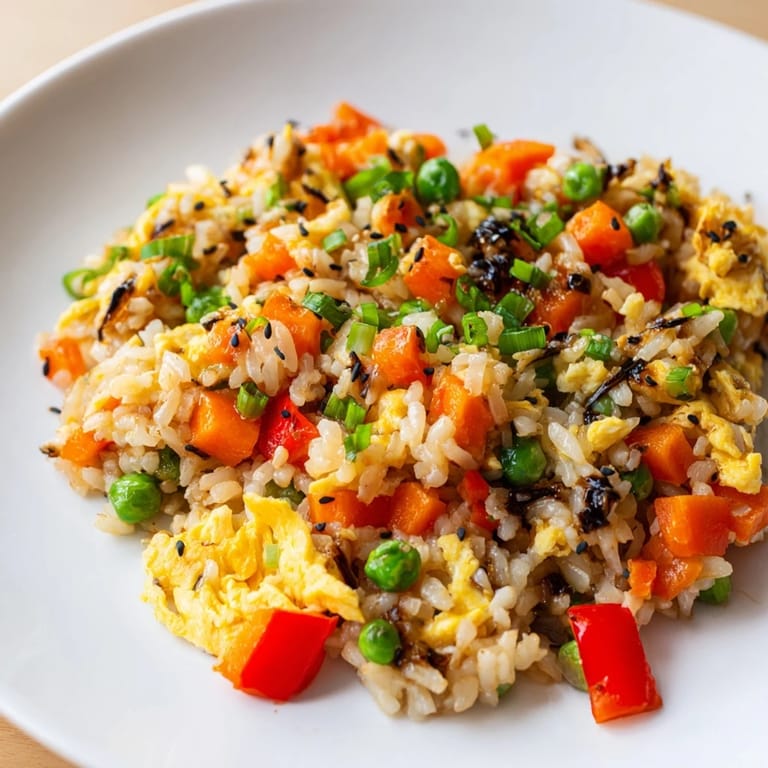
- Cooked leftover rice (2 cups, preferably day-old and cold): Cold rice is crucial because the grains stay separate instead of clumping together, and day-old rice has lost just enough moisture to fry beautifully rather than turn mushy.
- Large eggs (2): The eggs become fluffy pillows of protein threaded through the rice; beat them just before cooking so they're ready to hit the hot pan the moment you need them.
- Carrots, diced (1/2 cup): These add natural sweetness and a slight crunch; I use a sharp knife and aim for small, even pieces so they cook in exactly the right amount of time.
- Frozen peas, thawed (1/2 cup): Thaw them right before use so they stay tender and don't get overcooked once they hit the pan.
- Scallions, chopped (1/4 cup): Split these into two portions: half goes in during cooking for flavor, half is sprinkled on top for freshness and a mild onion bite.
- Bell pepper, diced (1/2 cup, optional): This adds another color and a subtle sweetness that balances the salty soy sauce beautifully.
- Soy sauce (2 tablespoons): Use low-sodium if you want control over the saltiness, and taste as you go because different brands vary in intensity.
- Sesame oil (1 teaspoon): Just a teaspoon is all you need; its deep nutty aroma is what makes people ask what smells so good.
- Ground white or black pepper (1/4 teaspoon): White pepper gives a sharper, cleaner bite; black pepper is earthier—choose based on your mood.
- Salt (to taste, optional): Hold off on this until the end and taste first, since soy sauce already brings plenty of salt to the party.
- Vegetable oil (2 tablespoons): Use a neutral oil that can handle high heat without smoking; this isn't the time for delicate flavored oils.
Tired of Takeout? 🥡
Get 10 meals you can make faster than delivery arrives. Seriously.
One email. No spam. Unsubscribe anytime.
Instructions
- Set up your mise en place:
- Arrange all your prepped ingredients within arm's reach before you turn on the heat. There's no pause button once the pan gets hot, so having everything ready transforms this from stressful to meditative.
- Scramble the eggs:
- Heat 1 tablespoon of oil in your skillet or wok over medium-high heat until it shimmers, then add the beaten eggs. Stir them gently and constantly until they're just set but still soft, then push them onto a plate and set aside. This takes barely a minute, and undercooked is better than overdone here.
- Build the vegetable base:
- Add the remaining oil to the same pan, then add your diced carrots and bell pepper. Stir and listen—after about 2 minutes, they'll soften slightly but keep some structure, which is exactly what you want. Add the peas and half your scallions, cook for 1 minute more until everything smells fragrant.
- Break and heat the rice:
- This is the moment where the rice goes in, and if it's clumpy, use your spatula to break it apart as you stir. The heat and movement separate the grains and coat them with the oil; keep going for 2 to 3 minutes until the rice is heated all the way through and starting to pick up a little color from the pan.
- Season and unite:
- Drizzle the soy sauce and sesame oil over everything, toss it all together until the rice glistens and that smell hits you—nutty, savory, alive. This is where the dish becomes itself.
- Bring the eggs back:
- Return those scrambled eggs to the pan, stir everything together for about a minute so they weave through the rice, then taste and adjust with pepper and salt if you think it needs it. Finish with the remaining scallions scattered on top for freshness and a gentle onion sharpness.
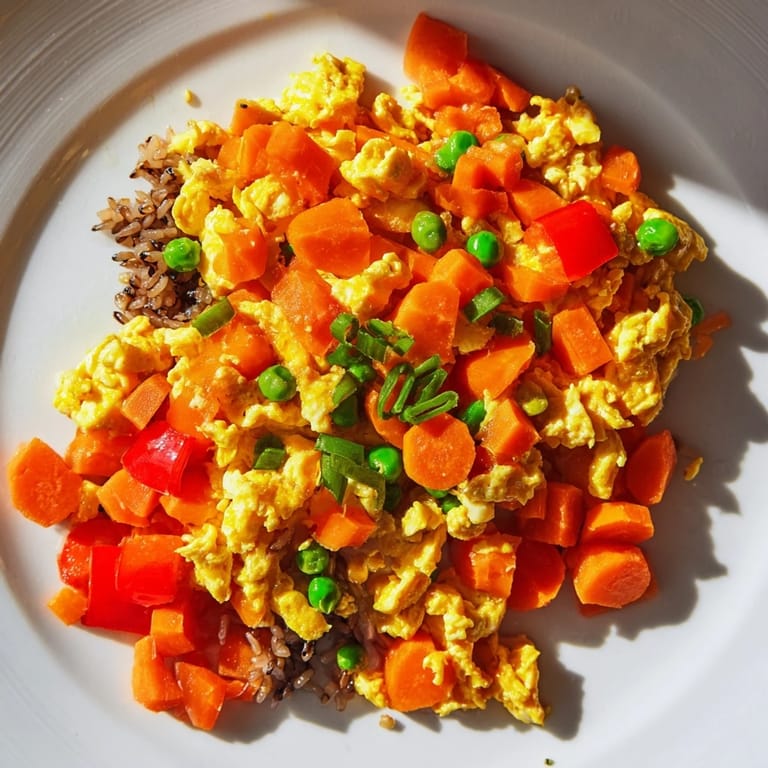 Pin this
 I remember my sister tasting this for the first time and saying it was the kind of food that made her feel taken care of without anyone having to say a word. Sometimes a meal is just dinner, and sometimes it's an answer to an unspoken question—this dish has that quiet power.
Playing with Vegetables
The beauty of fried rice is that it's forgiving with vegetables in a way other dishes aren't. I've thrown in corn that was about to go soft, snap peas that were lingering in the back of the crisper, even broccoli cut into tiny pieces—and every version has tasted completely natural and right. The key is cutting everything into roughly the same size so nothing gets left behind raw while something else turns mushy. Think of it less as following a recipe and more as having a conversation with whatever you have on hand.
Adding Protein Beyond Eggs
If eggs alone aren't enough to make this feel like a complete meal, there's so much room to build from there. Cooked chicken cut into small pieces goes in with the vegetables and becomes tender and savory. Shrimp cooks in seconds and brings this elegant briny quality that elevates the whole thing. Even cubed tofu, if you give it a moment to get a little golden at the edges, becomes creamy and absorbs all those soy and sesame flavors like a sponge. The ratio stays the same; you're just adding another texture and flavor story to the bowl.
The Little Flavor Moments
Once you're comfortable with the basics, those small additions start mattering in the best way. A tiny pinch of minced garlic or ginger stirred into the pan when the vegetables go in deepens everything that comes after it, without overwhelming the simple clarity of the dish.
- Add garlic or ginger early so they mellow into the background rather than bite you.
- A few drops of chili oil or sriracha on top at the end bring heat without needing to cook it in.
- A drizzle of additional sesame oil right before serving, even if it feels indulgent, is never a mistake.
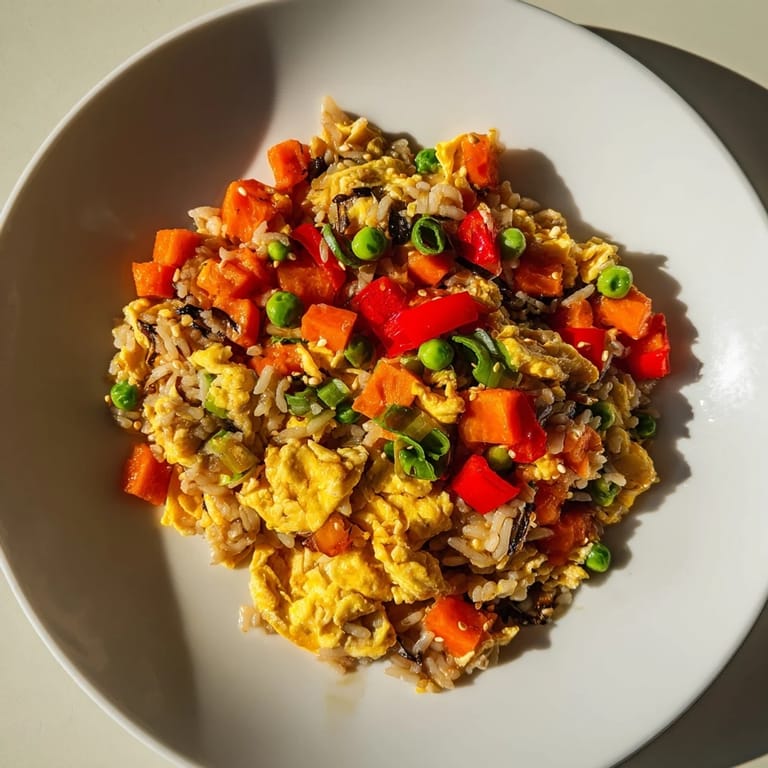 Pin this
 There's something wonderful about a dish that asks so little of you but gives back comfort, fullness, and the quiet satisfaction of having fed yourself well. This is the kind of recipe you'll make over and over until it becomes muscle memory.
Recipe Questions
- → What type of rice works best for this dish?
Day-old, cold cooked rice works best as it prevents clumping and yields a better texture when stir-fried.
- → Can I add other vegetables besides carrots and peas?
Yes, options like corn, snap peas, broccoli, or bell peppers work well and add color and flavor variety.
- → How do I prevent the eggs from overcooking?
Scramble the eggs quickly over medium-high heat until just set, then remove from the pan to add back later.
- → Is it necessary to use sesame oil?
Sesame oil adds a distinctive nutty aroma and flavor, but can be omitted or substituted with another oil if needed.
- → How can I make this dish more protein-rich?
Incorporate cooked chicken, shrimp, tofu, or additional eggs according to preference for extra protein.