 Pin this
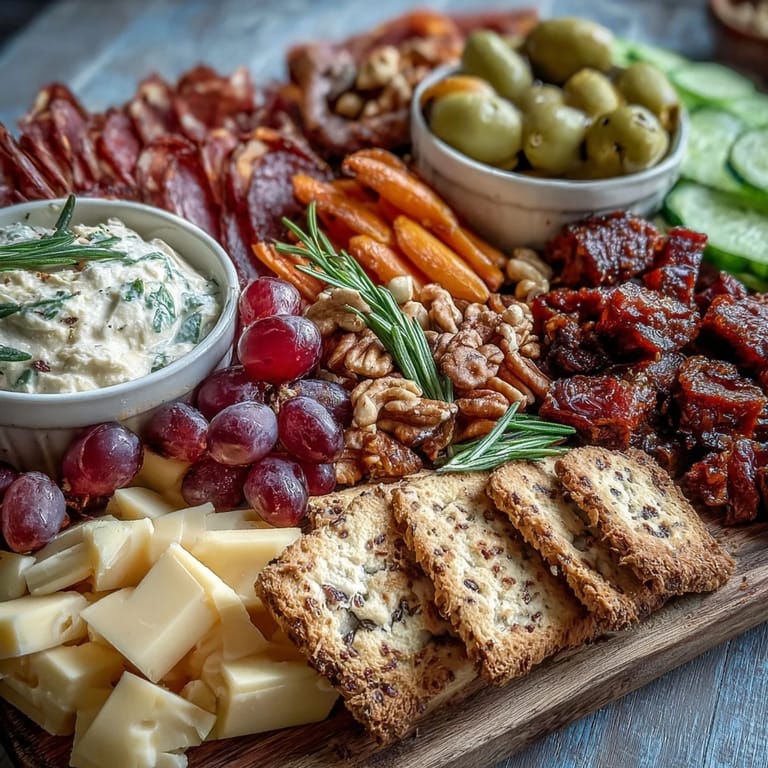
 My neighbor knocked on the door with a bottle of wine and a nervous laugh, admitting she'd never actually unpacked her kitchen boxes yet. That's when I decided a charcuterie board was exactly what her housewarming needed—something that required zero cooking, zero stress, but somehow looked like you'd spent hours planning it. The beauty of it is that you're really just arranging beautiful things people already love, and somehow that becomes this stunning centerpiece everyone gravitates toward.
I remember standing in her empty dining room with just this one board on the table, and within twenty minutes it became this natural gathering spot where people lingered, talked, laughed. Someone's partner reached for the blue cheese and prosciutto combo and actually closed their eyes like they'd tasted something revelatory. That's when I realized this wasn't just about feeding people—it was about creating a moment where everyone felt welcomed.
Ingredients
- Prosciutto: Buy it sliced thin from a proper deli counter if you can—it drapes beautifully and tastes infinitely better than pre-packaged, plus it's worth the splurge for something this special.
- Salami: Look for varieties with visible peppercorns or fennel; they add visual interest and flavor complexity you won't get from generic versions.
- Smoked ham: A milder, approachable meat for guests who find cured meats intimidating, so everyone feels included.
- Chorizo slices: The paprika-forward cousin that brings heat and personality to the meat section.
- Brie: Soft, buttery, and honestly the crowd favorite—slice it just before serving so it doesn't dry out under the lights.
- Aged cheddar: Cubed rather than sliced because it catches light differently and feels more substantial to grab.
- Gouda: The sweet, nutty bridge between sharp and mild that people reach for without thinking.
- Blue cheese: Crumbled instead of solid so it's less intimidating and easier to portion; this is where adventurous eaters congregate.
- Hummus: The vegetarian anchor that makes non-meat eaters feel genuinely considered, not like an afterthought.
- Tzatziki: Cool, herb-forward, and it pairs as beautifully with vegetables as it does with crackers.
- Roasted red pepper dip: The sweet, slightly smoky one that converts people who think they don't like dips.
- Assorted crackers: Mix water crackers with multigrain so there's texture variety—some people want something substantial, others want delicate.
- Baguette slices: Toasted lightly just before serving if you have time; they hold up better and taste exponentially better than soft bread.
- Breadsticks: They photograph beautifully standing upright and they're easier for standing guests to grab than flat crackers.
- Red and green grapes: The color contrast is non-negotiable for visual impact, and they act as palate cleansers between salty and creamy.
- Cherry tomatoes: Halve a few to show off the color inside; it makes the board feel more intentional and less like you just dumped things out.
- Cucumber slices: Refreshing, hydrating, and they bridge the gap between vegetable-averse guests and the pure snackers.
- Bell pepper: Sliced into strips because they're easier to grab than chunks, and the red color is almost mandatory for visual appeal.
- Baby carrots: Raw and crunchy; they're the humble vegetable that somehow gets eaten first.
- Mixed nuts: Toast them lightly if you remember—it deepens their flavor and makes them smell incredible.
- Olives: Pitted is absolutely essential unless you enjoy watching your guests navigate pits while holding a napkin and a cracker.
- Dried apricots and figs: They provide sweetness and chewiness that surprises people in the best way, especially when paired with cheese.
- Fresh herbs: A pinch of rosemary or thyme scattered on top takes it from assembled to curated in seconds.
Tired of Takeout? 🥡
Get 10 meals you can make faster than delivery arrives. Seriously.
One email. No spam. Unsubscribe anytime.
Instructions
- Start with the foundation:
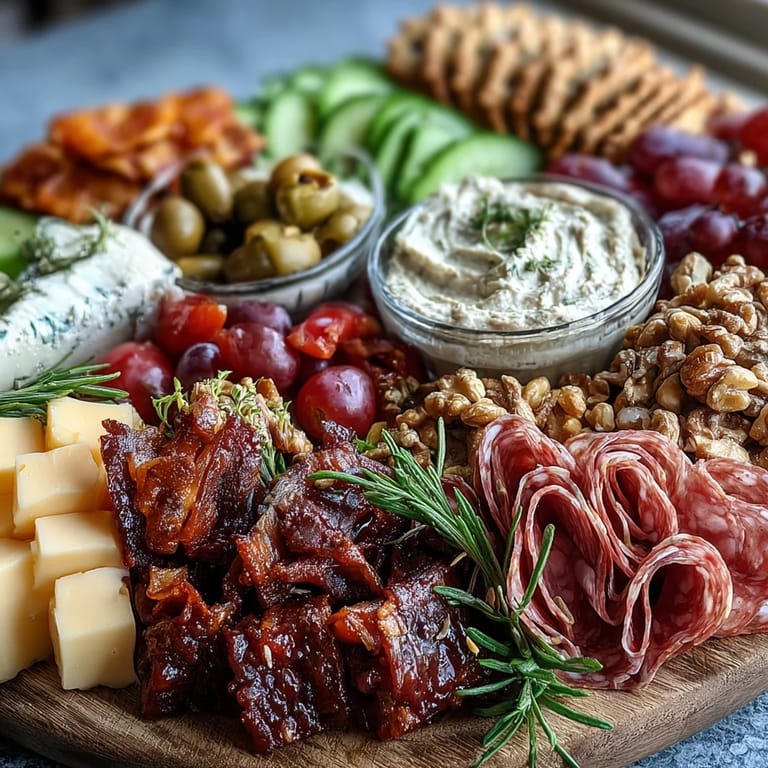
- Arrange your cured meats in loose folds or ruffled rolls across one section of your board—don't lay them flat and tidy, the organic clusters look more generous and inviting. This becomes the visual anchor that says this board is worth getting excited about.
- Anchor with cheese:
- Place your cheese selections around the board with intention, spacing them so guests can navigate without reaching awkwardly across other people. Leave a few inches between each type so the flavors don't visually blur together.
- Nestle the dips:
- Spoon your three dips into small bowls or shallow ramekins and tuck them into natural gaps, preferably toward the edges where people can access them without leaning over everything else. If a dip starts to look lonely, add a small herb sprig next to it.
- Create cracker zones:
- Fan out your crackers, baguette slices, and breadsticks in different sections so there's variety without looking chaotic—think of it like creating small neighborhoods rather than one jumbled pile. Standing the breadsticks upright in one corner creates height and movement.
- Fill with produce:
- Use your colorful fruits and vegetables to fill the gaps between everything else, arranging them in small clusters rather than scattered randomly. The grapes clustered together create visual breaks, while the tomato and pepper slices add pockets of bright color.
- Scatter the treasures:
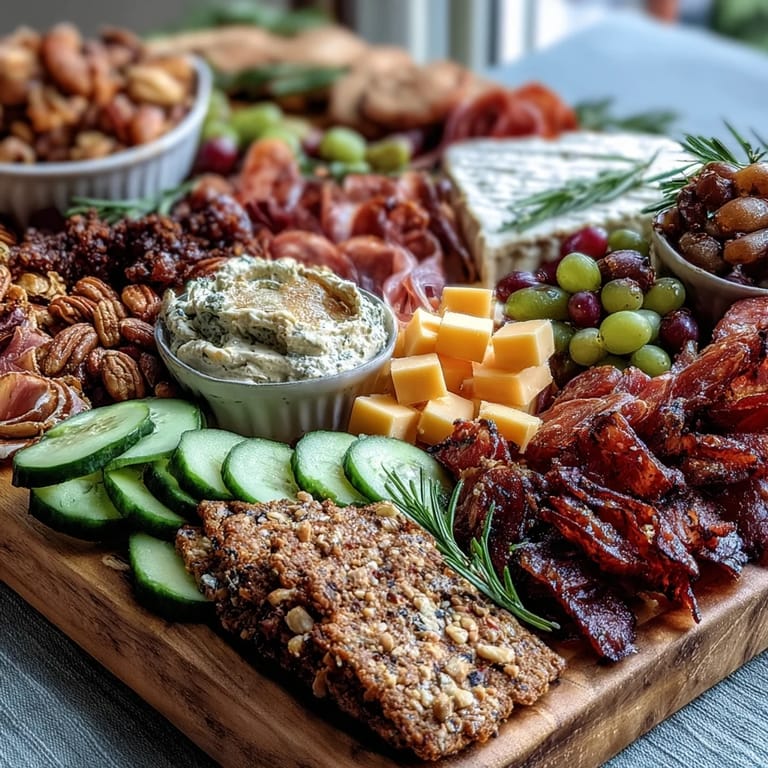
- Distribute nuts, olives, and dried fruits in small clusters around the board—these aren't filler, they're flavor discoveries, so let them breathe and be visible. A cluster of three or four of the same item feels more intentional than individual scattered pieces.
- The finishing garnish:
- Just before serving, scatter a few small sprigs of fresh rosemary or thyme across the top like you're adding the final brushstroke to a painting. This single step transforms it from nice to restaurant-quality.
- Serve and replenish:
- Set it out and watch what disappears first—that tells you what to refresh when the board starts looking depleted. The beauty is you can add things throughout the gathering as needed.
 Pin this
 Later that evening, I found my neighbor sitting on her kitchen floor with the board nearby, finally cracking open those boxes, snacking on cheese and talking to someone she'd just met. That board had somehow done exactly what I hoped—made her new space feel instantly like home, not an empty place waiting to be filled.
The Art of Arrangement
There's honestly no wrong way to arrange a charcuterie board, but there are definitely smarter ways that prevent chaos. I learned this the hard way by making them too symmetrical and careful at first—turns out people are drawn to boards that look abundant and slightly organic, not museum-curated. Think of it like setting a beautiful table: you want everything accessible but with enough visual rhythm that it feels intentional.
Make It Yours With Substitutions
The magic of this board is how adaptable it really is, so don't treat these ingredients as commandments. I've made versions with roasted vegetables instead of raw, with local artisanal cheeses when fancy ones felt more appropriate, with spicy salsa instead of hummus for a completely different mood. What matters is that you understand the balance—you need salty, creamy, fresh, crunchy, and something slightly sweet all represented so nothing tastes monotonous.
Pairing and Serving Suggestions
A crisp white wine like Sauvignon Blanc or a light red like Pinot Noir genuinely transforms how everything tastes, but honestly a sparkling water with fresh lemon works beautifully too if you're not serving alcohol. I've also learned that setting out small plates and napkins nearby prevents the awkward hand-to-mouth multiple-times situation, plus it makes the whole thing feel more intentional and less like snacking from a board. The best part about charcuterie is that it naturally creates lingering and conversation—you're not rushing through a meal, you're grazing and connecting.
- A squeeze of honey drizzled over the cheeses at the last minute adds unexpected sweetness that surprises people.
- Fresh fig jam or apricot preserves in a tiny bowl transforms the whole board into something more dessert-adjacent.
- If serving to vegetarians, make sure your dips are clearly vegetarian-friendly and consider adding marinated artichoke hearts or roasted mushrooms for substance.
 Pin this
 This board works for everything from housewarming parties to quiet evenings with one good friend, and somehow it always feels like you've created something thoughtful. It's proof that the best entertaining isn't about complexity—it's about paying attention to what people actually love.
Recipe Questions
- → What meats work best on this board?
Cured options like prosciutto, salami, smoked ham, and chorizo provide a rich, savory variety that balances well with cheeses and accompaniments.
- → How should the cheeses be prepared?
Slice softer cheeses like brie, cube firm types such as aged cheddar, and crumble blue cheese to create diverse textures and easy access.
- → What dips complement this selection?
Hummus, tzatziki, and roasted red pepper dip offer contrasting flavors that enhance the meats and cheeses while adding moisture.
- → Which fruits add the best freshness?
Red and green grapes, cherry tomatoes, and cucumber slices bring juicy bursts and vibrant colors that enliven the board.
- → Can this spread accommodate dietary preferences?
Yes, you can swap meats or cheeses as needed and include gluten-free crackers to suit various needs without sacrificing flavor.