 Pin this
 Last spring, I was caught between seasons—too warm for heavy soups, too chilly for gazpacho—when a friend stopped by with a bunch of fresh dill from her garden. She casually mentioned a lemon herb soup her grandmother made, and something about the way she described it, with that brightness cutting through the cream of the broth, made me want to recreate it right then. That afternoon turned into one of those happy kitchen accidents where constraint became creativity, and I discovered that sometimes the simplest ingredients tell the loudest story.
I made this for my mom during one of her surprise visits, back when she was still convinced I couldn't cook anything beyond pasta. The way her whole face lit up when she tasted it—that moment when she set down the spoon and smiled—that's when I knew this soup had crossed from just being food into something that mattered. She asked for the recipe three times before I finally wrote it down.
Ingredients
- Olive oil: A generous tablespoon here is your foundation, carrying the flavor of everything that follows without any heaviness.
- Onion: Medium and finely chopped, it breaks down almost completely to create a subtle sweetness that anchors the broth.
- Garlic cloves: Just two, minced fine so they distribute evenly and soften into something almost creamy.
- Carrots and celery: Diced into similar-sized pieces so they soften together, contributing their natural sweetness and body to the broth.
- Vegetable broth: Five cups of low-sodium broth lets the herbs and citrus shine without competing against a salty background.
- Lemon zest: The zest from one lemon gives you that concentrated brightness without extra liquid, hitting you with it before the juice softens the blow.
- Lemon juice: Two lemons worth, squeezed fresh—bottled won't give you that same snap that makes people ask what's in it.
- Fresh herbs: Parsley, dill, and chives should all be truly fresh and chopped just before adding, so you capture their essential oils and flavor.
- Fresh thyme: One tablespoon of leaves if you have fresh; half a teaspoon if dried, as it becomes more concentrated and woody when dried.
- Cooked rice or orzo: Optional, but it transforms this from a clear, brothy soup into something with actual body that sticks with you.
- Salt and pepper: Always taste and adjust at the end—the broth brings its own salt, so hold back until you've added everything else.
Tired of Takeout? 🥡
Get 10 meals you can make faster than delivery arrives. Seriously.
One email. No spam. Unsubscribe anytime.
Instructions
- Warm your oil and soften the onion:
- Heat that tablespoon of olive oil in your pot over medium heat until it shimmers slightly, then add your finely chopped onion. You'll watch it go from opaque white to translucent and a little golden around the edges—that takes about 3 minutes and transforms it into something sweet rather than sharp.
- Build the flavor base:
- Add your minced garlic, diced carrots, and celery all at once, then stir everything together for about 5 minutes. You want to hear that gentle sizzle and smell the vegetables beginning to soften and release their sweetness into the oil.
- Pour in the broth:
- Add all 5 cups of vegetable broth and bring the whole thing to a boil—you'll see bigger bubbles breaking the surface. Once it's boiling, immediately reduce the heat to medium-low and let it simmer gently for 10 minutes, which gives the vegetables time to fully soften.
- Introduce the brightness:
- Stir in your lemon zest first, then all the fresh herbs and lemon juice. This is the moment everything shifts—suddenly it smells alive and bright. Simmer for just 5 more minutes so the herbs infuse without losing their fresh edge.
- Add rice or orzo if you're using it:
- If you want a heartier soup, stir in your pre-cooked rice or orzo and let it warm through for 2 to 3 minutes. This isn't about cooking the grain; it's already cooked, so you're just bringing everything to the same temperature.
- Taste and finish:
- Taste a spoonful and season with salt and pepper until it tastes like the best version of itself. Remember, the broth already carries salt, so go slowly and trust yourself.
 Pin this
 There's something about serving this soup that changes how people gather around your table. A friend once told me she'd been stressed all week, and one spoonful of this made her shoulders drop—she just sat there tasting it quietly, and didn't need to talk for a few minutes. That's when I understood that food can be medicine in the way it gives people permission to slow down.
Making It Your Own
Once you've made this soup once, you'll start seeing variations everywhere. I've swapped the dill for fresh basil on a whim and suddenly it tastes more Mediterranean, leaning into that warmer herb family. On another day I added tarragon instead, which gave it something almost floral and French. The skeleton of this recipe is so steady that you can play with the herbs and discover completely different moods without losing what makes it special.
When You Want It Heartier
The version with rice or orzo is what I make when it needs to be an actual meal rather than a starter. The grains soften in the broth and absorb all that lemon and herb flavor, so each spoonful has something to hold onto. I've also added shredded cooked chicken on evenings when someone needs more protein, and it dissolves into the broth like it was always supposed to be there.
Serving and Storing
This soup tastes best served hot, right after you finish it, when the herbs are still at their brightest and the lemon hasn't faded. It keeps beautifully in the refrigerator for three days, though the herbs will gradually lose their intensity, so I usually make it fresh rather than doing big batches. If you do have leftovers, a fresh squeeze of lemon juice when you reheat it will bring some of that brightness back.
- Serve it with crusty bread for dipping, or alongside a simple green salad to make it feel like a full meal.
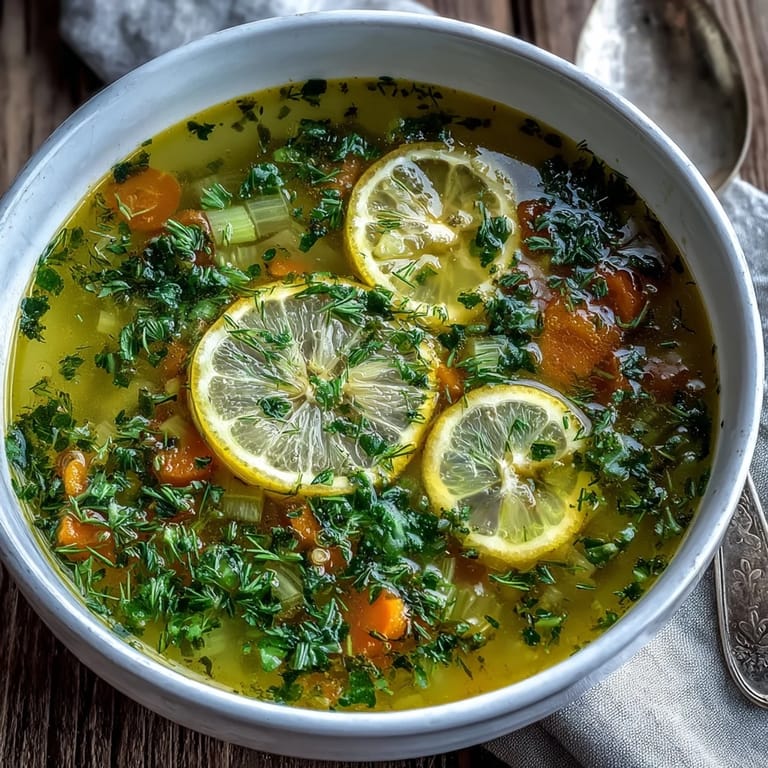
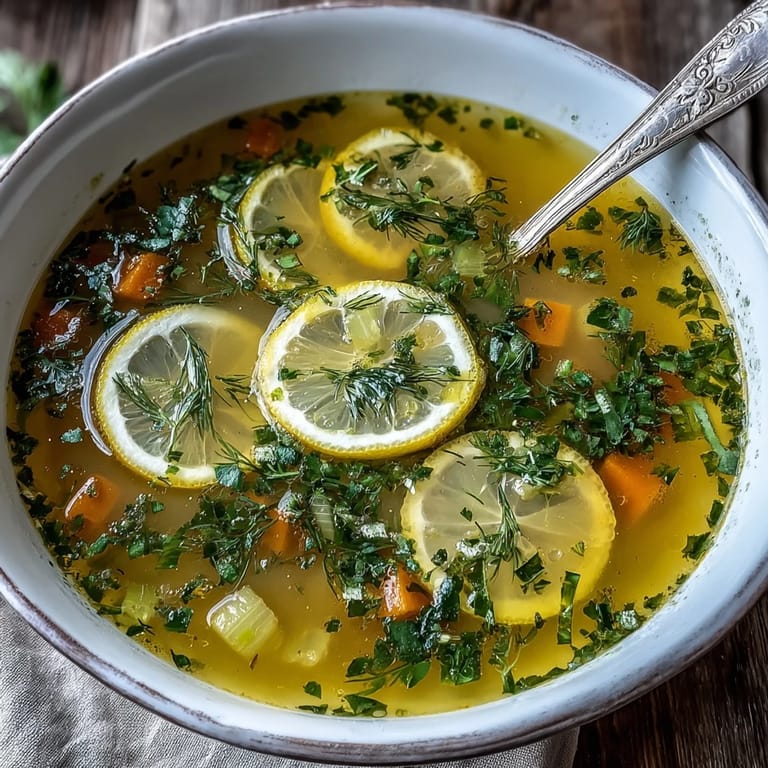
- A thin lemon slice floating on top, or a small handful of fresh herbs scattered across the surface, makes it feel fancy without any extra effort.
- This soup is naturally vegetarian and gluten-free if you use vegetable broth and skip the orzo, or swap it for a gluten-free version.
 Pin this
 Every time I make this soup, I think about that afternoon when my friend brought dill from her garden, and how the smallest moments of connection often lead to the best discoveries in the kitchen. This recipe is proof that you don't need complicated techniques or rare ingredients to create something that nourishes both body and spirit.
Recipe Questions
- → Can I make this soup ahead of time?
Yes, this soup reheats beautifully. Store it in an airtight container in the refrigerator for up to 3 days. The flavors often deepen and improve after resting overnight.
- → What herbs work best in this soup?
The classic combination includes parsley, dill, chives, and thyme. You can substitute basil or tarragon for different flavor profiles. Fresh herbs provide the brightest flavor, but dried thyme works well in a pinch.
- → How can I add more protein?
Stir in shredded cooked chicken during the last few minutes of heating. For a vegetarian protein boost, add white beans or chickpeas when you add the citrus and herbs.
- → Is this soup freezer-friendly?
Yes, freeze it for up to 3 months. However, the herbs may lose some vibrancy. For best results, freeze the base without herbs and add fresh herbs when reheating.
- → Can I use lime instead of lemon?
Yes, lime provides a lovely variation. Use the same quantities of zest and juice. The flavor will be slightly different but equally refreshing and bright.
- → What rice works best?
Short-grain white rice or orzo adds a nice texture. For a healthier option, use brown rice, though it will require longer cooking time. Ensure any grain is fully cooked before adding.