 Pin this
 There's something about assembling a bowl that feels less like cooking and more like creating—no precise timing, no worry about overseasoning, just building layers of color and texture until it looks like something you'd actually want to eat. My first Mediterranean bowl happened by accident on a Tuesday when I had half a container of hummus, some sad vegetables waiting to be used, and absolutely no desire to follow a recipe. What started as kitchen improvisation became my go-to answer whenever someone asked what I eat on busy weeks.
I made this for my sister on an unexpectedly warm spring afternoon when she mentioned being tired of salads but wanting something that wouldn't leave her sluggish at her desk. Watching her build her own bowl, piling on extra olives and feta, drizzling lemon everywhere—that's when I realized this wasn't just convenient, it was genuinely joyful to eat. She now makes it twice a week.
Ingredients
- Quinoa, 1 cup rinsed: This grain is your protein anchor—it has a slightly nutty flavor and fluffy texture when cooked properly, and rinsing it first removes any bitter coating that might otherwise surprise you.
- Zucchini, 1 medium chopped: Choose firm zucchini and chop it into roughly the same size so everything roasts evenly without any pieces turning mushy.
- Red bell pepper, 1 chopped: The sweetness that develops in the oven balances the tanginess of the yogurt and feta beautifully.
- Red onion, 1 small sliced: Roasting mellows the sharp bite, making it almost sweet—this is why raw won't give you the same result.
- Cherry tomatoes, 1 cup halved: They burst slightly during roasting, releasing juice that seasons everything around them, so don't skip this step by using fresh tomatoes raw.
- Olive oil, 2 tablespoons: Use something you actually enjoy tasting, since this isn't being cooked into submission—it matters here.
- Dried oregano and ground cumin, 1/2 teaspoon each: These spices whisper Mediterranean warmth without overwhelming; if you only have one, stick with oregano.
- Salt and black pepper, to taste: Season the roasted vegetables generously—they're your flavor foundation.
- Chickpeas, 1 can drained and rinsed: Rinsing removes excess sodium and that canned flavor; don't skip this even if you're in a rush.
- Kalamata olives, 1/2 cup pitted and halved: Buy quality ones if possible—cheap olives taste like regret, and these are too prominent to disappoint.
- Hummus, 1/2 cup: This acts as your creamy binder, so choose one you'd actually eat with a spoon if no one was watching.
- Greek yogurt, 1/2 cup: The tanginess cuts through richness and adds protein; don't substitute regular yogurt unless you enjoy watery bowls.
- Feta cheese, 1/2 cup crumbled: Crumble it yourself if possible—pre-crumbled sometimes tastes dusty and lacks that salty, creamy punch.
- Fresh parsley, 1/4 cup chopped: This feels like a garnish but tastes like brightness; add it right before serving so it stays vibrant.
- Lemon wedges, for serving: Squeeze generously just before eating—the acid is what makes everything taste alive.
Tired of Takeout? 🥡
Get 10 meals you can make faster than delivery arrives. Seriously.
One email. No spam. Unsubscribe anytime.
Instructions
- Heat your oven and prep the vegetables:
- Preheat to 425°F while you chop everything into roughly bite-sized pieces—nothing needs to be perfect here, just consistent so it roasts at the same speed.
- Season and roast:
- Toss your vegetables with olive oil, oregano, cumin, salt, and pepper on a baking sheet, making sure everything gets a light coating. Spread them in a single layer so they actually caramelize instead of steam.
- Stir and finish roasting:
- About halfway through the 20-25 minute roast, give everything a gentle stir and listen for that crackling sound—that's how you know things are browning beautifully. When the edges turn slightly darker and the vegetables soften, they're ready.
- Cook your quinoa:
- While vegetables roast, combine rinsed quinoa with water in a saucepan, bring to a boil, then lower heat to barely a simmer and cover. After 15 minutes, turn off the heat and let it sit covered for 5 more—this makes it fluffy instead of mushy.
- Warm the chickpeas:
- In a separate skillet over medium heat, gently warm your drained chickpeas for just 2-3 minutes with a pinch of salt—you're just taking off the chill, not creating a situation.
- Assemble your bowls:
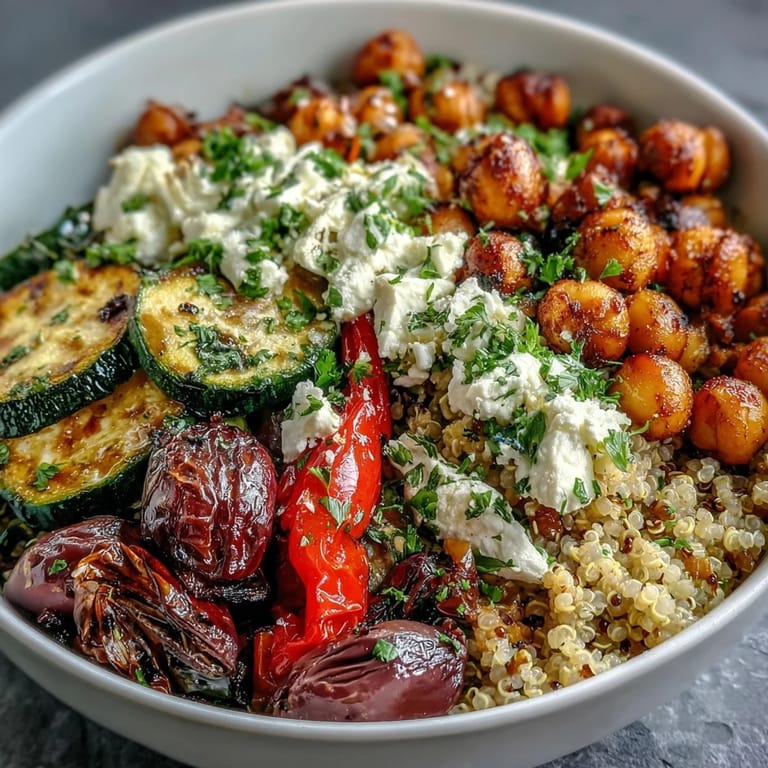
- Divide fluffy quinoa among bowls, then arrange roasted vegetables, warm chickpeas, olives, hummus, yogurt, and feta on top like you're creating edible art. There's no wrong way to arrange this.
- Finish and serve:
- Scatter fresh parsley over everything, place lemon wedges on the side, and encourage people to squeeze them generously—this is your final flavor adjustment and it makes all the difference.
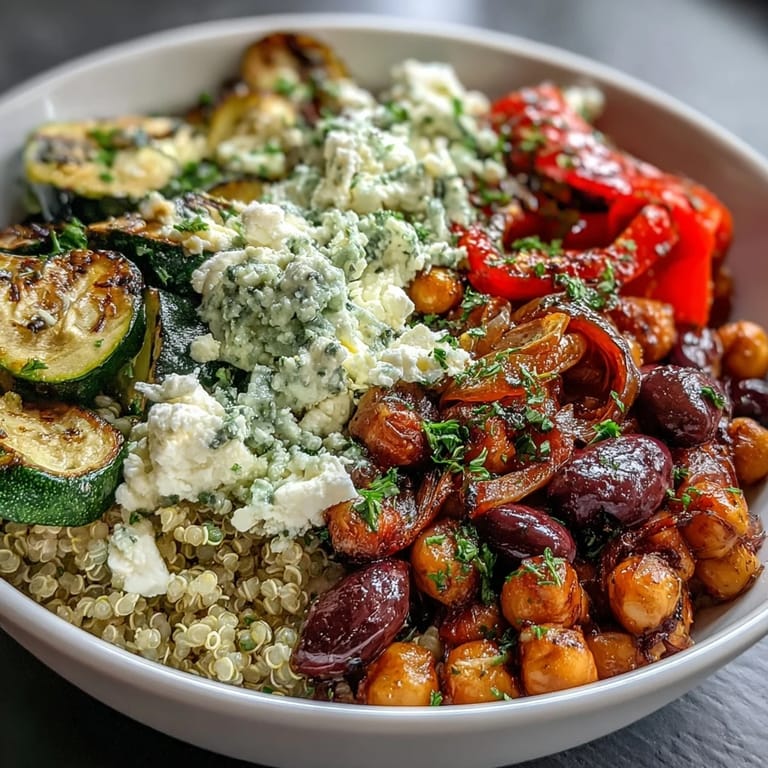 Pin this
 The best part of this bowl isn't any single ingredient—it's that moment when someone who usually skips vegetables actually asks for seconds because they didn't realize they were eating something healthy. That's when you know you've made something worth repeating.
Making This Bowl Your Own
The beauty of a Buddha bowl is that it's more framework than strict recipe, so adapt freely based on what's in season or what you're craving. In summer, I load it with extra raw tomatoes and cucumber; in winter, I add roasted sweet potato and skip some of the fresh elements. The structure stays the same—grain, roasted vegetables, protein, creamy element, fresh finishes—but your life circumstances get to dictate the details.
Timing and Prep Strategy
The entire bowl comes together in about 50 minutes, but most of that is passive—your oven is doing the work while you cook quinoa or chop herbs. On Sunday afternoons, I often make components separately so I can grab them throughout the week, which means mornings feel less frantic. You can roast vegetables the night before, cook quinoa in advance, and keep your toppings prepped and ready—assembly takes maybe five minutes when everything's ready.
Flavor Combinations That Work
Once you understand that this bowl needs a grain, something warm and roasted, something legume-based for substance, something creamy, and something bright, you can substitute almost anything and it'll still taste right. My friend who dislikes zucchini uses broccoli instead, another swaps feta for goat cheese, and neither version is wrong—they're just their versions.
- Try adding roasted sweet potato cubes for earthiness and natural sweetness that plays beautifully with the yogurt.
- Grill some halloumi cheese or add crispy chickpeas roasted separately if you want extra textural contrast.
- Fresh mint instead of parsley, pomegranate seeds instead of tomatoes, or tahini drizzle instead of hummus all work depending on your mood.
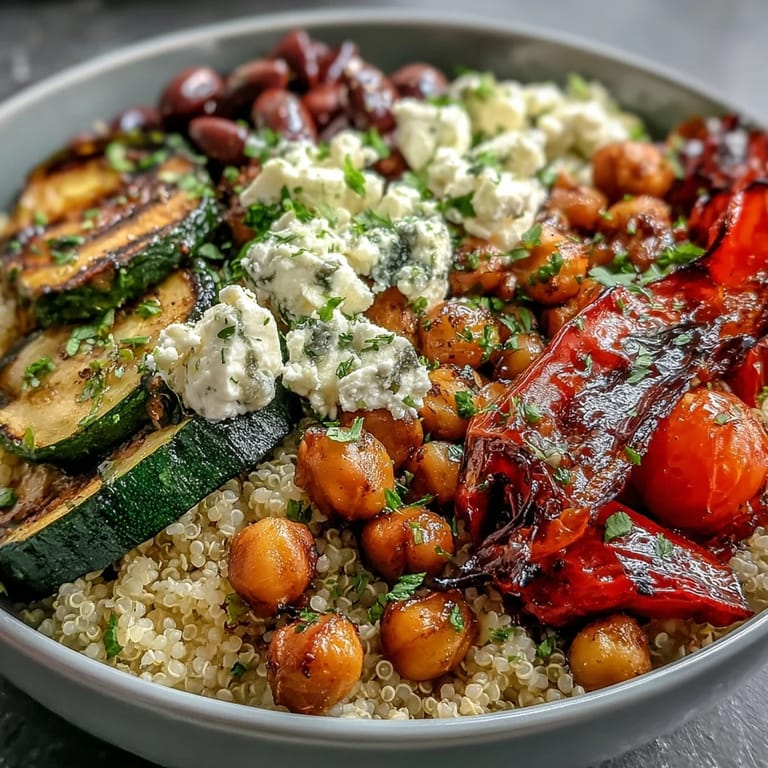 Pin this
 This bowl taught me that sometimes the best meals aren't the ones that require technique or fancy ingredients—they're the ones that make you actually look forward to eating well. That's the whole point, really.
Recipe Questions
- → Can I make this bowl vegan?
Yes, simply omit the feta cheese and substitute the Greek yogurt with a plant-based alternative. The hummus provides plenty of creaminess and flavor.
- → How long does this keep in the refrigerator?
Store components separately in airtight containers for up to 5 days. The quinoa and roasted vegetables reheat well, while fresh toppings should be kept cold.
- → What other grains can I use?
Farro, brown rice, or even bulgur work beautifully as substitutes for quinoa. Adjust cooking time accordingly depending on your chosen grain.
- → Can I add protein?
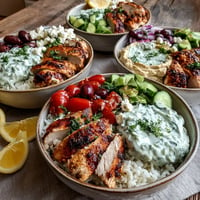
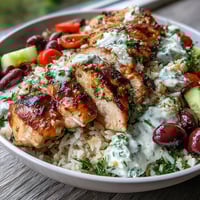
Grilled chicken, shrimp, or even baked salmon make excellent additions. Simply prepare your protein separately and arrange it in the bowl when assembling.
- → What vegetables work best for roasting?
Aside from the listed vegetables, eggplant, sweet potatoes, or cauliflower roast beautifully and complement the Mediterranean flavors perfectly.
- → Is this suitable for gluten-free diets?
Yes, quinoa is naturally gluten-free. Just ensure all other ingredients, especially packaged items like hummus, are certified gluten-free if needed.