 Pin this
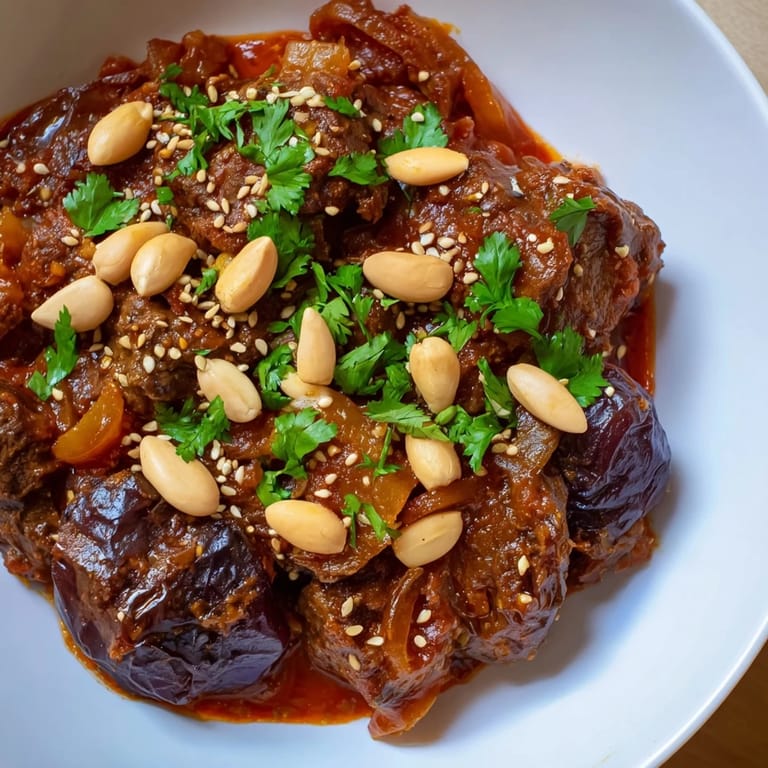
 The first time I truly understood Moroccan cooking wasn't from a cookbook, but from my neighbor who'd spent years in Marrakech. She invited me over on a cold winter evening, and as soon as I walked into her kitchen, the air hit me—warm, spiced, unmistakably alive. That tagine, with its dark, glossy sauce clinging to tender lamb and jewel-like prunes, changed how I thought about slow cooking forever. Now whenever I make this, I'm transported back to that moment, the smell of cinnamon and cumin filling my own kitchen the way it filled hers.
I served this for the first time to friends who'd been skeptical about "fancy stew," and watching their faces when they tasted it—that moment when surprise turns to genuine delight—was worth every minute of preparation. One friend actually set down her spoon between bites, shaking her head in disbelief that lamb and prunes could work together so seamlessly. That's when I knew this recipe wasn't just good; it was the kind of dish that lingers in people's memories.
Ingredients
- Lamb shoulder, 1.5 kg cut into 2-inch cubes: This cut has just enough marbling to become impossibly tender during the long braise, and the fat renders into the sauce, creating richness you can't fake with leaner cuts.
- Olive oil, 2 tbsp: Use good quality oil for browning the meat—it's the foundation of every bit of flavor that follows.
- Onions, 2 large finely chopped: They dissolve almost completely into the sauce, creating body and natural sweetness that balances the spices.
- Garlic, 4 cloves minced: Mince it fine so it melds seamlessly rather than creating harsh little pockets.
- Fresh ginger, 1-inch piece grated: The fresh stuff makes all the difference—it adds brightness that ground ginger simply can't match.
- Ground cinnamon, 1½ tsp: This is your most generous spice; it's the voice that carries through the entire dish, warm and slightly sweet.
- Ground cumin, 1 tsp: Earthy and grounding, it keeps the sweetness from becoming cloying.
- Ground coriander, 1 tsp: Often overlooked, but it adds a subtle citrus note that lifts everything.
- Ground turmeric, 1 tsp: Beyond the color, it brings an almost mineral depth that makes the dish feel complete.
- Ground black pepper, ½ tsp: Don't skip this—it adds a gentle heat that rounds out the flavor profile.
- Ground allspice, ½ tsp: A pinch of warmth that echoes Christmas and comfort.
- Ground ginger, ½ tsp: This doubles down on the ginger note in a way that feels intentional rather than redundant.
- Saffron threads, 1 pinch optional: If you have it, add this—it's the luxury ingredient that whispers elegance into every bite.
- Beef or lamb broth, 400 ml: Use homemade if you can; it transforms the whole dish into something that tastes like you've been simmering it for days.
- Canned chopped tomatoes, 400 g: They add acidity and body, cutting through the richness and keeping everything balanced.
- Honey, 2 tbsp: This isn't just sweetness—it's the glue that binds all the flavors into one cohesive, almost glossy sauce.
- Pitted prunes, 200 g: They plump up during cooking and burst with concentrated sweetness that contrasts beautifully with the savory spices.
- Whole blanched almonds, 80 g: Toast them yourself right before adding them—that moment when they release their aroma is worth every extra minute.
- Toasted sesame seeds, 2 tbsp: A garnish that adds textural contrast and a subtle nuttiness that feels unexpectedly perfect.
- Fresh cilantro or parsley, chopped: The brightness here is essential—it lifts the dish at the very last moment and makes it feel alive.
- Salt, to taste: Don't undersalt; this dish needs salt to fully express itself.
Tired of Takeout? 🥡
Get 10 meals you can make faster than delivery arrives. Seriously.
One email. No spam. Unsubscribe anytime.
Instructions
- Set the stage:
- Preheat your oven to 160°C (325°F), or if you're using a stovetop, just have your pot ready and your heat turned low for later. The gentle heat is what transforms tough lamb into something that falls apart at the hint of a spoon.
- Brown the lamb:
- Heat 1 tbsp of olive oil in a large, heavy pot over medium-high heat until it shimmers. Working in batches so you don't crowd the pan, brown the lamb cubes on all sides until they develop a deep golden crust—this takes about 3-4 minutes per batch. Don't rush this step; that crust is flavor.
- Build your base:
- Add the remaining olive oil, then the onions, garlic, and fresh ginger to the pot. Stir and let them soften for about 5 minutes, until the kitchen starts to smell like something's really happening. The onions should be translucent and the garlic should be softened but not browned.
- Wake up the spices:
- Sprinkle all your spices and saffron threads (if using) into the pot and stir constantly for about 1 minute. You'll feel the spices release their essential oils—that aroma is your signal that everything's ready for the next step.
- Bring it together:
- Return the browned lamb to the pot, add the chopped tomatoes, broth, and honey, then stir everything until the lamb is coated and the mixture comes to a gentle simmer. Don't let it boil hard; you want a barely-there bubble every few seconds.
- Into the oven (or onto low heat):
- Cover the pot and transfer it to your preheated oven, or cover it and reduce the stovetop heat to low. Either way, you're looking at 1 hour 30 minutes of gentle, patient cooking where the lamb slowly becomes tender and the sauce develops depth.
- Toast your almonds:
- About halfway through the cooking time, heat a dry skillet over medium heat and add the whole almonds. Shake the pan occasionally and watch them carefully—in about 2-3 minutes, they'll turn golden and fill the air with their warm, nutty aroma. The moment they smell incredible, they're done; transfer them to a plate so they don't keep cooking.
- Add the finishing fruits:
- After the initial 1 hour 30 minutes, carefully remove the pot from the oven (or lift the lid if you're on the stovetop—the steam will be hot). Stir in the prunes and toasted almonds, cover again, and cook for another 30-45 minutes until the lamb is so tender it threatens to fall apart and the sauce has thickened into something glossy and deeply flavorful.
- Taste and adjust:
- Remove the pot from heat and taste the sauce. Add salt until it tastes like home, then add more if it still needs it—Moroccan food isn't shy about seasoning.
- Present it with pride:
- Ladle the tagine into a serving dish, then sprinkle the sesame seeds and fresh cilantro or parsley over the top. Serve it hot, alongside couscous, saffron rice, or crusty bread that can soak up every precious drop of sauce.
 Pin this
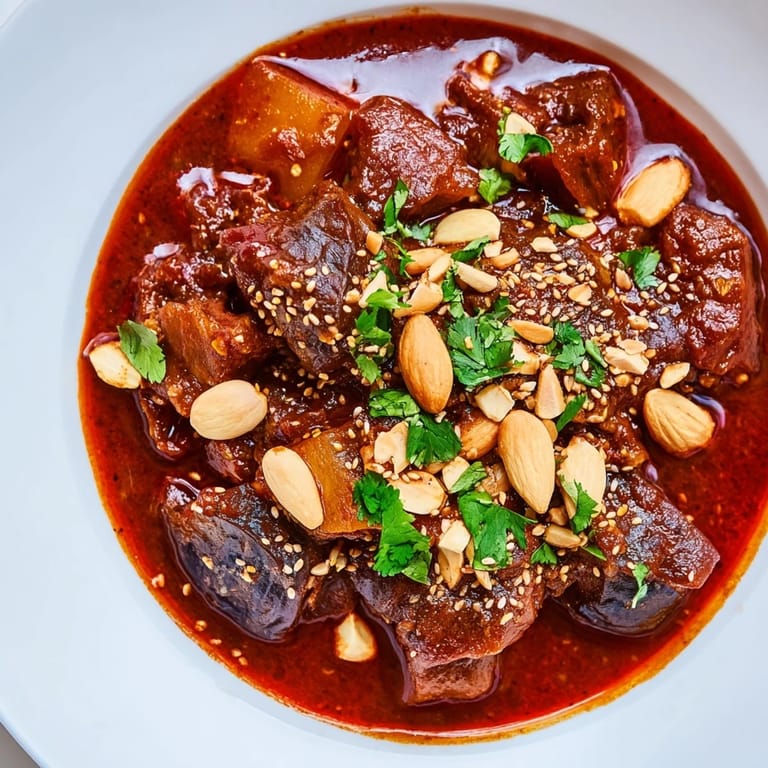
 There was a moment, about three-quarters of the way through cooking, when I lifted the lid and the steam cleared to reveal prunes that had plumped up like tiny rubies nestled in the dark, aromatic sauce. I remember thinking this wasn't just dinner anymore—it was an experience, a story I'd tell people about the day I learned that sweet and savory weren't opposites but partners. That's when tagine stopped being a recipe and became something I wanted to share with everyone I cared about.
Why Moroccan Spices Work This Way
Moroccan spice blends aren't designed to create a single dominant flavor; instead, they layer complexity. The cinnamon and allspice provide warmth, the cumin and coriander offer earthiness, and the turmeric and ginger add brightness. When combined with the natural sweetness of onions, tomatoes, and honey, these spices create a flavor experience that feels balanced rather than aggressive. I learned this the hard way—my first attempt with individual spices dumped in without thought tasted chaotic. Now I understand that each spice is there for a reason, and removing even one creates an imbalance you can taste immediately.
The Prune-and-Almond Partnership
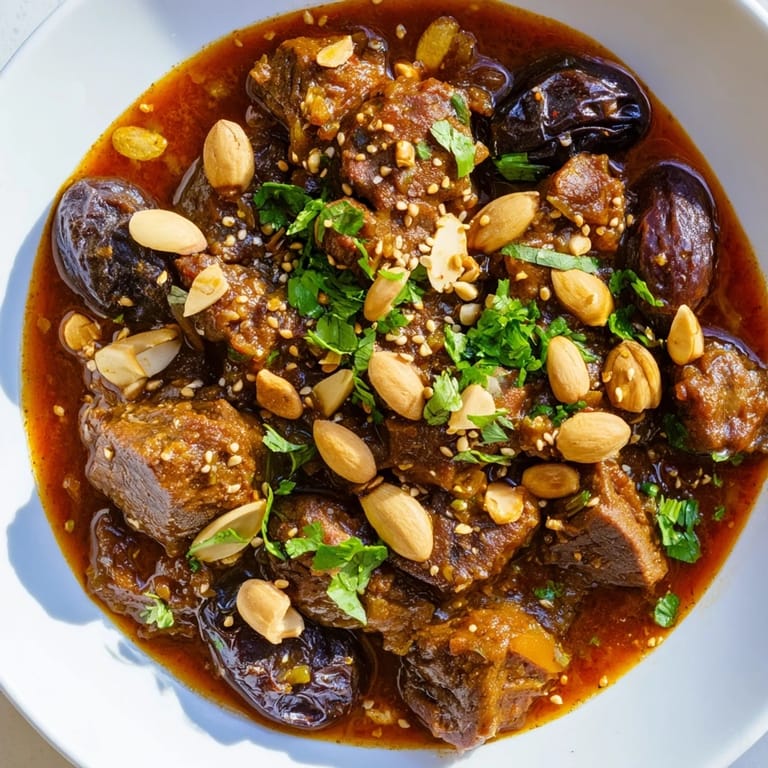
The moment I understood why prunes and almonds belong in this dish together was when I tasted how they transform during cooking. Prunes soften and release their concentrated sweetness, almost melting into the sauce, while almonds stay firm enough to provide texture and nuttiness. It's not just about adding ingredients; it's about how they interact with the lamb and the sauce. Together, they create contrast—soft against firm, sweet against savory—in every single spoonful.
Serving and Pairing Suggestions
This tagine is flexible enough to pair with several sides, each bringing something different to the table. I've learned that the dish's intensity actually demands something to balance it—couscous absorbs the sauce beautifully, saffron rice echoes the warmth of the spices, and crusty bread becomes a tool for capturing every last drop. Beyond the plate, think about what to drink: Moroccan red wine complements the spices, or mint tea afterward feels like the perfect conclusion to a meal this rich.
- Serve the tagine as hot as possible so the spices feel vibrant and the sauce clings to everything properly.
- Don't be shy about leftover sauce—it keeps for days and tastes even better the next day when all the flavors have melded.
- If you find the sauce is too thick, thin it with a bit of broth; if it's too thin, uncover the pot for the final 10 minutes to let some liquid evaporate.
 Pin this
 This tagine has become my go-to dish for moments when I want to cook something that feels both generous and intimate—food that says I've taken time for you, that I've thought about what would make you happy at the table. Every time I make it, I'm reminded that the best recipes aren't just instructions; they're invitations to slow down and savor.
Recipe Questions
- → What cut of lamb is best for this dish?
Lamb shoulder cut into cubes works best for slow cooking, becoming tender and flavorful over time.
- → Can I use dried apricots instead of prunes?
Yes, dried apricots can be substituted for prunes to provide a different but equally sweet flavor profile.
- → How do I toast almonds properly?
Toast almonds in a dry skillet over medium heat for 2–3 minutes, stirring frequently until golden and fragrant.
- → What sides pair well with this dish?
Serve with steamed couscous, saffron rice, or crusty bread to soak up the rich sauce.
- → Can this dish be prepared on the stovetop?
Yes, it can be cooked in a heavy-bottomed pot or tagine on low heat, slowly simmering until the lamb is tender.