 Pin this
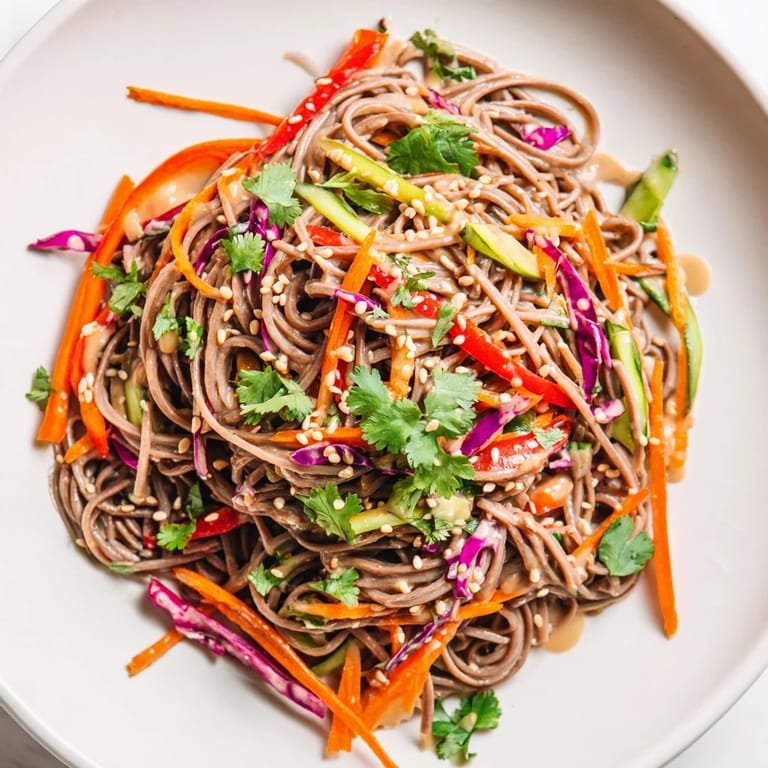
 There's something about slurping cold noodles on a sweltering afternoon that feels like you've figured out life. I discovered soba noodles by accident one summer when my usual pasta craving collided with an empty pantry and a half-jar of peanut butter. The buckwheat noodles had this earthy, nutty quality that made everything taste more interesting, and the dressing—silky, tangy, warm with ginger—turned a simple lunch into something I couldn't stop making.
I made this for a friend's spontaneous picnic last July, and watching people's faces light up when they tasted it—that moment when they went back for thirds without asking—taught me that the best meals aren't always complicated. She kept the recipe propped on her kitchen counter for months after.
Ingredients
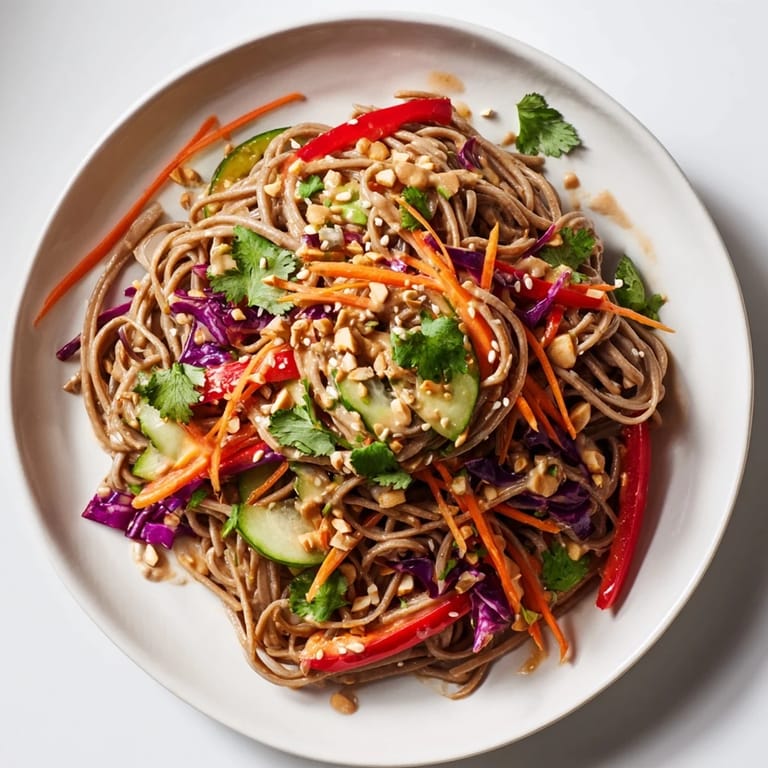
- Soba noodles (250 g / 9 oz): The star ingredient—buckwheat noodles with an earthy flavor and satisfying chew that holds up beautifully when chilled.
- Carrot (1 medium, julienned): The sweetness and crunch create textural contrast; julienne thinly so they cook slightly from residual heat.
- Cucumber (1 small, sliced into thin strips): Keeps everything fresh and cool; add just before serving if you're worried about sogginess.
- Red bell pepper (1, thinly sliced): Adds brightness and a slight peppery sweetness that plays well with the sesame.
- Spring onions (2, finely sliced): A whisper of onion flavor without overwhelming the dish; use the white and pale green parts for mildness.
- Red cabbage (1 cup / 50 g, shredded): It won't wilt and brings gorgeous color plus a subtle sweetness that rounds out the dressing.
- Peanut butter (3 tbsp smooth): The creamy backbone of the dressing; use the smooth kind so it emulsifies without grittiness.
- Soy sauce (2 tbsp): Umami depth that ties everything together; don't skip it.
- Rice vinegar (1 tbsp): Brightens the whole dish without the harshness of regular vinegar.
- Toasted sesame oil (1 tbsp): Non-negotiable—regular sesame oil tastes raw and floral; toasted gives you that nutty richness.
- Maple syrup or honey (1 tbsp): A touch of sweetness that balances the saltiness and brings harmony to the dressing.
- Fresh ginger (1 tsp, grated): Sharp and clean; grate it fresh right before mixing for maximum punch.
- Garlic clove (1 small, minced): A single clove is enough—too much overpowers everything else.
- Water (1–2 tbsp): Adjust the consistency of the dressing to your preference; some like it thick, others prefer it pourable.
- Toasted sesame seeds (2 tbsp for garnish): Toast them yourself if you can; the flavor difference is worth the two minutes.
- Fresh cilantro (2 tbsp, chopped): Herbaceous and bright; cilantro lovers won't be shy about adding extra.
- Red chili (1 small, thinly sliced, optional): For heat; I sometimes add it, sometimes skip it depending on my mood and who I'm feeding.
- Lime wedges: Essential for a final squeeze of acid that lifts everything on the plate.
Tired of Takeout? 🥡
Get 10 meals you can make faster than delivery arrives. Seriously.
One email. No spam. Unsubscribe anytime.
Instructions
- Cook and cool the noodles:
- Bring a pot of water to a rolling boil and cook the soba noodles for 5–7 minutes until they're tender but still have a slight firmness. Drain them and run them under cold water for a full minute, stirring gently with your fingers to remove the starch—you'll feel them go from sticky to slippery.
- Build the dressing:
- In a large mixing bowl, whisk the peanut butter with soy sauce, rice vinegar, sesame oil, maple syrup, ginger, and garlic until smooth. Add water one tablespoon at a time and whisk until it's creamy and pourable, not thick like a paste.
- Toss everything together:
- Add the cooled noodles and all the vegetables to the bowl with the dressing. Use two spoons or your hands to toss everything thoroughly, making sure every noodle gets coated in that silky sauce and no vegetables hide at the bottom.
- Plate and garnish:
- Divide the salad among bowls and top generously with sesame seeds, cilantro, and chili slices if you're using them. Serve with lime wedges on the side so everyone can squeeze and adjust the flavor to their liking.
 Pin this
 There's a quiet moment when you're standing in front of a cold noodle bowl, steam from the kitchen still clinging to you, and you take that first bite—crunchy, cold, complex, satisfying. That's when food stops being about hunger and becomes about the small pleasure of doing something right.
Adapting This Salad to What You Have
The beauty of this salad is that it's forgiving. Swap vegetables based on the season or what's in your crisper drawer—daikon radish, snap peas, shredded beets, even thinly sliced apple work beautifully. The dressing is the constant, and it's flexible too: tahini instead of peanut butter leans sesame-forward, while a touch of sriracha adds heat without changing the character of the dish.
Making This a Proper Meal
On its own, this salad is refreshing and satisfying, but add protein if you want it to anchor a dinner plate. I've stirred in grilled tofu cubes that absorbed all that dressing, scattered shredded rotisserie chicken across the top, or boiled edamame stirred right in. Even a soft-boiled egg cracked over the top turns it into something that feels complete and nourishing.
Storage and Keeping
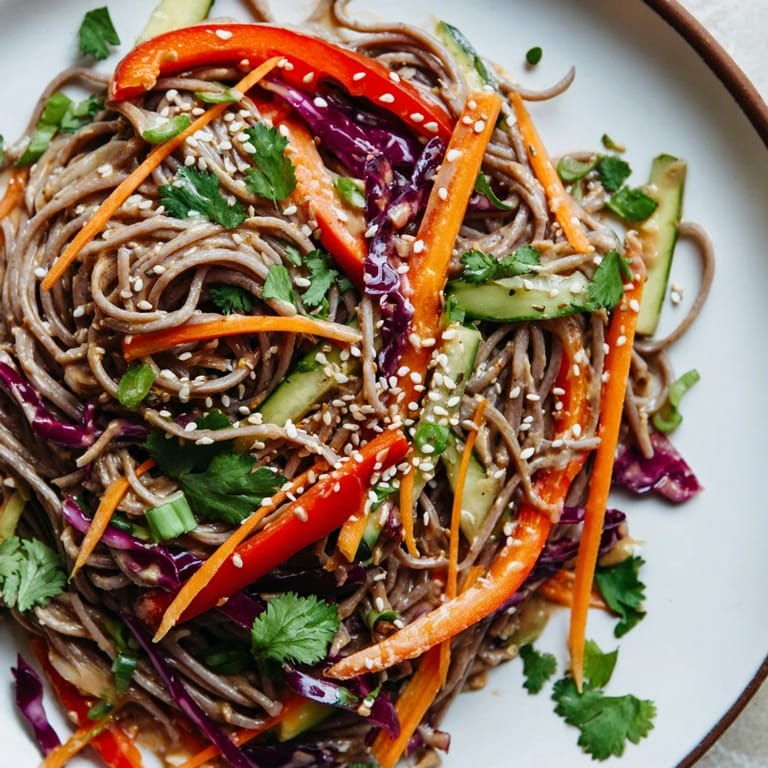
This salad actually improves the next day, once the flavors have had time to settle and mingle. Keep it in a sealed container in the fridge for up to two days, and if it's looking a little dry when you're ready to eat it again, just squeeze some lime over the top and toss it around. The cold salad world is one where leftovers aren't sad—they're strategic.
- Store the dressing separately if you're meal prepping, and toss everything together just before eating for maximum crunch.
- Keep the sesame seeds and cilantro off the salad until you're ready to serve so they don't get soggy.
- A quick toss with a fork when you reheat it from the fridge brings back all the texture and prevents clumping.
 Pin this
 This salad has become my go-to answer when someone asks what I'm making for lunch. It's humble, it's generous, and it tastes like you've been thinking about eating well all along.
Recipe Questions
- → How should the soba noodles be cooked?
Cook soba noodles according to the package, usually 5-7 minutes, then rinse under cold water to remove excess starch and cool them.
- → What can be used instead of peanut butter in the dressing?
To avoid nuts, substitute peanut butter with tahini for a similar sesame flavor and creamy texture.
- → How to make the dressing smooth and pourable?
Whisk the dressing ingredients together, adding water gradually, one tablespoon at a time, until the desired consistency is reached.
- → Can this salad be prepared ahead of time?
Yes, it can be stored in the fridge for up to 2 days; refresh with a squeeze of lime before serving for best flavor.
- → What variations can add more protein?
Adding edamame, grilled tofu, or shredded chicken increases protein content for a more filling dish.
- → Is this suitable for gluten-free diets?
Use 100% buckwheat soba noodles and substitute soy sauce with tamari to make this dish gluten-free.