 Pin this
 The first time I really understood paella was at a beachside restaurant in Valencia, where the cook let me peek into the kitchen and watch the saffron threads bloom in golden stock. There's something almost magical about that moment when you pour the liquid into the pan and hear it sizzle against hot oil and rice, filling the air with smoke and the scent of something ancient and celebratory. I went home determined to recreate that feeling, and after a few attempts—and one memorable disaster where I kept stirring when I shouldn't have—I finally got it right. Now this dish is my shortcut to making ordinary gatherings feel like a feast.
I made this for a small birthday dinner last spring, and halfway through cooking, my neighbor stopped by. The aroma pulled her right into my kitchen, and she ended up staying for dinner—something about the way the saffron and smoke carried down the hallway was impossible to ignore. That night taught me that paella isn't just food; it's an invitation that travels through the air.
Ingredients
- Saffron threads: These tiny crimson strands are worth their weight in gold—they give paella its soul and that unmistakable golden hue. Steep them in hot stock for at least 5 minutes to unlock their fragrance.
- Short-grain paella or Arborio rice: Regular rice falls apart; these varieties hold their shape and absorb liquid like they're meant to, creating that perfect tender-but-toothy texture.
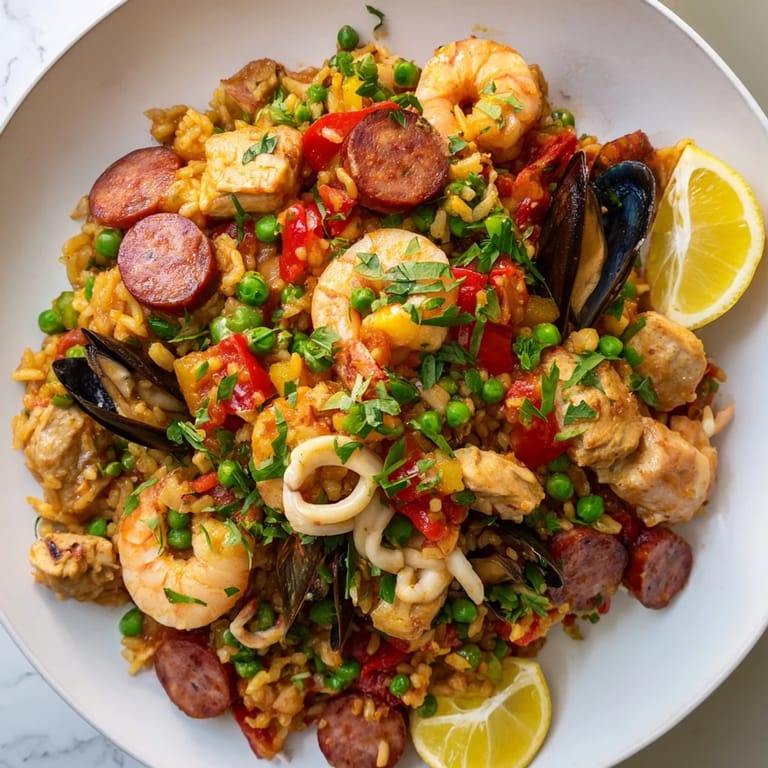
- Chorizo sausage: Sliced and browned first, it renders its spiced fat into the pan, seasoning everything that comes after with smoky, paprika-forward flavor.
- Chicken thighs: Dark meat stays juicier than breasts during the long, dry simmer; bite-sized pieces cook through without drying out.
- Shrimp, mussels, and calamari: Layer these proteins so they finish cooking at the same moment rice reaches that perfect consistency—timing is everything here.
- Smoked paprika: Use Spanish pimentón if you can find it; the smokiness adds depth that regular paprika simply cannot match.
- Bell peppers, onion, and tomatoes: These aren't just vegetables—they create the soffritto base that carries all the other flavors forward and adds natural sweetness and body to the dish.
- Fresh parsley and lemon: Both brighten the finished dish at the very last moment, cutting through the richness with acid and herbaceous freshness.
Tired of Takeout? 🥡
Get 10 meals you can make faster than delivery arrives. Seriously.
One email. No spam. Unsubscribe anytime.
Instructions
- Awaken the saffron:
- Pour a splash of hot stock over the threads in a small bowl and let them sit while you prep everything else. They'll bloom into deep gold, releasing their signature earthy, floral scent.
- Crisp the meat:
- Heat oil in your paella pan over medium heat and brown the chorizo and chicken until their edges turn golden and crispy. This step builds flavor—don't rush it or skip it.
- Soften the vegetables:
- Once the meat is out, add onion and peppers to the same oily pan and let them soften for several minutes. They'll begin to caramelize at the edges, adding natural sweetness that balances the savory elements later.
- Build the base:
- Stir in garlic and tomatoes, cooking just long enough for the raw edge to disappear. You're creating an aromatic foundation that will flavor every grain of rice.
- Toast the rice:
- Add rice and paprika, stirring constantly to coat every grain with the oil and spice. This toasting step, though brief, prevents the rice from becoming mushy and adds a subtle nutty depth.
- Combine everything:
- Return the meat, add all your stock along with the saffron and its soaking liquid, season, and stir gently. Bring to a boil—you'll see the liquid bubble up vigorously—then immediately lower the heat.
- The sacred simmer:
- Here's where restraint matters: keep the heat low and do not stir. The bottom of the pan should sizzle gently, creating a thin, crispy crust called socarrat that's treasured in Valencia. Fifteen minutes is your target.
- Finish with seafood:
- When the rice is mostly tender and the liquid is nearly absorbed, nestle shrimp and mussels into the surface and scatter peas on top. Cover loosely with foil—the steam will finish cooking the seafood in about 10-12 minutes.
- Rest and release:
- Remove from heat, keep covered, and wait 5 minutes. This resting period lets the rice absorb any remaining liquid and allows mussels to finish opening. Discard any that stubbornly refuse.
 Pin this
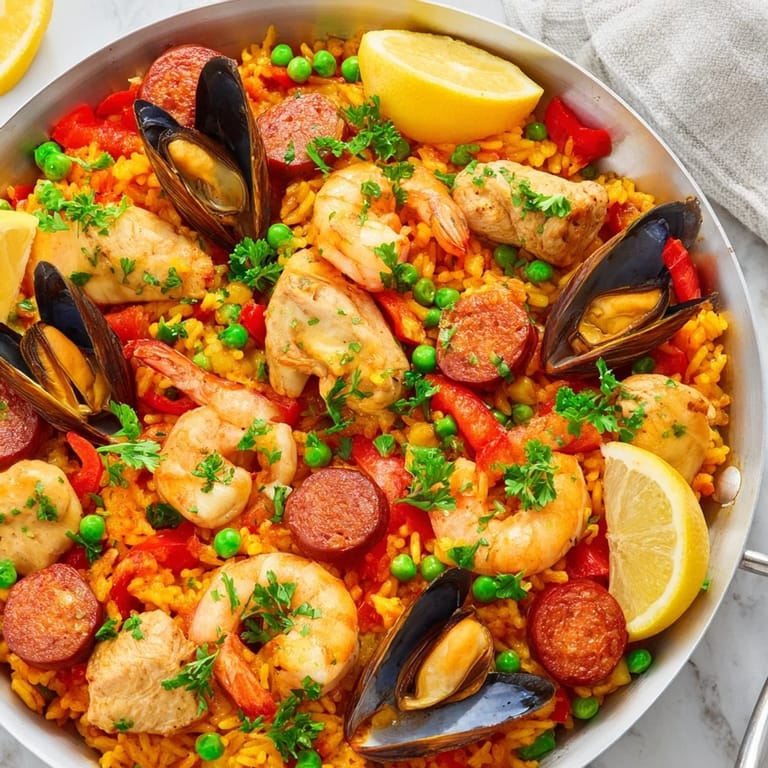
 What I love most about paella is that moment when you lift the foil off and steam rises up, and everyone at the table inhales at once. It's the only dish I know that creates pure theater just from being finished.
Choosing Your Seafood
The beauty of paella is flexibility—use whatever looks freshest at the market that day. Clams and scallops work beautifully alongside or instead of mussels; jumbo shrimp are more forgiving than tiny ones. If calamari intimidates you, skip it without guilt. What matters is that each piece is fresh and that you're not overcrowding the pan, which would lower the temperature and throw off your timing.
Making It Your Own
Spanish cooks are fiercely territorial about their paella recipes, but that's precisely why you should feel free to adapt. Vegetarians can omit all meat and seafood, then add artichoke hearts, green beans, or chickpeas for substance and texture. Some people swear by a splash of white wine stirred in after the tomatoes. I've seen home cooks add roasted red peppers, sun-dried tomatoes, or even a pinch of cayenne for heat. The core technique stays the same—respect the rice, trust the sizzle, and let the pan do the work.
Wine Pairing and Serving
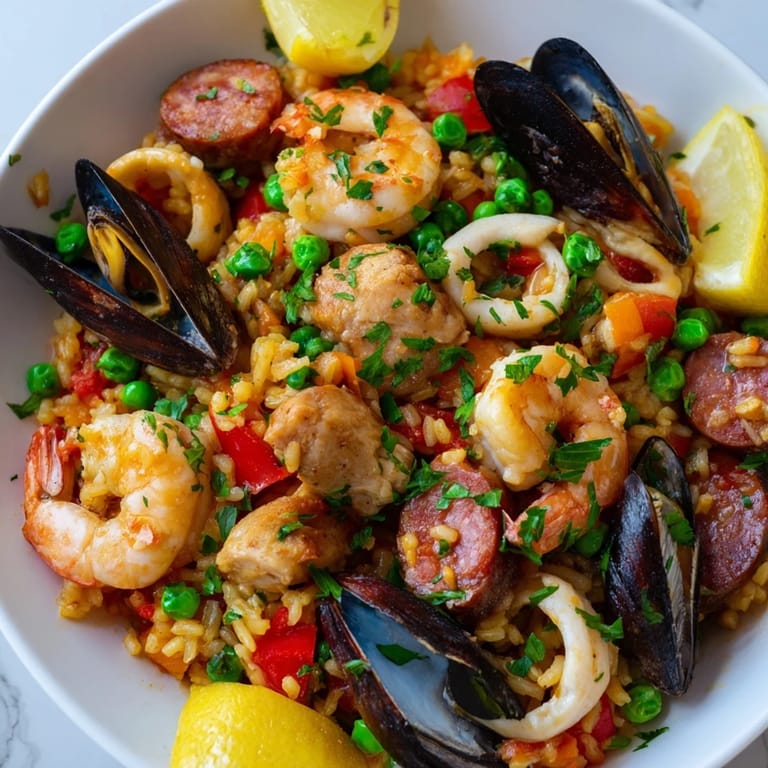
Paella deserves a crisp, unoaked white wine like Spanish Albariño or Verdejo that cuts through the richness without competing. The acidity in wine mirrors the lemon wedges served alongside; together they brighten each bite and keep your palate refreshed across a leisurely meal. Serve the paella straight from the pan if you're cooking for friends—there's something more generous and inviting about that gesture than plating individual portions.
- Offer lemon wedges at the table so people can add their own brightness.
- A simple green salad dressed with sherry vinegar balances the richness beautifully.
- Save any crusty socarrat pieces for lucky guests who reach them first—they're edible treasure.
 Pin this
 Every time I make paella, I'm transported back to that Valencia kitchen, watching steam rise and hearing the sizzle of something alive and generous. It's a dish that rewards you for slowing down.
Recipe Questions
- → What type of rice is best for paella?
Short-grain rice like Arborio or traditional paella rice absorbs liquid well and maintains texture during cooking.
- → Can I substitute the seafood used in this dish?
Yes, clams, scallops, or squid can be used as alternatives to shrimp, mussels, and calamari for varied flavor and texture.
- → How important is saffron in this dish?
Saffron imparts the distinct golden color and subtle aroma key to the dish’s character, making it a critical ingredient.
- → What is the best way to cook the proteins evenly?
Brown the chorizo and chicken first to develop flavor and partially cook them before combining with rice and seafood.
- → Should the paella be stirred during cooking?
Once the liquid is added, avoid stirring to allow a flavorful crust to form on the bottom, enhancing texture and taste.