 Pin this
 There's something about the smell of cumin hitting hot oil that stops me mid-morning. A friend brought me a thermos of this soup on a grey October day when I'd caught the tail end of a cold, and one spoonful changed everything—suddenly I was warm, the kitchen was warm, and I understood why people talk about soup like it's medicine. I started making it the next week, then the week after, and now it's the thing I reach for when the weather turns. It's vegan, it's gluten-free, it tastes like someone cares about you, and it comes together in under an hour.
I made this for my partner when they were working through a rough project and eating whatever was fastest. They looked up from the bowl after the first bite and said, 'You made this?' like I'd pulled off something impossible. That's when I realized: good food, especially something warm and thoughtful, is a language of its own. Now I always have red lentils on the shelf.
Ingredients
- Olive oil: Just a tablespoon—enough to carry the flavors without making it heavy, though honestly I've never measured it exactly and it's turned out fine.
- Onion, garlic, carrots, and celery: The foundations of almost everything good; they dissolve into the soup and build the base that holds everything else up.
- Red lentils: They break down into the broth and thicken it naturally, which means no cream, no butter, no fussing.
- Vegetable broth: The soul of the whole thing—use something you actually like drinking because you can taste it.
- Canned tomatoes: Those 14 ounces bring acid and body; juice and all, because that's where the flavor lives.
- Cumin, coriander, smoked paprika, cinnamon, and cayenne: This is where the spell happens—they turn a simple vegetable broth into something that tastes like it traveled somewhere warm and stayed for dinner.
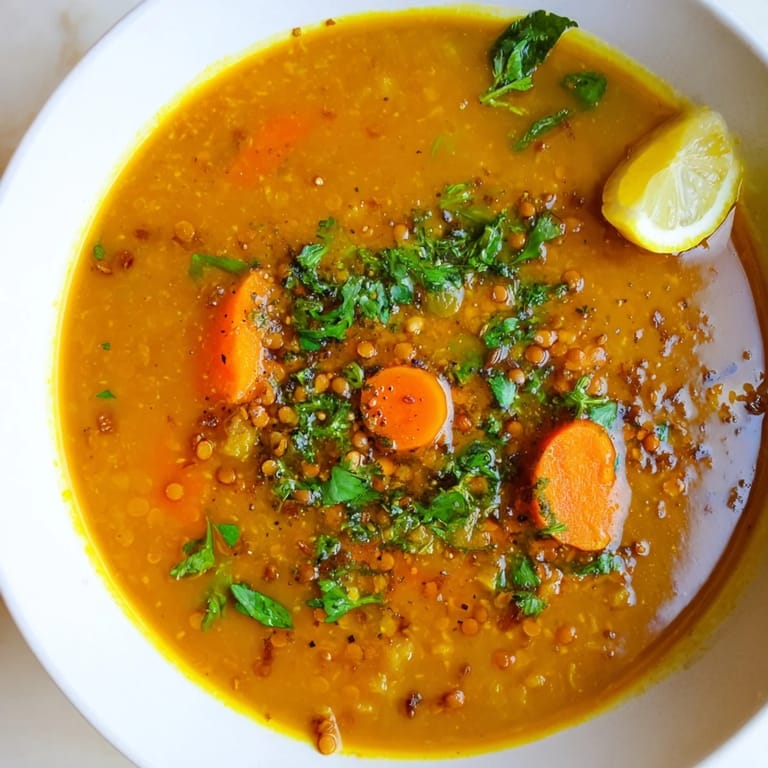
- Fresh cilantro or parsley and lemon wedges: The finish that brings brightness and reminds you it's fall, not a sad bowl of beige.
Tired of Takeout? 🥡
Get 10 meals you can make faster than delivery arrives. Seriously.
One email. No spam. Unsubscribe anytime.
Instructions
- Start with warmth:
- Heat olive oil in a large pot over medium heat and add chopped onion. Let it soften for 3–4 minutes, and you'll know when it's ready because it starts to turn almost transparent and the smell becomes sweet instead of sharp. This is the moment you're building flavor, not just cooking onion.
- Layer in the roots:
- Stir in garlic, carrots, and celery, cooking them for another 3–4 minutes until they start to soften at the edges. You're not looking for them to be done—just released enough that the pot starts smelling like home cooking.
- Toast the spices:
- Add all your spices—cumin, coriander, paprika, cinnamon, and cayenne if you want heat—and stir constantly for about a minute. This one minute changes everything; you're waking them up so they're not just background notes but part of the whole conversation.
- Build the broth:
- Add your red lentils (rinsed so they don't cloud the pot), the tomatoes with their juice, and vegetable broth, stirring so nothing sticks to the bottom. This is when you can taste it and know you're on the right track.
- Let it simmer:
- Bring everything to a gentle boil, then turn the heat down low and cover the pot. Let it bubble quietly for 25–30 minutes while the lentils soften and the carrots turn tender. You can walk away, but honestly, the smell alone makes you want to stay.
- Taste and adjust:
- Once everything is soft, taste it and add salt and black pepper until it tastes like the version you want. This is your moment to decide if you want more warmth, more salt, more anything.
- Blend if you want to:
- If you like it smooth, use an immersion blender and go as far as you want—silky or just thinned out a little. If you like texture, leave it chunky. Both are right.
- Serve and finish:
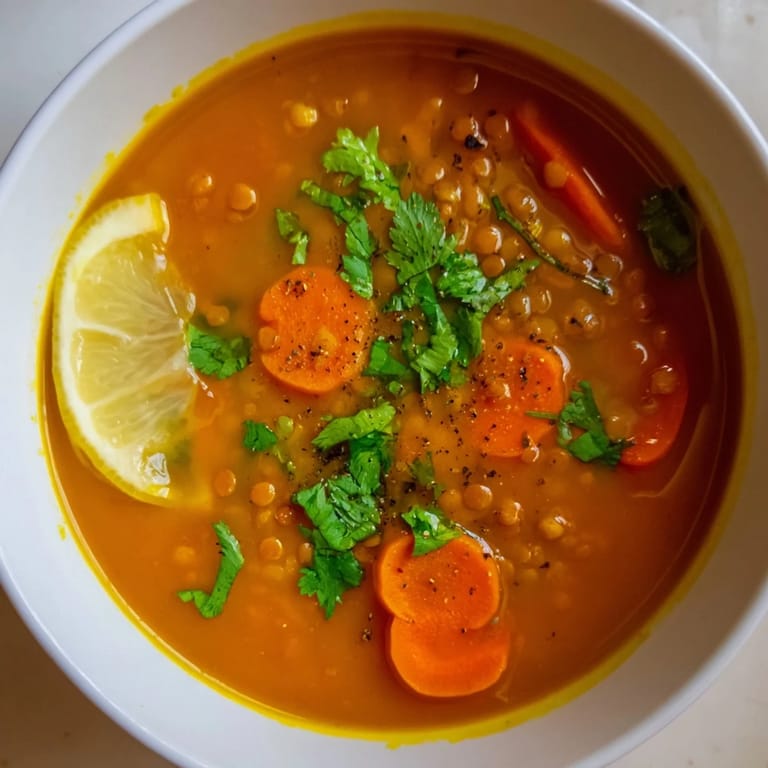
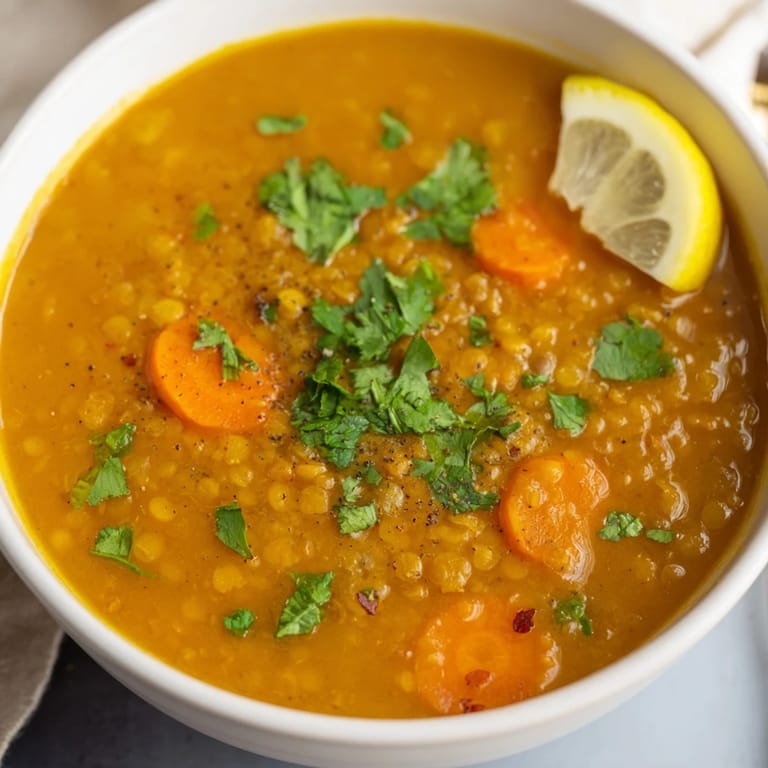
- Ladle it into bowls, scatter cilantro or parsley on top, and squeeze lemon juice over it. The brightness matters more than you'd think.
 Pin this
 I was sick once, actually properly sick, and made this soup at the last minute because the alternative was cereal. By the second bowl, I wasn't thinking about feeling terrible anymore; I was thinking about the flavors, the warmth, what I'd eat next. That's when I understood: soup isn't just food when you need it—it's proof that you're taking care of yourself.
Why the Spices Matter
Most people don't think twice about cumin and coriander, but they're the reason this tastes like it came from somewhere, like it has a story. The smoked paprika adds depth without heat, cinnamon brings warmth that feels almost cozy, and cayenne waits in the background in case you want it. If you're new to cooking with spices, this is the recipe that teaches you they're not scary—they're the difference between a bowl of vegetables and something you actually want to eat. Start with what's listed, and next time you can adjust based on what called to you.
Making It Your Own
The base is solid, but the margins are where you get creative. You can add spinach or kale in the last five minutes if you want green, swap half the carrots for sweet potatoes if you want sweetness, or add coconut milk at the end if you're in the mood for something richer. I've made it with different broths, with extra garlic when I'm feeling bold, with double the cilantro because I can't help myself. The soup is patient with you; it forgives small changes and thanks you for big ones.
Serving and Storage
This is the kind of soup that's better the next day after flavors have gotten to know each other, so make it ahead if you can. It keeps in the fridge for about five days and freezes beautifully for up to three months. Warm it gently on the stove, and it comes back to life like nothing happened. Crusty bread, warm naan, or just a bowl with nothing else is always the right choice.
- Reheat it gently so the flavors don't shock each other; medium heat and patience beat high heat and rushing.
- The lemon wedges aren't optional—they're the thing that makes you notice what you're eating instead of just eating.
- Make a double batch; you'll want it around, and future you will be grateful to past you.
 Pin this
 This soup is the answer to a lot of questions: What do I make when someone needs comfort food? What do I eat when I want to feel like I made something real? What proves that vegan and gluten-free don't mean sacrifice? Make it, and you'll understand why people keep coming back to it.
Recipe Questions
- → What spices give this soup its unique flavor?
The warming aroma comes from cumin, coriander, smoked paprika, cinnamon, and optional cayenne pepper for a gentle kick.
- → Can I make this soup thicker or smoother?
Yes, use an immersion blender to partially or fully puree the soup to reach your preferred texture.
- → What are good garnish options for this dish?
Fresh cilantro or parsley and a squeeze of lemon juice add fresh brightness as garnish.
- → How can I add more greens to this dish?
Stir in chopped spinach or kale during the last 5 minutes of cooking for extra nutrients and color.
- → Is this dish suitable for gluten-free diets?
Yes, it contains no gluten naturally; just confirm the vegetable broth used is gluten-free.
- → What can I serve alongside to complete the meal?
Crusty bread or warm naan bread pair wonderfully, balancing the hearty flavors of the soup.