 Pin this
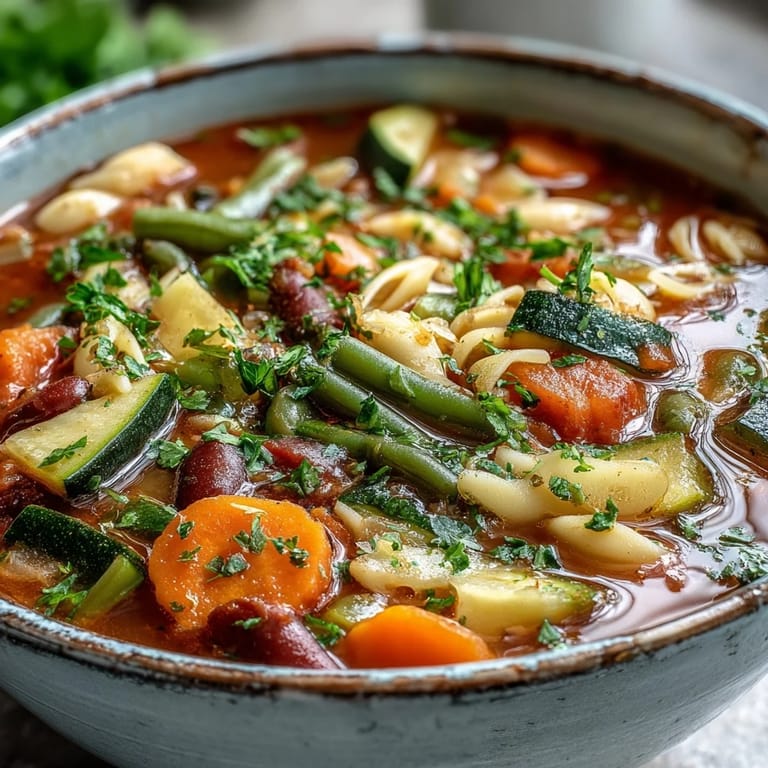
 My neighbor once brought me a bowl of minestrone on a rainy Tuesday, and I realized I'd been overcomplicating soup my entire life. There's something almost meditative about the way this Italian classic comes together—vegetables tumbling into the pot in waves, the kitchen filling with that warm, savory steam. What struck me most wasn't the recipe itself, but how she adapted it without flinching, swapping summer zucchini for winter squash like it was the most natural thing in the world. That's when minestrone clicked for me: it's not a rigid formula, it's an invitation to cook with what's in front of you.
I made this for my sister when she was going through a rough patch, and she ate three bowls without saying much of anything. Sometimes food does more talking than words ever could, and watching her slow down around that steaming ladle reminded me why I loved cooking in the first place. The pasta softens just enough to feel forgiving, the beans give you something substantial to hold onto, and the broth wraps around everything like a gentle hand.
Ingredients
- Olive oil: Use a good quality one here because it's doing real work, not just lubricating the pan.
- Onion, carrots, and celery: This holy trinity is the foundation of every proper Italian soup I've ever tasted, so don't skip the sauté step.
- Garlic: Mince it fresh if you can; jarred garlic tastes like regret in comparison.
- Seasonal vegetables: Summer calls for zucchini and green beans, winter begs for butternut squash and kale—this is where you make the soup your own.
- Diced tomatoes: Canned is perfectly fine and honestly more reliable than fresh for this purpose.
- Vegetable broth: A decent broth makes all the difference between soup that tastes flat and soup that tastes like someone who knows what they're doing made it.
- Cannellini or borlotti beans: They're creamy without falling apart, which matters more than you'd think.
- Small pasta: Ditalini, elbow, or shells work because they don't overwhelm the spoon.
- Herbs: Bay leaf, oregano, and basil build layers of flavor, and fresh parsley at the end wakes everything up.
- Parmesan cheese: Optional but worth it, unless you're making the vegan version, in which case skip it entirely.
Tired of Takeout? 🥡
Get 10 meals you can make faster than delivery arrives. Seriously.
One email. No spam. Unsubscribe anytime.
Instructions
- Build your flavor base:
- Heat olive oil in a large pot and add your onion, carrots, and celery. You're looking for them to soften and turn slightly golden, which takes about five minutes and fills your kitchen with a smell that makes you understand why people write poetry about cooking. Listen for the gentle sizzle, not an aggressive hiss.
- Add the fresh vegetables:
- Stir in your minced garlic, then the zucchini or squash and green beans or kale. Cook for just three minutes so they stay bright and hold onto their structure.
- Deglaze and layer:
- Pour in your diced tomatoes and potato if you're using one, let it cook for a minute, then add the bay leaf before pouring in all that vegetable broth. You'll watch the pot transform from a jumble of vegetables into something that actually looks like soup.
- Let it simmer:
- Bring everything to a boil, then turn the heat down and let it bubble gently for fifteen minutes. This is when you can take a breath and stop hovering.
- Finish the soup:
- Add your beans and pasta, then simmer uncovered for ten to twelve minutes until the pasta is tender and the vegetables have softened completely. The pasta will release some starch and make the broth slightly thicker, which is exactly what you want.
- Season and serve:
- Stir in oregano, basil, salt, and pepper, then fish out that bay leaf. Add the fresh parsley last so it stays vibrant green, then ladle it into bowls and top with Parmesan if that's your style.
 Pin this
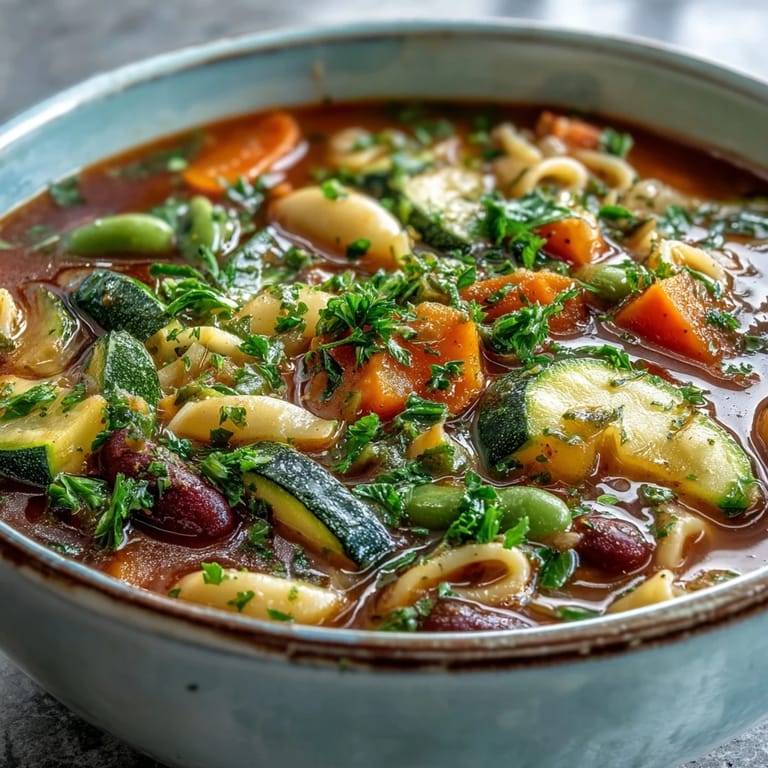
 There was this morning when I made minestrone for myself before anyone else was awake, just because I wanted to taste something honest and warm. I sat at the kitchen table as the house was still quiet, and that simple bowl became a moment of pure peace—no rush, no performance, just soup that understood me. That's when minestrone stopped being a recipe and became something I knew I'd keep making forever.
Making It Your Own Across the Seasons
The beauty of minestrone is that it's actually designed to shift with what's available, not against it. Spring begs for peas, leeks, and young greens that will brighten everything up. Summer is your moment for zucchini, green beans, and tomatoes that taste like they actually grew somewhere. Fall wants butternut squash and maybe some shredded cabbage, and winter absolutely demands kale or spinach that can stand up to longer cooking without disappearing entirely. Think of this soup as a conversation with your farmers market, not a list you have to follow exactly.
The Secret of Depth Without Fussiness
If you really want to understand what separates good minestrone from forgettable minestrone, it's this: save a piece of Parmesan rind and let it simmer with the broth. It dissolves slowly into something that tastes impossibly rich without tasting heavy, and you remove it before serving so no one even knows it was there. It's the kind of small move that makes people think you've been cooking for decades when really you just learned a trick that changed everything.
Serving and Storing Like You Know What You're Doing
Minestrone is one of those soups that actually improves when you let it sit overnight and the flavors get friendlier with each other. Serve it hot in deep bowls with crusty bread and a drizzle of extra virgin olive oil, and watch people slow down the way they should. Leftover minestrone keeps for four days in the fridge, though you might need to add a splash of broth when you reheat it because the pasta keeps drinking.
- Make the vegan version by skipping the Parmesan and using vegetable broth you trust.
- Leftover minestrone actually tastes better the next day, so don't hesitate to make a full batch.
- Use gluten-free pasta if you need to, and it will taste just as honest and true.
 Pin this
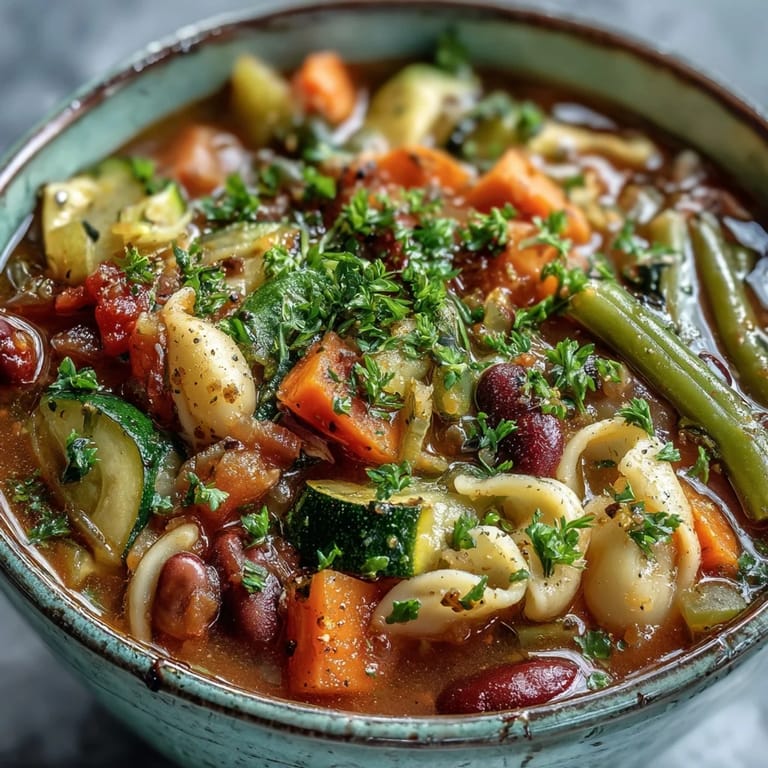
 This is the soup I come back to when everything else feels too complicated. It's forgiving, adaptable, and honest—everything a good bowl of soup should be.
Recipe Questions
- → What vegetables work best in minestrone?
Classic choices include onions, carrots, celery, zucchini, green beans, and tomatoes. For winter variations, use butternut squash, kale, or spinach. Spring works well with peas and leeks. The beauty is adapting to what's fresh and available.
- → Can I make this gluten-free?
Absolutely. Simply substitute the regular pasta with gluten-free pasta shapes like ditalini or small shells. The rest of the ingredients are naturally gluten-free, making this an easy adaptation.
- → How long does minestrone keep in the refrigerator?
Stored in an airtight container, it keeps well for 3-4 days. The pasta may absorb some liquid, so add a splash of broth when reheating. It actually tastes better the next day as flavors meld together.
- → Can I freeze minestrone soup?
Yes, but consider cooking the pasta separately. Pasta can become mushy when frozen and reheated. Freeze the vegetable base, then cook fresh pasta when serving and combine. This maintains the best texture.
- → What's the secret to deeper flavor?
Adding a Parmesan rind to the simmering broth infuses subtle umami notes. Also, don't rush the soffritto—cooking onion, carrot, and celery until properly softened creates a sweeter, more aromatic foundation.
- → Is minestrone suitable for meal prep?
Excellent for meal prep. Make a batch on Sunday and portion for lunches throughout the week. The flavors develop beautifully over time, and it reheats perfectly in the microwave or on the stovetop.