 Pin this
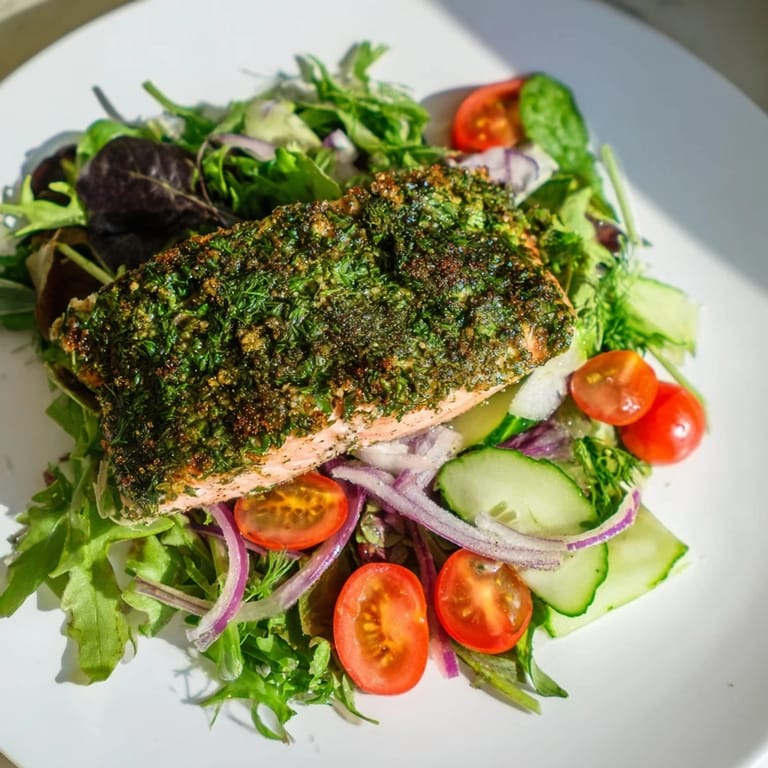
 There's something about the moment salmon hits a hot oven that makes you feel like you're cooking something fancy, even though it's somehow simpler than most weeknight dinners. I discovered this herb-crusted salmon salad combo during a rushed Tuesday when I needed something that felt restaurant-quality but wouldn't keep me in the kitchen for hours. The herbs stuck to the fish, the oven did the heavy lifting, and by the time it was done, I had a warm, elegant plate that made me feel accomplished without the stress.
I made this for my friend who'd been stressed about work, and watching her face light up when she took that first bite—the way the herbs and dill filled her nose—reminded me that feeding people doesn't have to be complicated to matter. She came back asking for the recipe, and now I think she makes it more often than I do.
Ingredients
- Salmon fillets (4, about 150g each), skinless: The foundation here, and honestly, the quality of your salmon matters more than any technique—look for bright color and a fresh smell, and don't skip the skin removal because you want those herbs to cling directly to the fish.
- Fresh herbs (parsley, dill, chives): Together they're like a flavor conspiracy—the parsley adds brightness, dill brings that unmistakable salmon-friendly earthiness, and chives sneak in a whisper of onion that pulls everything together.
- Olive oil and Dijon mustard: These two create the paste that holds the herbs to the fish and adds a tangy richness that makes people ask what your secret ingredient is.
- Mixed salad greens (120g / 4 cups): Arugula gives peppery attitude, spinach adds body, and romaine keeps things crisp—mix them or go with what you have on hand.
- Cherry tomatoes, cucumber, red onion: These vegetables aren't just fillers; they catch the vinaigrette and add texture contrast that makes every bite interesting.
- Walnuts and feta cheese (optional but recommended): If you add them, the walnuts bring a toasted earthiness and the feta adds a salty tang that keeps the whole plate from feeling light in a boring way.
- Vinaigrette (olive oil, white wine vinegar, honey, Dijon mustard): This is where magic happens—the honey rounds out the sharp vinegar, the mustard adds depth, and the ratio means every leaf gets coated without drowning.
Tired of Takeout? 🥡
Get 10 meals you can make faster than delivery arrives. Seriously.
One email. No spam. Unsubscribe anytime.
Instructions
- Set your oven and prep:
- Heat the oven to 200°C and line a baking sheet with parchment paper so cleanup isn't a thing. This step takes seconds but saves you from scrubbing.
- Build the herb paste:
- Mix olive oil, Dijon mustard, lemon juice, and the fresh herbs together until it looks like a chunky paste—you want texture here, not a smooth spread. The garlic powder, salt, and pepper go in too, and this is where the salmon's flavor personality comes from.
- Coat the salmon:
- Lay your fillets on the parchment and spread the herb paste evenly across the top of each one, using a spoon or the back of a knife to make sure every inch gets covered. Don't worry if it's not perfect; it will hug the fish as it cooks.
- Bake until just cooked:
- Into the oven for 12–15 minutes—you're looking for the moment when the salmon just starts to flake when you press it with a fork, not the moment when it's fully opaque throughout. A minute too long and it dries out; a minute too short and it feels raw, so stay close.
- Build the salad base:
- While the salmon's in the oven, toss your greens, tomatoes, cucumber, red onion, and optional nuts and feta into a large bowl—don't dress it yet, or it'll get soggy.
- Whisk the vinaigrette:
- In a small bowl, combine olive oil, vinegar, honey, and mustard, then taste and adjust seasoning with salt and pepper until it makes you want to dip a spoon in it.
- Dress and plate:
- Drizzle the vinaigrette over the salad and toss until every leaf glistens, then divide among four plates and crown each plate with a warm salmon fillet straight from the oven. Serve immediately so the salmon stays warm against the cool greens.
 Pin this
 There was a Sunday morning when I made this for someone who was visiting, and they lingered over the last bites like they were savoring something more than just lunch. That's when I realized this dish works because it asks nothing of you except to show up with fresh ingredients and patience—everything else takes care of itself.
How to Know When Your Salmon Is Perfect
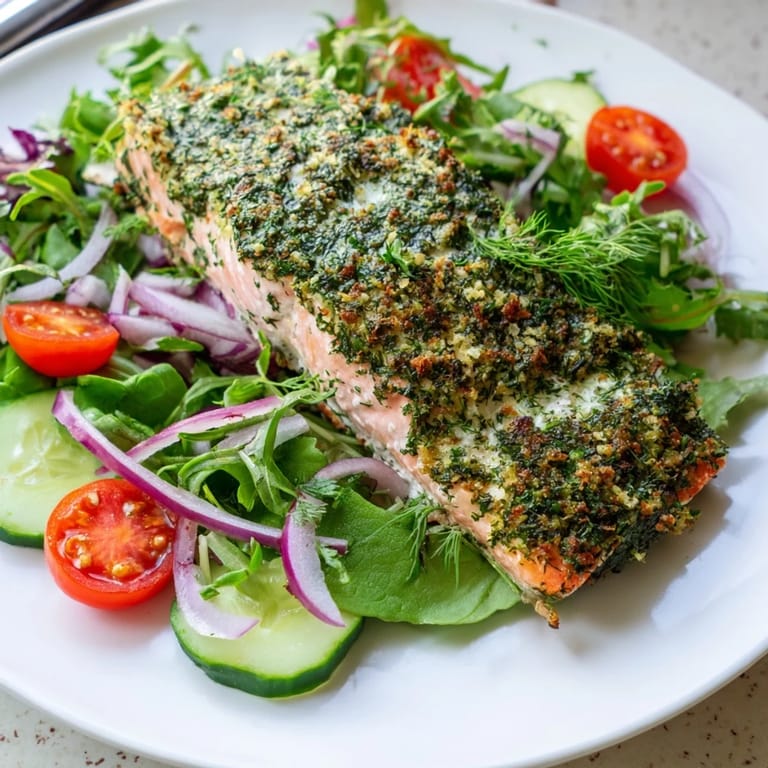
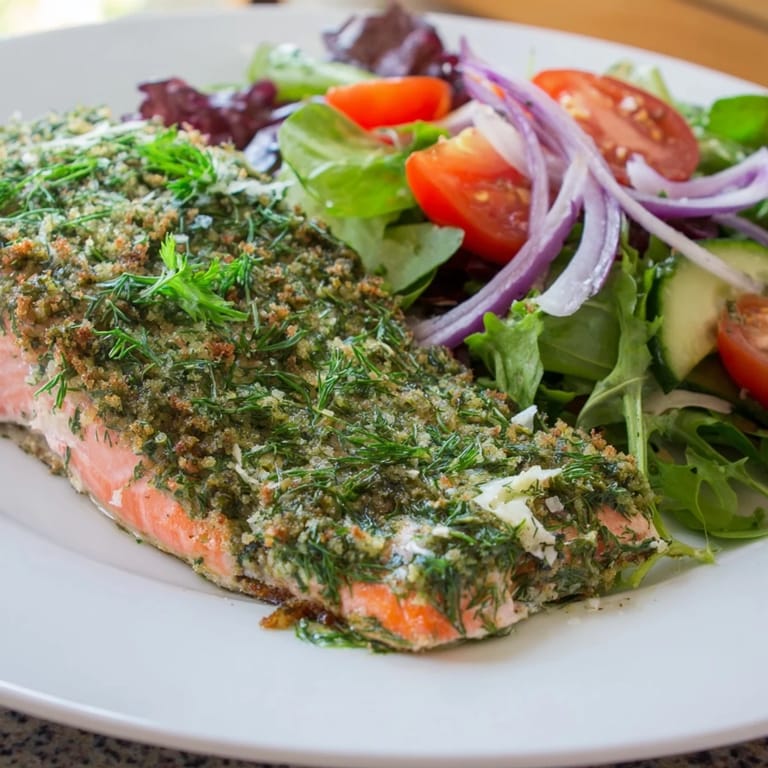
The herbs should smell fragrant and almost toasted as the salmon comes out of the oven, and the flesh should be opaque with just a barely translucent center—it will keep cooking for another minute after you pull it out. If you press the thickest part with your fork and it flakes with gentle pressure, you're there. The crust should feel crispy from the herbs and oil, and there should be a faint sizzle from the pan or parchment as you plate it.
Why Fresh Herbs Matter More Than You Think
Dried herbs are fine for a pinch, but fresh herbs here aren't optional niceness—they're literally the seasoning that makes salmon taste like salmon instead of like fish you're tolerating. The oils in fresh dill especially bring something alive to this dish that you just can't replicate from a jar.
Building a Vinaigrette You'll Actually Use
Most people overthink vinaigrette, but the honest truth is three parts oil to one part acid, then honey to soften the edge and mustard to add depth—that's it. Taste as you go and remember that the salad greens are neutral, so your vinaigrette is doing all the flavor work. It should make you want to lick the bowl.
- If you prefer a sharper dressing, use more vinegar and less honey; if you like it richer, add a touch more oil.
- Make extra vinaigrette because it pairs with leftover salmon and roasted vegetables just as well as it does with this salad.
- This keeps in the fridge for a week, so there's no reason not to double the batch.
 Pin this
 This is the kind of meal that reminds you why cooking for yourself or others matters—it's fast enough to be practical but feels intentional enough to be special. Make it once, and you'll find yourself circling back to it whenever you need something that feels like you're taking care of yourself.
Recipe Questions
- → What herbs are used for the crust?
Fresh parsley, dill, and chives combined with garlic powder create the flavorful herb crust for the salmon.
- → Can other fish be used instead of salmon?
Yes, trout or other firm fish work well as alternatives for this preparation.
- → How is the vinaigrette prepared?
The vinaigrette is made by whisking together extra-virgin olive oil, lemon juice or white wine vinegar, Dijon mustard, honey, salt, and pepper.
- → Are nuts necessary in the salad?
Nuts like toasted walnuts or almonds are optional but add a pleasant crunch and extra flavor.
- → What sides pair well with this dish?
A crisp Sauvignon Blanc or sparkling water with lemon complements the fresh, herbaceous elements nicely.