 Pin this
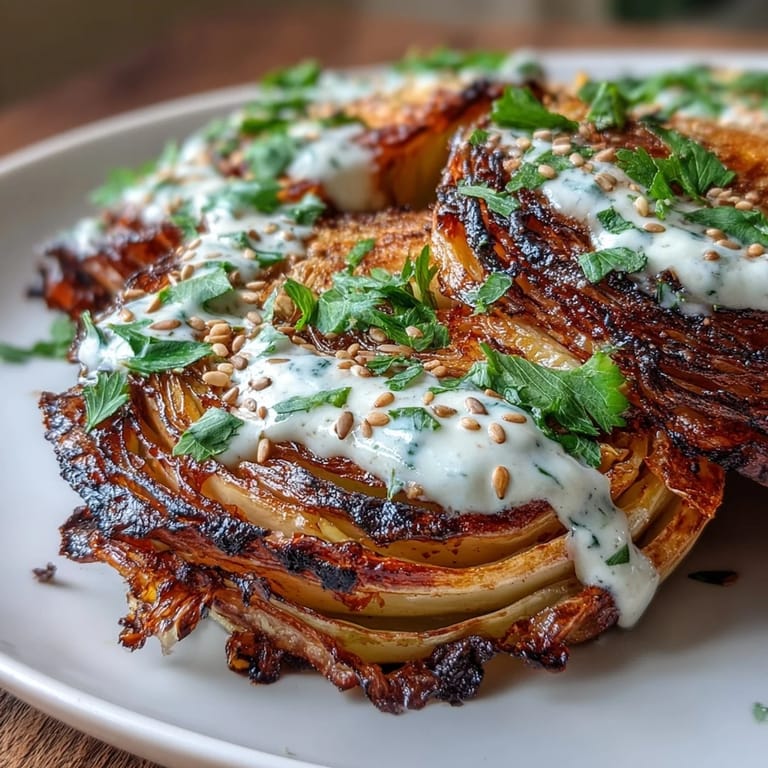
 There was a Wednesday evening when my friend showed up with a head of cabbage and asked if I could turn it into something that didn't taste like a side dish. I'd been experimenting with roasting vegetables differently, slicing them thick instead of chopping them into submission, and something clicked that night. The cabbage transformed into these golden, caramelized steaks that felt almost meaty in their presence on the plate. A quick tahini sauce finished the job, and suddenly we were eating something that didn't apologize for being vegetables.
I made these for a dinner party once where someone had just gone vegan, and I was nervous about the reaction. The moment they took a bite and their whole face changed, I realized I'd created something that didn't need explanation or justification. It was just food that happened to be delicious, and everyone at the table asked for the recipe before dessert arrived.
Ingredients
- 1 large green cabbage: The foundation of everything—choose one that feels dense and heavy for its size, which means it's packed with water and will caramelize beautifully.
- 3 tbsp olive oil: Use something you actually like tasting, since it becomes a star player here when the cabbage roasts.
- 1 tsp ground cumin: The secret that makes people ask what you did differently; it adds earthiness without announcing itself.
- 1 tsp smoked paprika: This gives you depth and a hint of smoke even though you're using an oven, not a grill.
- ½ tsp garlic powder: A whisper of garlic that intensifies during roasting without overpowering anything.
- Salt and freshly ground black pepper, to taste: Taste as you go—your palate will know better than any measurement.
- ⅓ cup tahini: The silky finish that makes this whole dish sing; buy the good stuff if you can, as quality matters here.
- 2 tbsp freshly squeezed lemon juice: Bottled won't cut it—fresh lemon is what loosens the tahini into something pourable and keeps everything bright.
- 1 small garlic clove, finely minced: Raw garlic adds punch to the sauce, so go easy and taste as you blend.
- 2–4 tbsp cold water: Add gradually; the sauce will thicken as it sits, so start conservative with the water.
- 2 tbsp chopped fresh parsley: The green that catches the eye and adds a fresh finish without stealing the show.
- 2 tbsp toasted sesame seeds, optional: Toast them yourself if you have time—they're worth the extra two minutes in a dry pan.
- Lemon wedges: Serve these alongside so people can brighten their plate to their liking.
Tired of Takeout? 🥡
Get 10 meals you can make faster than delivery arrives. Seriously.
One email. No spam. Unsubscribe anytime.
Instructions
- Heat your oven and prepare:
- Set the oven to 425°F and line a baking sheet with parchment paper while it preheats. This takes the stress out of assembly later when you're holding wet cabbage steaks.
- Slice your cabbage:
- Remove any bruised or tough outer leaves, then use a sharp knife to cut the cabbage into 1-inch thick rounds, working from root to crown. You'll get about 4 to 5 steaks, depending on the size of your cabbage.
- Season generously:
- Brush both sides of each steak with olive oil, then sprinkle the cumin, smoked paprika, garlic powder, salt, and pepper across everything. Don't be shy—the seasoning needs to coat the exposed surfaces for flavor to develop.
- Roast until golden:
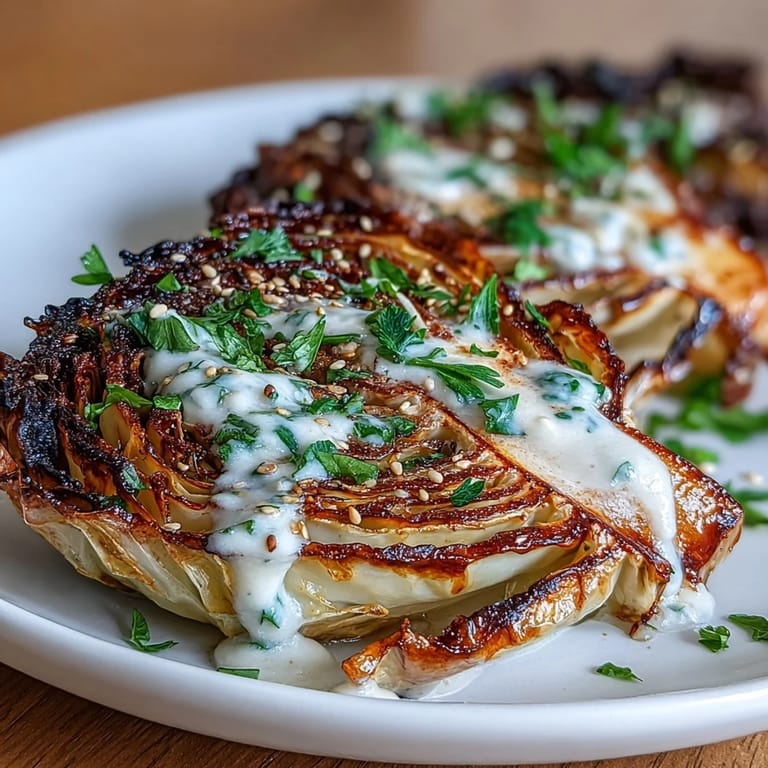
- Arrange the steaks on the parchment paper and roast for 25 to 30 minutes, flipping halfway through. You're looking for golden-brown edges and a fork-tender center, which means the cabbage has released its moisture and caramelized slightly.
- Whisk the tahini sauce:
- While the cabbage roasts, combine tahini, lemon juice, minced garlic, and salt in a bowl. Whisk in cold water one tablespoon at a time until the sauce reaches a drizzle consistency—it should flow smoothly but not pool like water.
- Plate and finish:
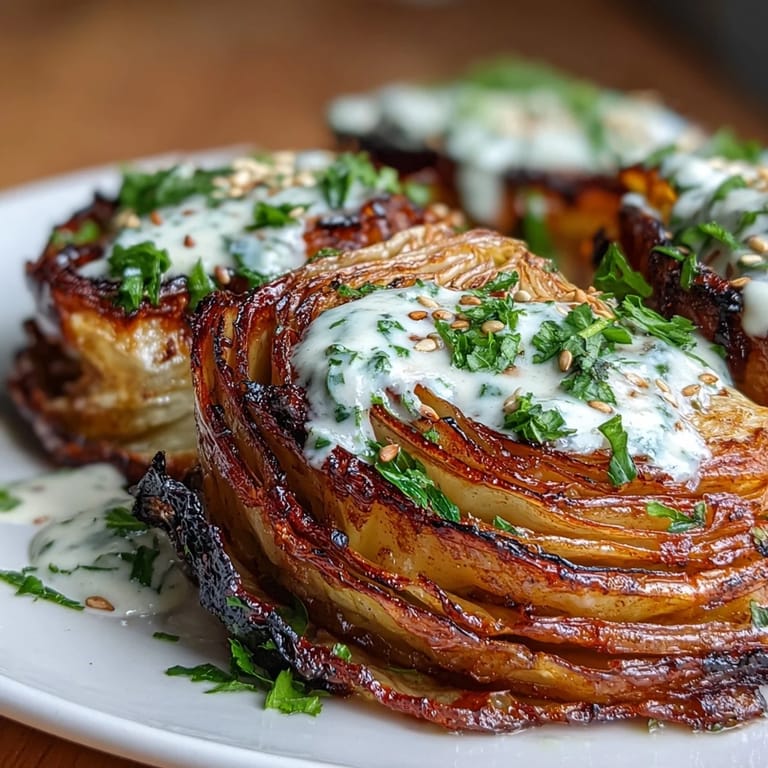
- Transfer the warm cabbage steaks to a platter, drizzle generously with tahini sauce, scatter the parsley and sesame seeds on top, and serve with lemon wedges nearby. Taste and adjust salt as needed before serving.
 Pin this
 The first time I made these for myself alone, I was surprised by how satisfying a plate of roasted cabbage could be. It wasn't filling because of heavy cream or cheese—it was filling because the caramelization had coaxed out sweetness and depth that made you want to slow down and actually taste it.
Why This Approach Works
Thick slices matter because they create two crispy, caramelized sides while the inside stays tender instead of turning into mushy shreds. When you roast cabbage at high heat with good oil, the exterior undergoes a transformation that feels almost miraculous—the water evaporates and sugars concentrate into something nearly nutty. This approach respects the vegetable instead of hiding it.
The Tahini Equation
Tahini can feel finicky if you've never worked with it before, but it's actually straightforward once you understand that you're emulsifying it. The lemon juice and garlic cut through the richness and keep it from tasting flat or heavy on the palate. The water is your control knob—add it patiently and the sauce becomes something people will want to drizzle on everything.
Making It Your Own
This recipe is a framework rather than a rigid formula, which is what makes it fun to return to again and again. You can swap the spices based on what you have on hand or what mood you're in. Some nights I add a pinch of sumac for tang, other times a whisper of chili flakes for heat.
- Zaatar sprinkled on before roasting brings herbal, tangy notes that pair beautifully with tahini.
- A handful of pomegranate seeds or a drizzle of pomegranate molasses adds brightness and sophistication.
- Serve it alongside grains like farro or quinoa, or as a side to grilled tofu or roasted chickpeas for a complete meal.
 Pin this
 This dish has become my answer when someone asks what to cook for someone newly plant-based, because it doesn't feel like a substitution—it feels like its own thing. It's proof that vegetables don't need apology or disguise to be genuinely satisfying.
Recipe Questions
- → How do I get the best caramelization?
Preheat your oven thoroughly to 425°F and use a dark baking sheet if possible. The high heat and direct surface contact create those beautifully browned, sweet edges. Don't crowd the pan—airflow helps with even browning.
- → Can I make this ahead?
Roast the cabbage steaks up to a day in advance and reheat at 400°F for 10 minutes. Store the tahini sauce separately in the refrigerator and bring to room temperature before serving—add a splash of water if it thickens.
- → What cabbage works best?
Green cabbage is ideal for its mild sweetness and tight layers that hold together well when sliced. Red cabbage works too but will have a slightly stronger flavor and striking purple hue. Napa cabbage is too delicate for this technique.
- → Why is my tahini sauce separating?
Tahini naturally separates, but whisking vigorously while gradually adding cold water creates a smooth emulsion. If it looks grainy at first, keep whisking—it will suddenly turn creamy. Adding lemon first helps stabilize the mixture.
- → How do I slice cabbage into steaks?
Trim the root end flat so the cabbage sits steady. Slice through the core horizontally into 1-inch thick rounds. The core holds each steak together—don't remove it before roasting. You'll get 4-5 substantial pieces from one large head.
- → What can I serve alongside?
These pair beautifully with fluffy couscous, quinoa, or warm flatbread. They also complement grilled fish, roasted chicken, or lentils. The tahini makes them substantial enough to stand alone as a light main.