 Pin this
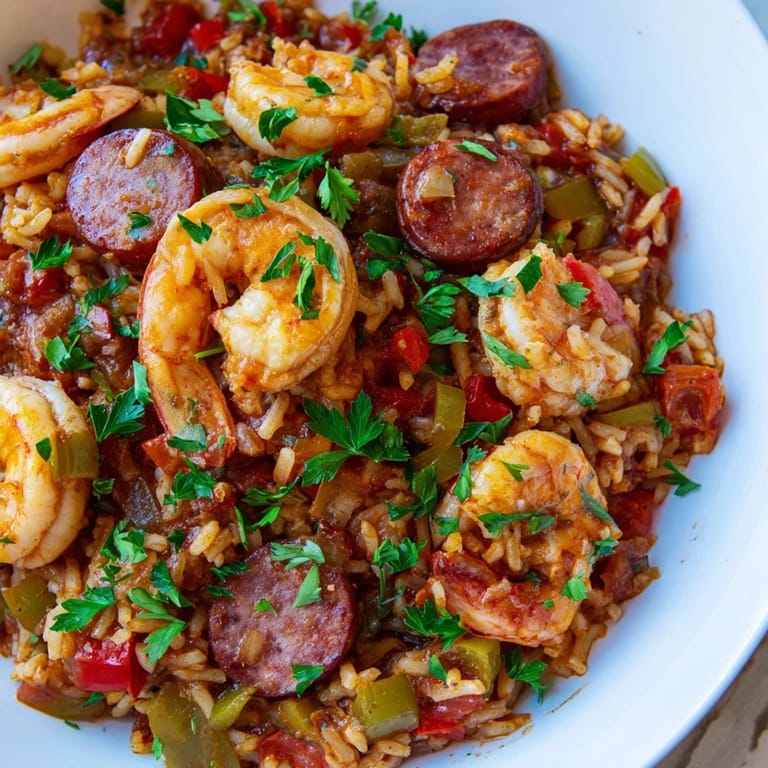
 There's something about the smell of andouille sausage hitting hot oil that immediately transports me to a humid kitchen where time moves slower. My first proper jambalaya came together almost by accident—I had shrimp thawing on the counter, leftover sausage from a grill night, and the kind of afternoon where I wanted something that felt like a celebration without the fuss. One skillet, thirty-five minutes, and suddenly I understood why this dish shows up at every important table in the South. The magic isn't in doing anything fancy; it's in letting everything simmer together until the rice absorbs all those smoky, spicy flavors and becomes something you can't stop eating.
I made this for my neighbor on a Wednesday evening after she'd mentioned craving something warm but didn't have the energy to think about dinner. Watching her face when she tasted it—that moment when you can see someone truly relax into a meal—that's when I realized this recipe does something special. It feels fancy enough to impress, but honest enough that you can make it on a regular week.
Ingredients
- Andouille sausage, sliced (225 g / 8 oz): This is the backbone of everything—look for authentic versions with real smoke, as the quality difference is noticeable once it hits the oil.
- Large shrimp, peeled and deveined (225 g / 8 oz): Add these near the end so they stay tender; frozen works fine if you thaw them properly.
- Yellow onion, diced (1 medium): The foundation that sweetens as it cooks and helps carry all the spice flavors.
- Red and green bell peppers, diced (1 of each): The color isn't just pretty—red peppers bring sweetness while green adds slight bitterness that balances everything.
- Celery stalks, diced (2): This is the holy trinity element; it adds a subtle earthiness that ties the whole dish together.
- Garlic, minced (3 cloves): Stir it in quickly after the vegetables soften so it perfumes the oil without burning.
- Long-grain white rice (200 g / 1 cup): The canvas that soaks up all that Creole soul—don't use jasmine or basmati here.
- Low-sodium chicken broth (400 ml / 1 2/3 cups): This gives you control over the final salt level, which matters more than you'd think.
- Diced tomatoes with juice (400 g / 1 can): The acid brightens everything and prevents the dish from feeling too heavy.
- Smoked paprika (1 tsp): This is the whisper of smoke that runs through the entire dish.
- Dried thyme and oregano (1/2 tsp each): Together they create that Creole warmth without overwhelming the other flavors.
- Cayenne pepper (1/2 tsp, adjust to taste): Start conservative—you can always add heat, but you can't take it back.
- Freshly ground black pepper and salt (1/2 tsp and 1 tsp): Taste as you go because every brand of broth has different sodium levels.
- Olive oil (2 tbsp total): Use it to brown the sausage first, then sauté the vegetables in what's left of the rendered fat.
- Fresh parsley, chopped (2 tbsp for garnish): This final sprinkle of green and fresh herb cuts through the richness perfectly.
Tired of Takeout? 🥡
Get 10 meals you can make faster than delivery arrives. Seriously.
One email. No spam. Unsubscribe anytime.
Instructions
- Brown the sausage first:
- Heat 1 tablespoon of olive oil in your skillet over medium-high heat until it shimmers slightly. Slice the sausage and lay it flat—you want it to touch the hot surface so it develops color and releases its oils. This usually takes 3-4 minutes total, and you're not looking for it to be fully cooked, just kissed with brown on the edges.
- Build the flavor base:
- Add the remaining oil and sauté your onion, peppers, and celery until they've softened and the onion turns translucent—about 4-5 minutes of gentle stirring. Add the garlic last, letting it cook just until fragrant, because garlic burns quickly and tastes bitter when it does.
- Toast the rice with spices:
- Stir in your rice and let it cook dry in the pan for a minute, coating every grain with the spiced oil. This step sounds small but it changes everything, giving the rice a subtle nutty flavor that raw rice won't have.
- Bring it all together:
- Return the sausage to the skillet, then pour in your tomatoes with their juice and the chicken broth. Stir until everything is evenly distributed, then bring it to a gentle simmer—you'll see small bubbles breaking the surface regularly.
- Let it cook low and covered:
- Cover your skillet and reduce the heat to low. This is where patience matters—about 20 minutes while the rice absorbs the liquid and becomes tender. Don't peek constantly, but do give it a gentle stir around the 15-minute mark.
- Crown it with shrimp:
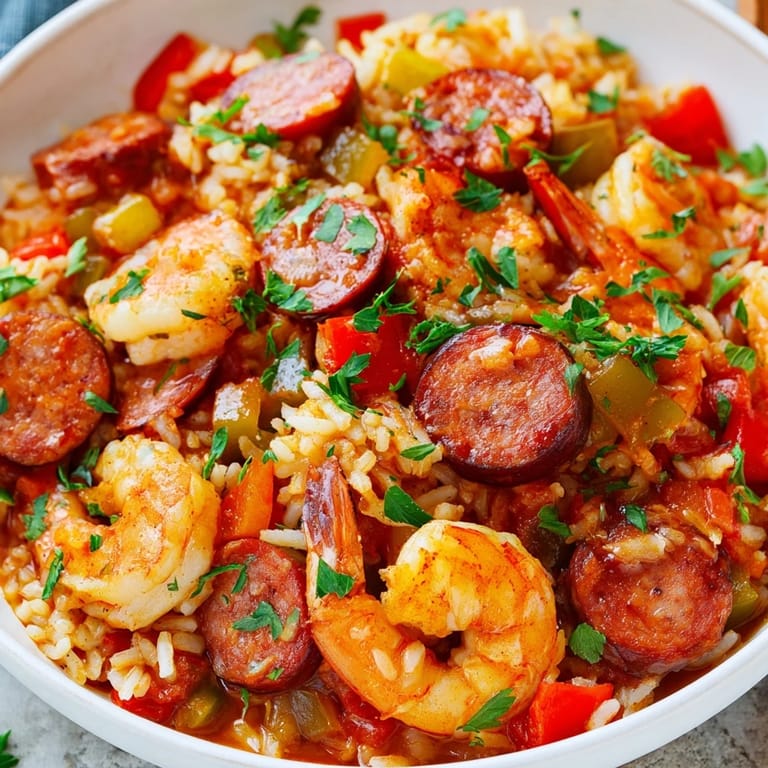
- Arrange the shrimp on top of the rice mixture in a single layer, cover again, and cook for another 5-7 minutes until they've turned pink and opaque all the way through. Shrimp cook fast, so this is your only real time crunch.
- Finish and serve:
- Use a fork to gently fluff the rice, which helps separate the grains and release steam. Scatter parsley over the top and serve directly from the skillet if you want to keep it warm.
 Pin this
 I served this to my family on a Friday night when nobody had energy for anything complicated, and my dad, who's skeptical about one-pot meals, came back for seconds before everyone else had finished their first plate. That moment when food stops being about the recipe and becomes about being together—that's what this dish does naturally.
The Secret to Restaurant-Quality Results
The difference between a good jambalaya and a great one comes down to how long you give the rice to absorb the liquid. Don't rush this step by turning up the heat—low and slow means every grain develops that tender bite while still holding its shape. I learned this the hard way with a skillet of mush before understanding that the covered cook time is non-negotiable.
Making It Your Own
While the recipe works beautifully as written, this is one of those dishes that welcomes adjustment based on what you have and what you love. I've made it with chicken thighs when shrimp was out of budget, added okra when I had it fresh, and once threw in some smoked paprika-rubbed andouille I'd made myself. The framework holds everything together; the ingredients are just the conversation.
Pairing and Serving Ideas
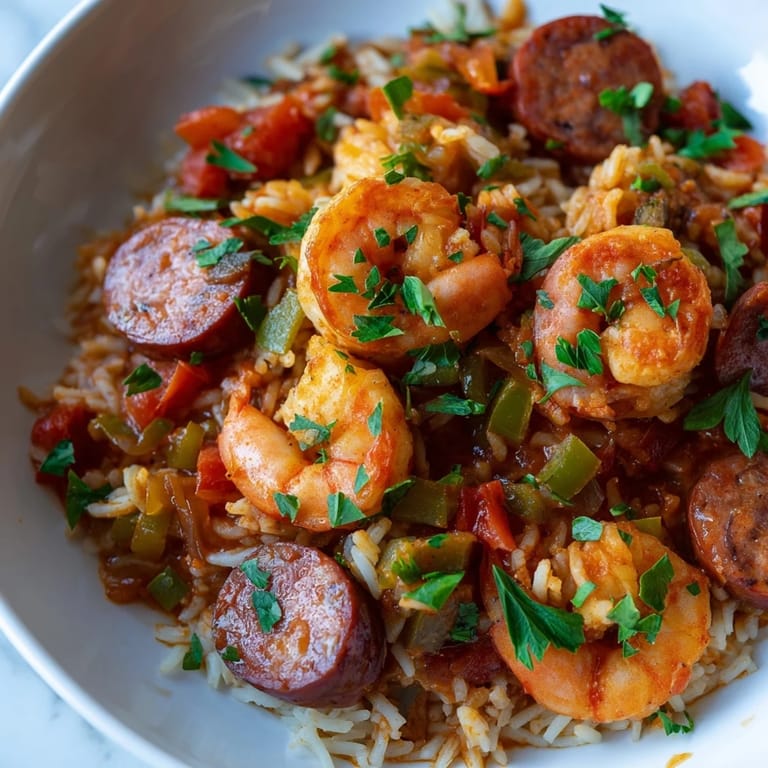
Serve this directly in the skillet if you're cooking for people who appreciate that aesthetic, and have crusty bread standing by—you'll want to soak up every bit of sauce. A crisp Sauvignon Blanc or even a light lager pairs perfectly, cutting through the richness and letting all the spices shine.
- Serve with hot sauce on the side for anyone who wants more fire.
- Make a double batch because leftovers taste even better the next day.
- This reheats beautifully on the stovetop with a splash of broth to refresh it.
 Pin this
 This jambalaya has become the dish I make when I want to feel like I'm cooking with confidence, and when I want people to feel cared for. That's the real recipe.
Recipe Questions
- → Can I substitute the sausage?
Yes, you can swap andouille or smoked sausage with chicken sausage or turkey sausage for a different flavor profile while maintaining the dish’s heartiness.
- → Is it possible to make this dish spicier?
Adjusting the amount of cayenne pepper or adding hot sauce can easily increase the heat level to suit your taste.
- → What type of rice works best?
Long-grain white rice absorbs the flavors well and cooks evenly, making it ideal for this skillet preparation.
- → How do I ensure the shrimp stays tender?
Add the shrimp toward the end of cooking and simmer just until they turn pink to avoid overcooking and maintain a succulent texture.
- → Can I prepare this dish ahead of time?
It’s best enjoyed fresh, though you can refrigerate leftovers and gently reheat, adding a splash of broth to retain moisture.