 Pin this
 I'll never forget the first time I assembled an elaborate charcuterie board for a dinner party—it was supposed to be simple, but as I arranged those first slices of prosciutto, something clicked. What started as a casual appetizer became my canvas, a way to tell a story through cured meats, cheeses, and jewel-toned fruits. That night, watching my guests spend an hour grazing and discovering new flavor combinations transformed how I think about entertaining. This Advanced Artisan Array is the culmination of years of happy experiments, each board teaching me something new about balance, beauty, and the art of abundance.
I remember my sister arriving early to help set up a party, and before the other guests showed up, we just stood there in silence, looking at this sprawling board we'd built together. She said, 'This is almost too beautiful to eat.' Almost. But then everyone arrived, and within minutes, it became this living, breathing landscape of discovery—someone finding the perfect fig to pair with goat cheese, another person creating their own flavor adventure with manchego and fig jam. That's when I knew this board wasn't just about the food; it was about creating moments.
Ingredients
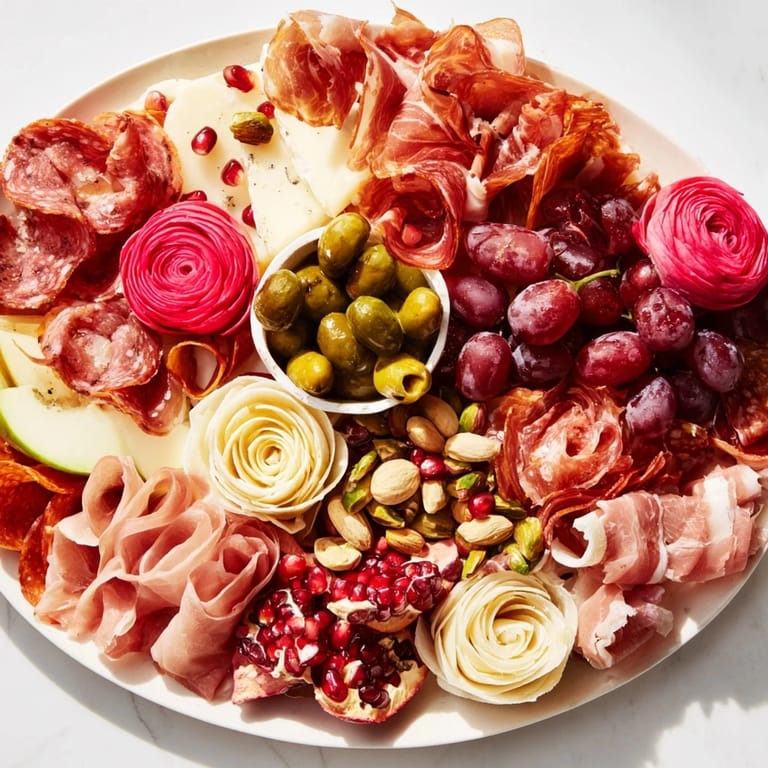
- Cured Meats (prosciutto, soppressata, capicola, chorizo, mortadella): These are your flavor anchors. The key is getting them sliced paper-thin and arranging them in dramatic folds and ribbons. I learned to keep them cool until the last moment—they're much easier to work with when they haven't warmed up.
- Cheeses (brie, manchego, aged cheddar, goat cheese, gouda, provolone): Variety is everything. Soft, hard, pungent, mild—you want your guests to experience a journey. The provolone needs to be particularly pliable for sculpting roses; sometimes I ask the cheese counter to cut it thinner than usual.
- Fresh Fruits (grapes, figs, pomegranate, apple, pear): These brighten everything and add moisture. Prep them right before assembly so they stay crisp and don't oxidize. A trick I discovered: keep sliced apples and pears in lemon water for a few minutes, then pat dry—it keeps them from browning and adds a subtle brightness.
- Dried Fruits & Nuts (apricots, cherries, figs, Marcona almonds, pistachios): Texture is the unsung hero of charcuterie. These create pockets of sweetness and crunch that keep people coming back for more bites.
- Pickles & Accoutrements (cornichons, olives, roasted peppers, artichoke hearts, mustard, fig jam, honey): These are your flavor adventures—the things that make someone say, 'Oh, wow, try this combination.' The mustard and jam are essential, but honestly, I also sneak in some hot honey or a quality balsamic reduction sometimes.
- Crackers & Bread (baguette, assorted crackers, grissini): Don't skimp here. Good crackers and fresh bread make the difference between a nice board and an unforgettable one. Toast the baguette slices lightly if you want them to hold up better under the weight of toppings.
- Garnishes (rosemary, thyme, edible flowers, microgreens, radish roses): These are your final flourish, the details that transform good into gallery-worthy. Fresh herbs add aroma; edible flowers add whimsy. I always add these last, right before serving.
Tired of Takeout? 🥡
Get 10 meals you can make faster than delivery arrives. Seriously.
One email. No spam. Unsubscribe anytime.
Instructions
- Prepare Your Stage:
- Start with a pristine board—wipe it down so it's ready for its close-up. Arrange small bowls for your jams, honey, and pickles around the perimeter. This might seem like a small step, but it's where you're setting the visual rhythm. I like to place these bowls asymmetrically; it feels more organic and inviting than perfect symmetry.
- Sculpt Your Cheese Roses:
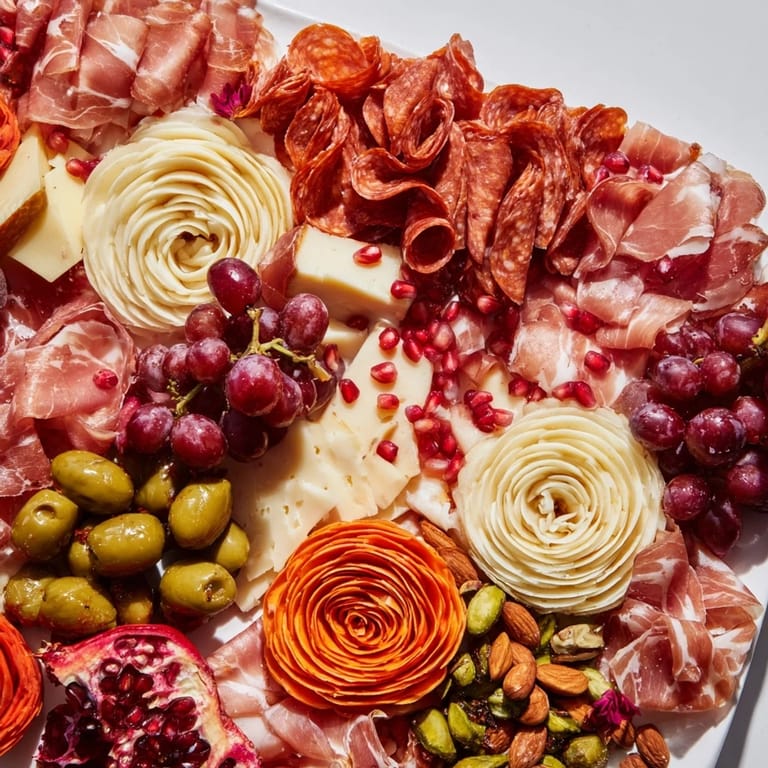
- Take your provolone and lay out thin slices on parchment. This is where patience pays off. Roll each slice into a tight spiral, starting from one end, then gently fan out the edges so they look like petals unfurling. It might take a few attempts to get the tension right—you want them tight enough to hold shape but loose enough to look natural. Some slices will be perfect; some will be charmingly imperfect. Both tell a story. Do the same with salami for dramatic meat roses.
- Create Meat Arrangements:
- Now comes the fun part—folding. Take your prosciutto and create dramatic ribbons and folds across sections of the board. Don't be timid. Bunch it, layer it, let some pieces stand up. The goal is to fill negative space and create a sense of abundance. This is where the board starts looking luxurious. I often think of it like draping fabric.
- Cut and Place Your Cheeses:
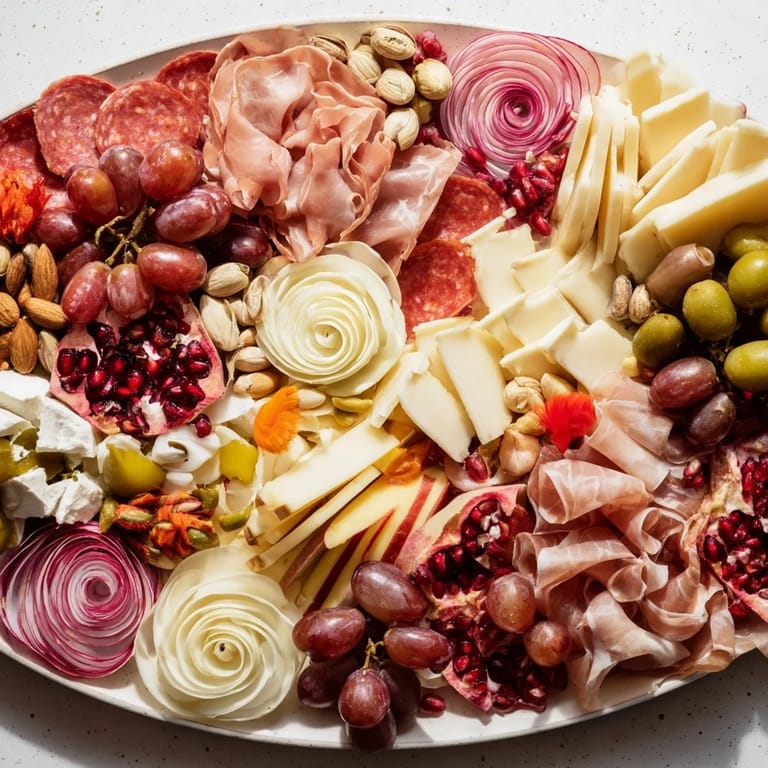
- Cut different cheeses into varied shapes—wedges for the harder cheeses, cubes for the cheddar, shards for drama, and of course, your beautiful roses. Scatter them throughout, thinking about color balance. Brie's creamy pale tone next to the golden manchego, the deep aged cheddar creating visual weight. Leave some space; you'll fill it as you go.
- Nestle Fruits with Intent:
- Group fruits by color and type in little clusters. Fresh grapes together, figs in one corner, pomegranate seeds scattered like jewels. Sliced apple and pear go in areas where they'll be discovered mid-board exploration. This is where the board starts looking like an edible still life.
- Scatter Nuts, Olives, and Pickles:
- Pour almonds and pistachios into small strategic piles—they catch light beautifully. Create little clusters of olives and cornichons. These items are your flavor punctuation marks; they break up the board and give guests' palates a reset between richer bites.
- Arrange Bread with Confidence:
- Fan out baguette slices in one area. Stand grissini up in a glass or bunch them casually. Arrange crackers in a way that looks natural, not rigid. This is the practical part, but make it look intentional.
- Add the Final Magic:
- This is my favorite moment—the garnish layer. Tuck fresh rosemary sprigs between cheeses. Scatter microgreens in clusters. Place edible flowers with intention—they're not just decoration, they're the exclamation points. Add radish roses for unexpected texture and peppery pop. Step back and look. Does it feel abundant? Does it feel like an invitation?
- Serve with Ceremony:
- Bring it out right before guests arrive if possible, or cover it and refrigerate until you're ready. If you've refrigerated it, let it sit out for 10 minutes before serving so cheeses warm to their best flavor.
 Pin this
 The real magic happened at a casual Saturday night when friends just kept circling this board for hours, not eating a full dinner but creating their own moments—the couple who discovered they both love fig and manchego together, the friend who kept going back for 'just one more' cornichon. That's when I realized this isn't just an appetizer; it's an experience, a conversation starter, a way of saying 'I'm glad you're here and I want you to feel celebrated.'
Building Your Signature Board
Over time, you'll develop instincts about what works on your board. Maybe you'll learn that you prefer Spanish cheeses, or that you always want something spicy, or that edible flowers feel essential. The skeleton of this recipe—the balance of textures, temperatures, and flavors—stays the same, but the soul becomes yours. I've made this board dozens of times, and I've never made it the same way twice. That's the beauty of it.
Pairing & Serving Wisdom
Pair this board with something bold—a Syrah if you want to echo the depth of the cured meats and aged cheeses, or a crisp sparkling wine if you want brightness that refreshes between bites. I've also served it with a really good natural wine that had unexpected tannins; it created this beautiful friction with the rich fats. The board isn't just food; it's a conversation between flavors, and wine is another voice in that conversation.
Customization & Creativity
This recipe is a blueprint, not gospel. Want to add candied nuts? Do it. Thinking about including dark chocolate truffles for drama? Yes. Prefer plant-based options? Build your own cheese and charcuterie selections that reflect your values. The art is in the arrangement, not in following rules. Every time you make it, you're making it for specific people, for a specific moment, and that should shine through.
- Gluten-free guests? Substitute with quality gluten-free crackers and confirm the cured meats are GF (most are, but always verify).
- Vegetarian friends? Create a separate beautiful section with extra cheeses, fruits, nuts, and spreads—let them feel celebrated, not like an afterthought.
- Remember that this board feeds 8-10 people as an appetizer, but if it's the main event, plan for more variety and quantity.
 Pin this
 This board is my love letter to the idea that feeding people beautifully doesn't require hours of cooking—it requires intention, quality ingredients, and the willingness to play. Every time I make it, I feel a little bit like an artist.
Recipe Questions
- → How do I create cheese roses for the board?
Use pliable cheeses like provolone; roll thin slices tightly, then gently fan the edges to resemble petals. Repeat for variety.
- → What’s the best way to fold cured meats attractively?
Fold thin slices into layered ribbons or delicate folds to add volume and an elegant look, filling gaps thoughtfully.
- → Which fresh fruits complement this style of board?
Red and green grapes, figs, pomegranate seeds, apples, and pears add color, sweetness, and texture contrast.
- → How can I incorporate nuts and pickles effectively?
Scatter nuts like Marcona almonds and pistachios in small piles; cluster pickles and olives in bowls or neat groups for balance.
- → What garnishes enhance the visual impact?
Fresh rosemary, thyme sprigs, edible flowers, microgreens, and radish roses add vibrant color and texture to finish the board.
- → How should breads and crackers be arranged?
Fan baguette slices and arrange crackers and grissini to fill spaces, creating layers and easy access for guests.