 Pin this
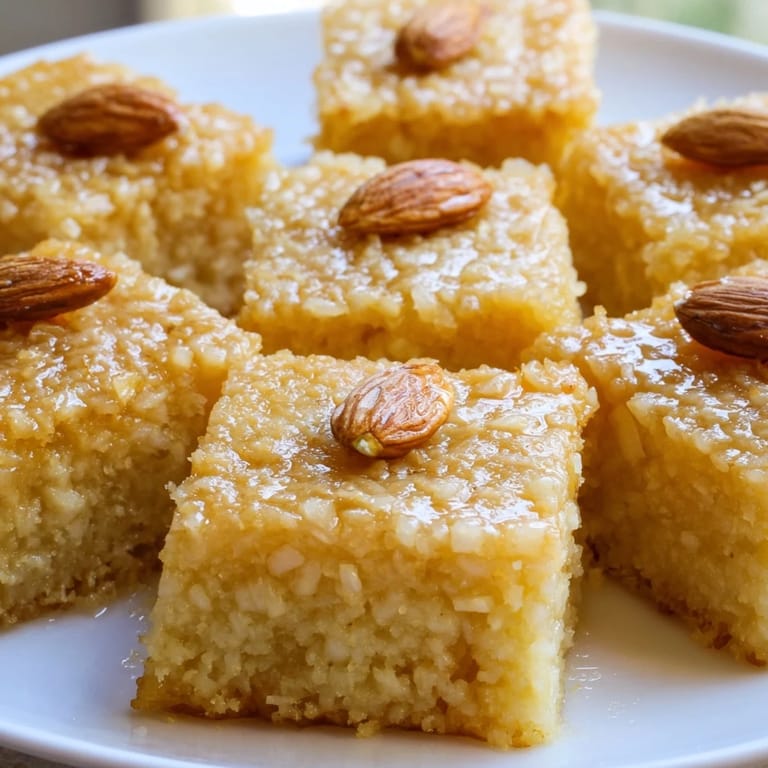
 There's something almost sacred about the moment when hot syrup meets warm basbousa straight from the oven—that first hiss and the way the cake seems to sigh as it drinks in all that sweetness. I discovered this Egyptian gem at a neighbor's kitchen table one afternoon, where her grandmother had taught her the rhythm of semolina and yogurt, and I've been chasing that exact texture ever since. The coconut makes it tender, the almonds give it personality, and the syrup transforms it into something that tastes like celebration in every bite.
I remember bringing this to a potluck once, convinced nobody would touch it because it looked so different from the usual desserts—all golden squares with almond eyes watching from the pan. By the time I left, there were only crumbs and three people asking for the recipe with that urgent tone people use when they've tasted something they didn't know they needed.
Ingredients
- Fine semolina: The backbone of the cake, giving it that distinctive grainy-but-smooth texture; don't skip the fineness or you'll end up with something gritty.
- Granulated sugar: Both in the cake and the syrup, it's what makes basbousa sing—though I've learned you can reduce it slightly if you prefer something less sweet.
- Desiccated coconut (unsweetened): Essential for moisture and flavor; sweetened versions will make the cake cloyingly sweet.
- Plain yogurt: The secret weapon that keeps everything tender; full-fat works best, and the tang balances the sweetness beautifully.
- Unsalted butter or ghee: Melted and mixed in, it enriches every bite; ghee adds an extra layer of nutty flavor if you're feeling adventurous.
- Baking powder: Just enough to give the cake a slight lift without making it cakey.
- Vanilla extract: A small touch that deepens the coconut flavor without announcing itself.
- Salt: The quiet hero that makes everything taste more like itself.
- Whole blanched almonds: More than garnish, they're tradition; each one marks a portion and adds a pleasant crunch.
- For the syrup—sugar, water, lemon juice: The trinity that creates that glossy, fragrant soak; lemon juice prevents crystallization and adds brightness.
- Rose water or orange blossom water: Optional but worth the small bottle; it's what takes this from good to memorable.
Tired of Takeout? 🥡
Get 10 meals you can make faster than delivery arrives. Seriously.
One email. No spam. Unsubscribe anytime.
Instructions
- Prepare your canvas:
- Heat your oven to 350°F and butter or lightly oil your 9x9 inch pan; I use a pastry brush to get into the corners, and it makes unmolding easier later.
- Mix the dry foundations:
- In a large bowl, whisk together semolina, sugar, coconut, baking powder, and salt until there are no lumps hiding anywhere. This step matters more than you'd think—lumps of dry ingredients are impossible to break down once the wet ones join.
- Build the batter:
- Add yogurt, melted butter, and vanilla, then stir with purpose until everything is combined and thick like wet sand. Don't overmix once it comes together or you'll toughen the final crumb.
- Spread and score:
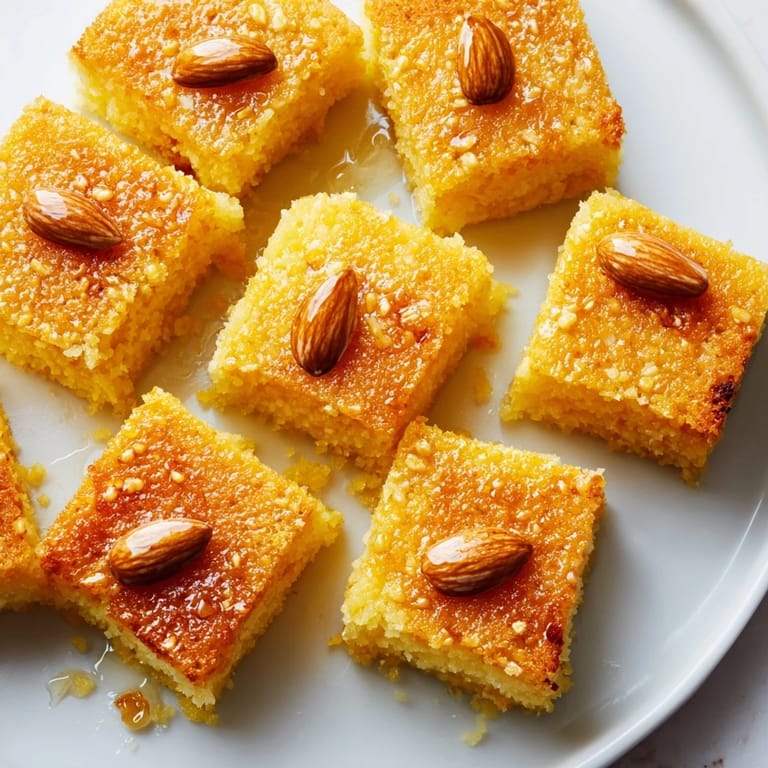
- Press the batter evenly into your pan using a spatula or the back of a spoon, then use a sharp knife to score it into 12 squares or diamonds in whatever pattern feels right. Score all the way to the bottom so the syrup can find every layer later.
- Crown each piece:
- Place one almond in the center of each square, pressing it in gently so it stays put during baking.
- Bake until golden:
- Slide into the oven for 30 to 35 minutes until the top is deep golden and a toothpick comes out clean; your kitchen will smell like a spice market by the end.
- Create the syrup:
- While the cake bakes, combine sugar, water, and lemon juice in a saucepan and bring to a boil, then let it simmer for 8 to 10 minutes until it thickens just slightly and coats a spoon. Add rose or orange blossom water if you're using it, then let it cool completely—this step is crucial because hot syrup poured over hot cake can make it mushy.
- The magic moment:
- Pull the cake from the oven and immediately pour the cooled syrup evenly over the hot surface, watching as it soaks in and transforms everything. The contrast of temperatures is what makes this work, so don't skip ahead.
- Rest and serve:
- Let it cool completely, then re-cut along your scored lines using a sharp knife dipped in cold water between cuts to prevent sticking.
 Pin this
 There was a morning I made this for my daughter's first day of a new school, wanting to send her with something that felt like a hug from home. She brought back an empty container and a note from a friend's parent asking if I could teach them how to make it because their kid wouldn't stop talking about it.
The Syrup Science
The syrup is where most people stumble, mostly because they pour it at the wrong moment or make it the wrong consistency. I learned this by trial and error—one batch was like water and just pooled at the bottom, another was so thick it barely soaked in. The sweet spot is when it coats a spoon but still pours easily, and it absolutely must be cool or at least room temperature when it meets the hot cake. This temperature contrast is what makes basbousa stay moist for days without becoming mushy.
Coconut and Yogurt Magic
The combination of unsweetened coconut and yogurt is what separates this from other semolina cakes—it's almost creamy in a way that surprises people on the first bite. The yogurt adds moisture and a gentle tang, while the coconut brings both texture and a subtle sweetness that doesn't need any help. I once tried making this with sweetened coconut to save a step, and it was cloyingly sweet; unsweetened is non-negotiable if you want balance.
Variations and Moments
This cake is forgiving enough to play with, which is why I keep coming back to it. You can swap half the yogurt with sour cream for extra richness, sprinkle more coconut on top before baking if you want pronounced coconut flavor, or use pistachios instead of almonds for something entirely your own.
- Serve it warm with mint tea or strong Turkish coffee, which cuts through the sweetness perfectly.
- Store it covered at room temperature for up to three days, and it actually improves as the syrup settles in.
- If you want extra coconut flavor, toast the desiccated coconut lightly in a dry pan before mixing it in, though I usually skip this because the texture is already so good.
 Pin this
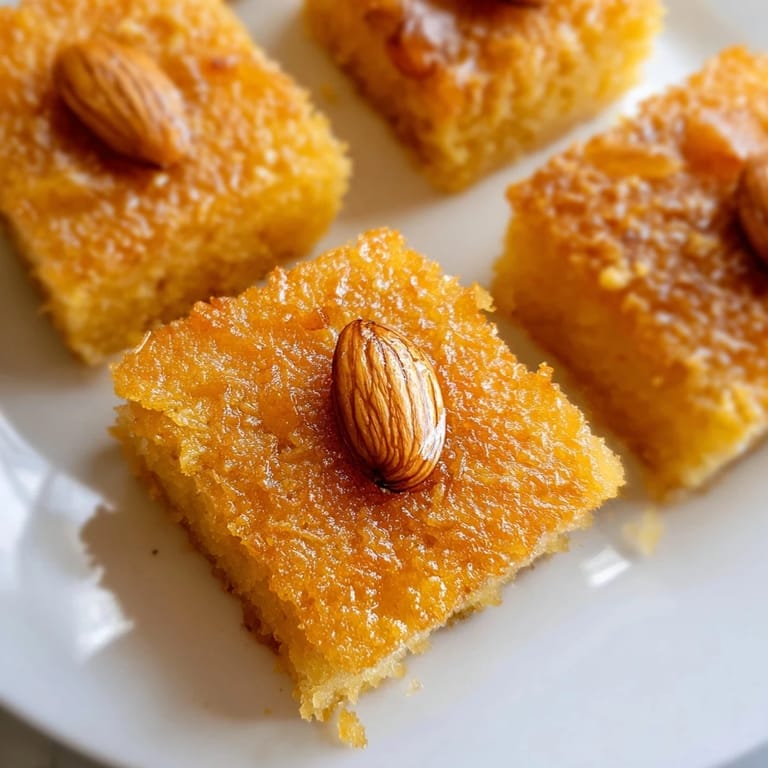
 Basbousa is the kind of dessert that brings people together without fuss, and after one batch, you'll understand why it's been a centerpiece of Egyptian celebrations for generations. Make it once and you'll want to make it again.
Recipe Questions
- → What gives Basbousa its moist texture?
The combination of yogurt and melted butter in the batter helps keep the semolina cake tender and moist.
- → Can I substitute the almonds with other nuts?
Yes, pistachios or walnuts can be used as garnish for a different flavor and crunch.
- → How is the syrup prepared for this dish?
The syrup is made by boiling sugar and water with lemon juice, then optionally flavored with rose or orange blossom water before cooling.
- → What is the ideal baking temperature for this cake?
Preheat the oven to 350°F (180°C) and bake until the surface turns golden and a toothpick comes out clean.
- → Are there variations to enhance the coconut flavor?
Sprinkling extra desiccated coconut on top before baking intensifies the coconut aroma and taste.
- → Is this cake suitable for vegetarians?
Yes, the ingredients used are vegetarian-friendly, relying on dairy and nuts without animal products.