 Pin this
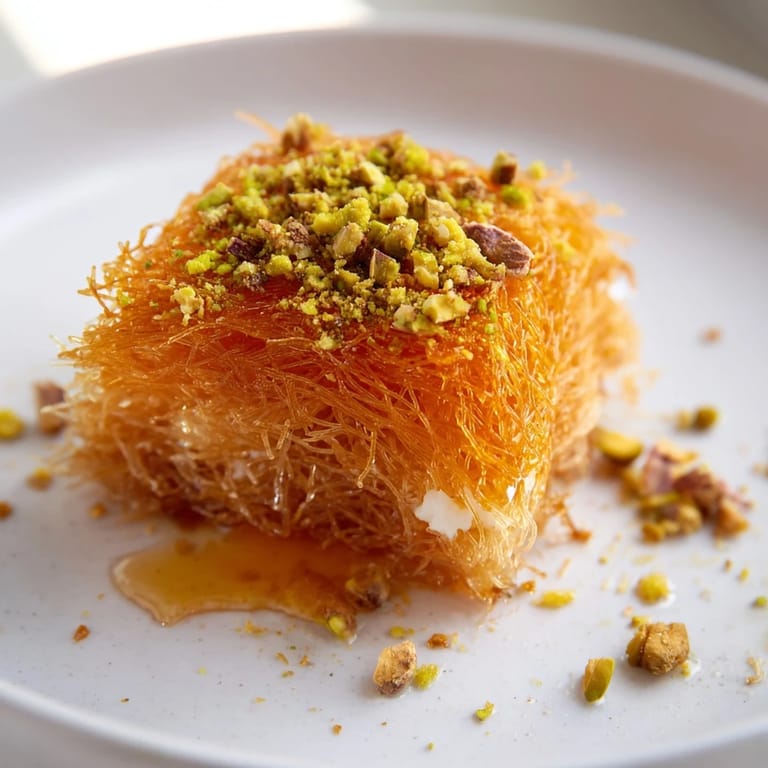
 The first time I tasted knafeh, I didn't recognize what I was eating at first—just this magnificent crunch giving way to warm, almost-liquid cheese, all bathed in honeyed syrup that tasted like flowers smelled. My neighbor had made it for Eid, and I watched her pull it from the oven with the kind of confidence that comes from making something dozens of times. She flipped it onto a platter in one smooth motion, and I understood then why this dessert shows up at celebrations—it's theater and comfort all at once.
I made this for my in-laws without warning them it was coming, and the moment they bit through that golden crust, the room went quiet in a way that told me I'd done something right. My mother-in-law asked for the recipe before she even finished her first piece, which felt like the highest compliment.
Ingredients
- Akawi cheese: This is the traditional choice, and its mild, slightly salty character is exactly what you need here—it stays creamy without becoming greasy.
- Ricotta cheese: Adds a subtle sweetness and prevents the filling from being too dense or rubbery.
- Kataifi pastry: Those delicate shredded strands create that signature crispy texture; make sure it's thawed completely or it'll crack and shatter.
- Unsalted butter: Room temperature or melted, it coats every strand and turns them golden—don't skimp or the texture suffers.
- Orange blossom water and rose water: These aren't optional if you want authentic flavor; they give the syrup its soul and make people ask what that haunting, beautiful taste is.
- Pistachios: The final garnish matters—their slight bitterness and green color balance the sweetness perfectly.
Tired of Takeout? 🥡
Get 10 meals you can make faster than delivery arrives. Seriously.
One email. No spam. Unsubscribe anytime.
Instructions
- Prep your cheese the night before:
- Soak your Akawi in cold water for several hours or overnight, changing the water every hour—this removes the excess salt that would make the filling unpleasant. Pat it dry thoroughly and shred it into thin strands so it melts evenly.
- Mix the cheese filling:
- Combine your shredded Akawi with ricotta in a bowl and set it aside; the simplicity here lets the cheese shine without interference.
- Butter the kataifi strands:
- Gently separate the phyllo strands in a large bowl, then pour melted butter over them and toss carefully until every strand is coated and glistening. Work slowly—rushing tears them.
- Build the base layer:
- Grease your baking dish generously, then spread half the buttered kataifi across the bottom, pressing down gently to create an even, compact base that won't fall apart.
- Add the cheese:
- Spread your cheese mixture in an even layer over the base, then top with the remaining buttered kataifi, pressing down again to seal everything together.
- Bake until golden:
- Slide it into your preheated 180°C oven for 30 to 35 minutes until the top is deep golden brown and crisp to the touch. You'll smell the butter and phyllo toasting, and your kitchen will smell unreal.
- Make the syrup while it bakes:
- Combine sugar, water, and lemon juice in a saucepan, bring to a boil, then simmer for 8 to 10 minutes until it thickens slightly. Remove from heat, stir in orange blossom and rose water, and let it cool—cool syrup on hot knafeh is the key to the right texture.
- Invert and soak:
- This is the brave part: run a knife around the edges, place your serving platter on top, and flip the whole thing in one confident motion. Immediately pour about half the cooled syrup over the hot knafeh so it absorbs properly.
- Garnish and serve:
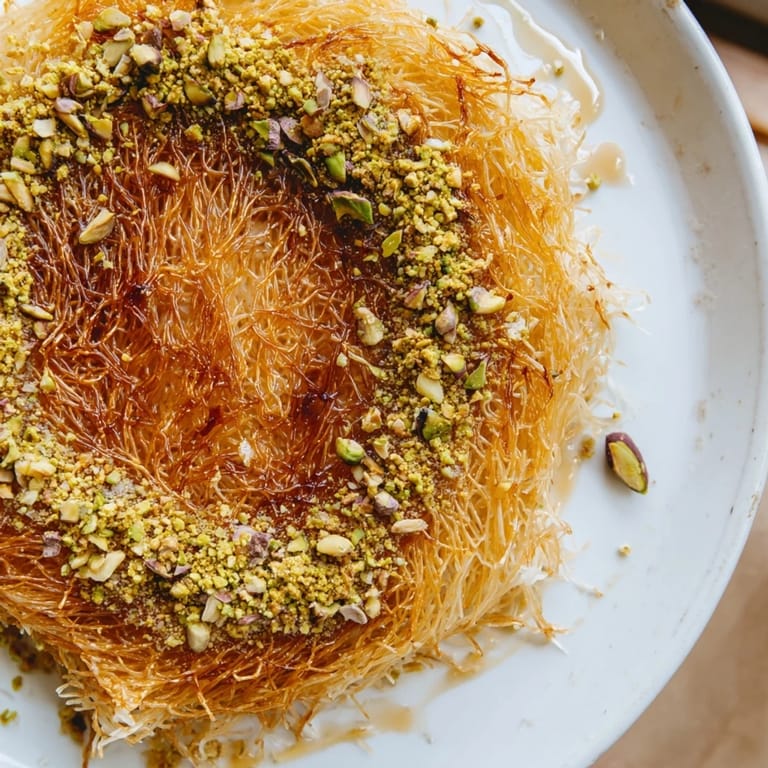
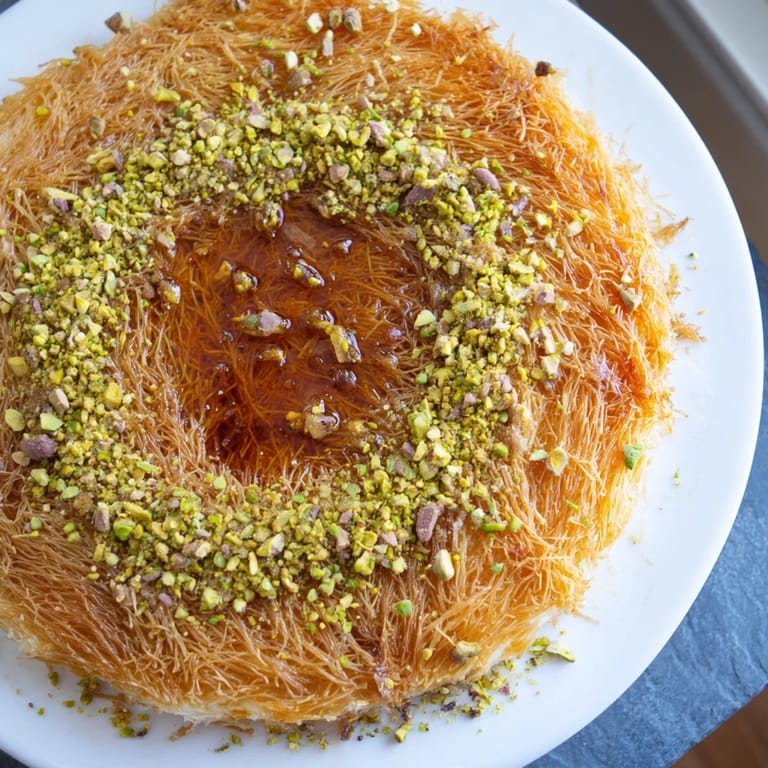
- Scatter finely chopped pistachios across the top, drizzle with honey if you like, and serve while it's still warm—the cheese should still be slightly stretchy and the phyllo still crispy.
 Pin this
 What moves me most about this recipe is how it brings people together—something about sharing warm, sticky-sweet cheese wrapped in crisp phyllo feels like a small ceremony. It's made my kitchen a place where conversations slow down and people linger over seconds.
The Magic of Flower Waters
Orange blossom and rose water are what separate a nice cheese pastry from something genuinely special—they add an almost ethereal quality that makes people pause mid-bite and try to identify what they're tasting. The first time I added them, I was tentative, worried they'd be too floral, but they're actually quite subtle in the syrup. They sit in the background like a secret, making everything taste more elegant without announcing themselves.
Texture and Timing
The entire appeal of knafeh lives in its texture contrast—crispy phyllo giving way to warm, almost-melted cheese. If you overbake it, the phyllo toughens and the cheese becomes rubbery. If you underbake it, the filling stays cold in the center and the phyllo doesn't crisp. The sweet spot is when the top is deep golden and the edges are already pulling slightly away from the dish—that's when the cheese is hot all the way through but not separated.
Serving and Pairing
Serve knafeh immediately after assembly, while the phyllo still has its snap and the cheese is at that perfect stretchy warmth. It pairs beautifully with strong, bitter flavors that cut through the sweetness—Turkish coffee or mint tea both work wonderfully, but even strong black coffee will do the job. If you're making this for a gathering, you can assemble it a few hours ahead and bake it right before guests arrive, so it's warm and at its best when you serve it.
- For a crunchier top, broil it for 1 to 2 minutes right after baking, but watch it carefully so the pistachios don't burn.
- Leftover knafeh keeps for a day if you store it in an airtight container, though it's honestly best eaten fresh.
- If you can't find Akawi, low-moisture mozzarella works as a trustworthy substitute—just soak it briefly to soften the texture slightly.
 Pin this
 There's something honest about making knafeh—it asks you to be present and careful, but rewards you with something stunning that tastes like celebration. Once you've made it once, you'll understand why it shows up at every special occasion.
Recipe Questions
- → What cheeses can be used for the filling?
Akawi cheese is traditional, but low-moisture mozzarella mixed with ricotta also works well for a stretchy, creamy texture.
- → How do I prepare the kataifi pastry?
Gently separate thawed kataifi strands and coat thoroughly with melted butter before layering to ensure crispness during baking.
- → What is in the syrup for soaking?
The syrup combines sugar, water, lemon juice, and aromatic orange blossom and rose waters, adding a floral sweetness to complement the cheese.
- → Can this dish be made ahead?
It's best served immediately for optimal texture, though you can keep it warm briefly before serving without soaking in syrup.
- → What garnishes enhance this dish?
Chopped pistachios add crunch and color, while a light drizzle of honey can deepen sweetness if desired.
- → Are there any common allergens to note?
Yes, this dish contains dairy, gluten from phyllo, and tree nuts in the garnish, so caution is advised for those with allergies.