 Pin this
 The first time I made baghrir, I was standing in a cramped kitchen in Marrakech, watching my host's mother work with such ease that her hands seemed to move on their own. She barely looked at the batter as she poured it, just listened to the pan's quiet sizzle and knew exactly when to stop. Years later, I recreated that same light, spongy texture in my own kitchen, and suddenly I understood what she'd been listening for—that gentle whisper of bubbles forming across the surface, the smell of warm yeast meeting hot metal. Now every time I make these crepes, I'm transported back to that moment, standing shoulder to shoulder with someone teaching me through action rather than words.
I remember making these for a roommate who'd been stressed about an exam, and the smell of the batter rising on the counter seemed to settle something in the apartment. She came into the kitchen halfway through cooking, drawn by the sound of those tiny holes popping across the surface, and just stood there watching without saying anything. When I slid the first one onto her plate and poured that warm honey-butter over it, she took a bite and closed her eyes. That's when I realized these crepes weren't just breakfast—they were a small act of care, the kind that fills a room with comfort before anyone even sits down to eat.
Ingredients
- Fine semolina: This is what creates that signature honeycomb texture, so don't swap it for cornmeal or coarse semolina—the fineness matters more than you'd think.
- All-purpose flour: Balances the density of the semolina and gives the batter structure without making it tough.
- Warm water: The warmth wakes up the yeast, so use water that feels comfortable on your wrist, not hot enough to kill the yeast or cold enough to slow things down.
- Active dry yeast: Just a teaspoon is enough because the baking powder joins forces with it, creating those delicate holes that make baghrir unmistakable.
- Baking powder: This is your backup yeast, ensuring the holes form even if your yeast is feeling lazy.
- Sugar and salt: A tablespoon of sugar feeds the yeast and rounds out flavors, while salt anchors everything and keeps the batter from tasting flat.
- Unsalted butter and honey: These aren't optional—they're the whole point, melted together into a golden pool that soaks into every honeycomb cell.
Tired of Takeout? 🥡
Get 10 meals you can make faster than delivery arrives. Seriously.
One email. No spam. Unsubscribe anytime.
Instructions
- Mix the dry foundation:
- Combine your semolina, flour, sugar, yeast, baking powder, and salt in a large bowl. The dry ingredients need to know each other before the water arrives, so whisk them together until you don't see any streaks of color.
- Build the batter:
- Slowly pour in the warm water while whisking constantly, moving your whisk in steady circles to catch any lumps before they have a chance to hide. You're looking for a consistency like thin pancake batter—smooth, pourable, with no resistance.
- Let time do its magic:
- Cover the bowl and step away for 30 minutes. The yeast will wake up and start creating tiny bubbles throughout the batter, and you'll notice it becoming slightly thicker and more alive as you check on it.
- Heat your pan with patience:
- Set a nonstick skillet or crepe pan over medium heat and let it warm for a couple of minutes—resist the urge to grease it, as the batter needs to stick slightly to form those holes. Test the heat with a drop of water; it should sizzle immediately without smoking.
- Pour and swirl gently:
- Pour about ¼ cup of batter into the center of the hot pan and immediately use a gentle swirling motion to spread it into a thin, even layer. Move quickly but without rushing; the batter will spread easier than you expect.
- Watch for the holes:
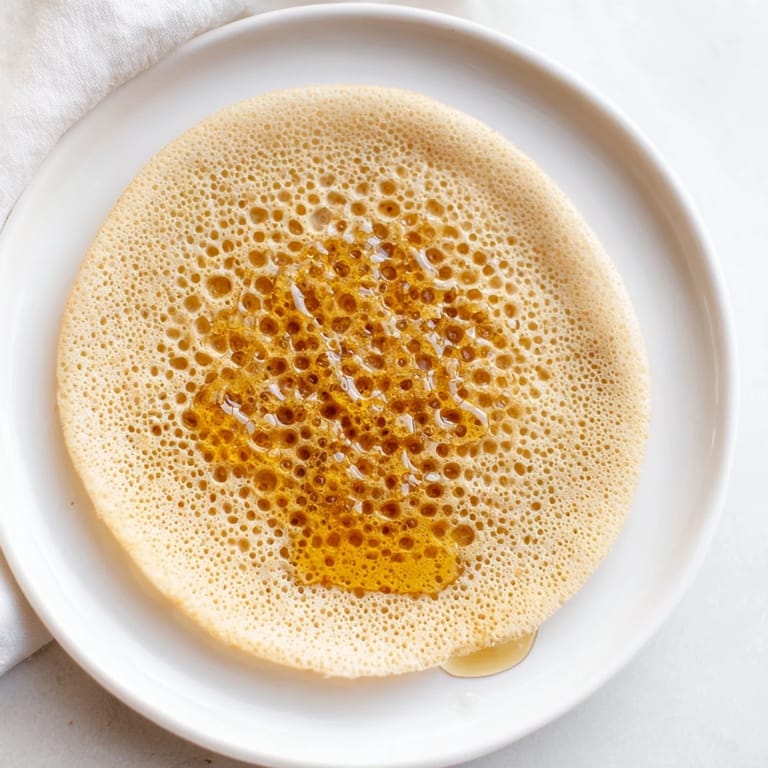
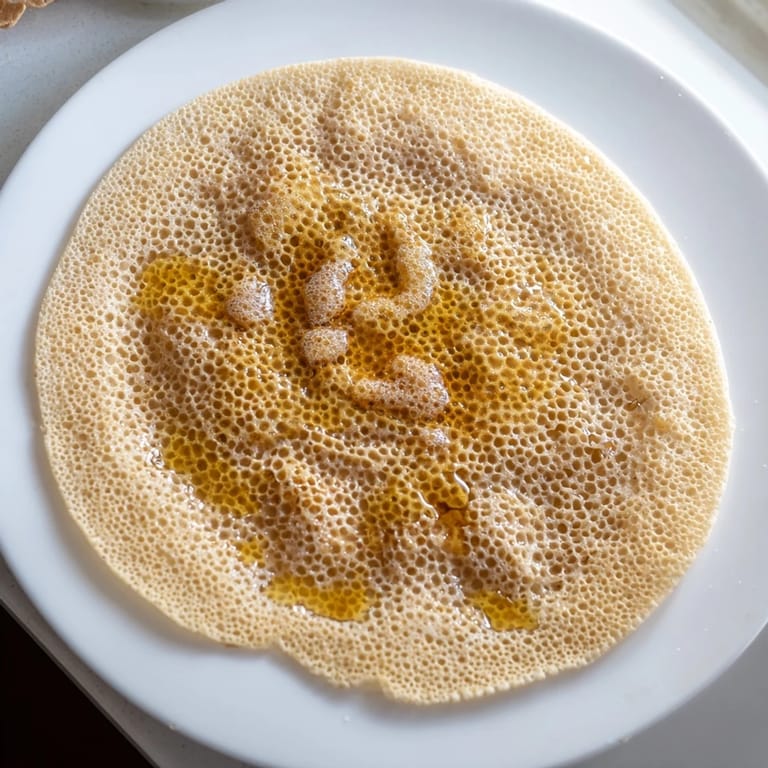
- This is where patience becomes visible—after about 2-3 minutes, you'll see tiny holes beginning to form across the surface like a sponge appearing before your eyes. The top should look dry and matte, never wet or shiny, and the bottom should be pale golden when you peek.
- Release and repeat:
- Slide a spatula underneath and transfer the baghrir to a plate, then quickly stir the batter again before pouring the next one. The batter settles between crepes, so a quick stir keeps the yeast and leavening agents evenly distributed.
- Melt your finish:
- While the last few crepes cook, gently warm the butter and honey together in a small saucepan over low heat, stirring until they combine into a silky golden liquid.
- Serve immediately:
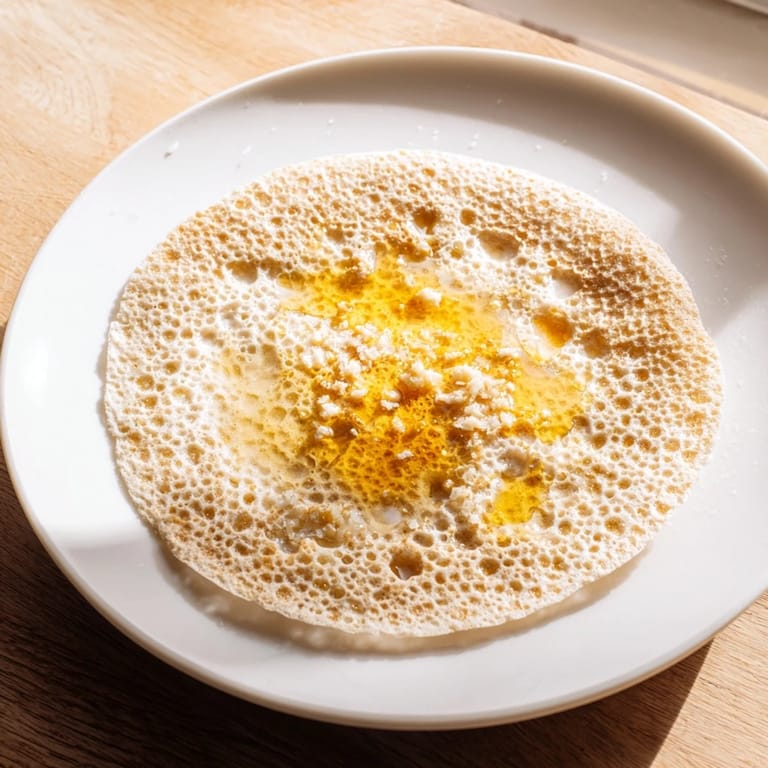
- Stack the warm baghrir and pour that honey-butter mixture over the top, letting it soak into every cell. Eat them while they're still warm enough to let the butter and honey pool at the bottom of the plate.
 Pin this
 The moment I understood baghrir was the moment I stopped thinking of it as a recipe and started thinking of it as a conversation between ingredients and heat. My grandmother used to say that you can taste impatience in food, and I finally knew what she meant when I tried to rush the resting time and ended up with flat, lifeless crepes. Now when I make them, I use that 30 minutes to sit quietly, and somehow the baghrir always comes out better.
The Science Behind the Honeycomb
That impossible texture isn't magic, though it feels like it when you first see it happening. The yeast and baking powder both release gas, creating tiny bubbles that try to escape upward through the batter while it cooks on a single side. Because you never flip it, those bubbles stay put, hardening into that delicate sponge that looks almost too fragile to pick up. The semolina's fine particles support these tiny air pockets without crushing them, which is exactly why the ratio and fineness matter so much.
Timing and Temperature Matter More Than You Think
I've learned that baghrir is one of those dishes where small adjustments in heat completely change the outcome. Too hot and the bottom burns before the top dries; too cool and the holes never form properly and you end up with dense crepes. The sweet spot is that medium heat where you can count to about 2-3 minutes without panic, where the bottom turns pale gold and the top dries to a matte finish. Once you feel this temperature in your bones—once your hands recognize the pan's heat without needing a thermometer—making baghrir becomes almost meditative.
Serving and Stretching the Joy
Baghrir is best consumed the moment it leaves the pan, warm enough that the honey-butter soaks all the way through instead of sitting on top. But life happens, and sometimes you need to reheat them—wrap them loosely in foil and warm them gently in a 300°F oven for about 5 minutes, then add fresh honey-butter to restore that luxurious soak.
- Chop some pistachios or almonds and scatter them over the top for texture and a subtle nuttiness that echoes North African flavors.
- A drizzle of orange blossom water mixed into the honey creates a more authentic, aromatic version that transports you instantly.
- Make these ahead and freeze them stacked between parchment paper—they'll reheat beautifully and remind you that good food is worth the small effort it takes to prepare.
 Pin this
 These crepes are a reminder that the most rewarding recipes are often the ones that look impossible until you understand them. Once you do, they become second nature, something you can make for people you love without ever needing to check a recipe again.
Recipe Questions
- → What gives baghrir its honeycomb texture?
The bubbly, honeycomb texture comes from yeast fermentation and baking powder in the semolina-based batter, which create air pockets during cooking.
- → Why is the batter rested before cooking?
Resting allows the yeast to activate and the batter to develop bubbles, resulting in the signature spongy texture and airflow holes on the surface.
- → Do you flip the crepes while cooking?
No, baghrir is cooked on only one side until the surface is dotted with holes and fully dry on top.
- → What are traditional toppings for these crepes?
They are typically served warm with melted butter and honey, enhancing the gentle sweetness and texture.
- → Can I adjust the batter consistency?
If the batter thickens too much after resting, adding a small amount of water helps achieve the ideal pourable texture.