 Pin this
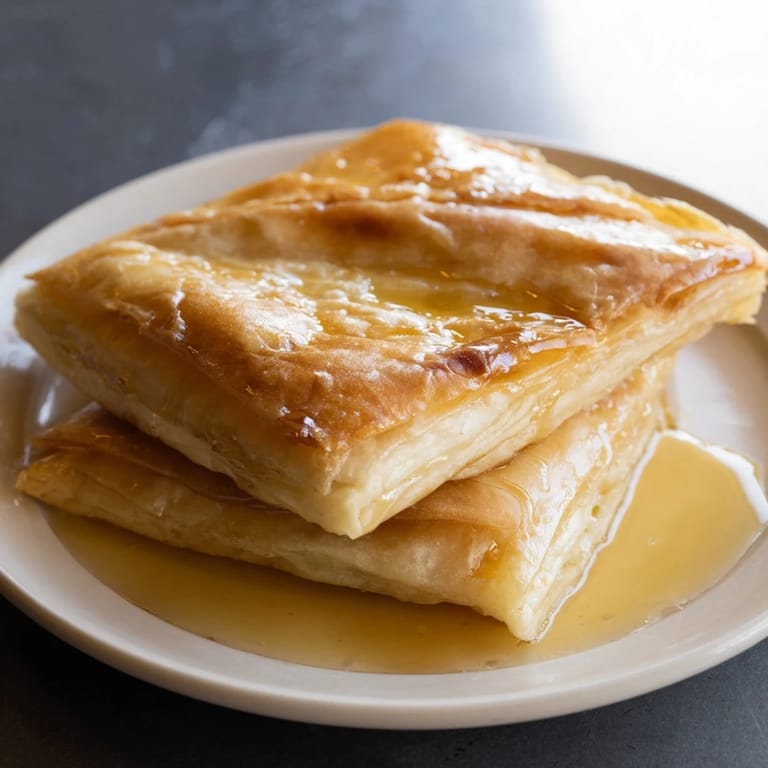
 The first time I truly understood msemen was in a cramped kitchen in Marrakech, watching a grandmother work the dough with such speed and certainty that her hands seemed to move of their own accord. She never measured, never hesitated, just created these perfect golden squares that emerged from her skillet crackling and warm. Years later, I tried to recreate that magic at home, and after a few lumpy attempts, I finally grasped the rhythm of the fold, the butter, the semolina. Now when I make msemen, I'm chasing that feeling of effortless skill.
I brought a batch of these to a friend's breakfast gathering once, still warm from the skillet, and watched people go absolutely quiet for a moment before devouring them. Someone asked if I'd learned to make them professionally, and I had to laugh because I'd burned the first three trying to get the temperature right. But that's the thing about msemen—even imperfect, they're magnificent.
Ingredients
- All-purpose flour (2 cups): The foundation that gives structure; I always sift it before using because lumps hide until you're halfway through kneading.
- Fine semolina (1 cup plus 1/4 cup for sprinkling): This is what gives msemen its distinctive slightly grainy texture and helps the layers separate—don't skip it or substitute regular semolina.
- Warm water (1 1/4 cups, plus more as needed): The temperature matters more than you'd think; too hot kills the yeast, too cool and the dough stays stubborn.
- Instant yeast (1 tsp, optional): A small amount creates an almost imperceptibly lighter crumb without making it feel airy or bread-like.
- Sugar and salt (1 tsp each): Sugar feeds the yeast if you're using it; salt enhances flavor and strengthens the gluten network.
- Vegetable oil and melted butter (1/2 cup plus 1/4 cup): The oil greases your hands and the work surface (absolutely essential), while butter creates those crackling layers and adds richness.
- Honey for serving: Warm it gently so it pools rather than beads up; cold honey just sits on top like it's unsure.
Tired of Takeout? 🥡
Get 10 meals you can make faster than delivery arrives. Seriously.
One email. No spam. Unsubscribe anytime.
Instructions
- Build your dough:
- Combine your dry ingredients in a large bowl, then add warm water gradually while mixing with your hands or a wooden spoon until the dough comes together into something soft and slightly sticky. Knead for a full 10 minutes—your arms will get tired, but this builds the gluten that lets you stretch the dough later without it tearing.
- First rest:
- Cover the bowl and let it rest for 15 minutes while you gather your oil and butter. This brief rest makes the dough more forgiving and easier to work with.
- Portion into balls:
- Divide the dough into 8 equal pieces and roll each into a smooth ball. Grease your hands with oil as you work; dry hands will stick to the dough and frustrate you.
- The stretch:
- Take one ball and, with oiled hands, gently stretch it into a very thin, almost see-through circle on your oiled work surface. You're aiming for thin enough that you can almost read through it, but not so aggressive that it tears.
- Layer and fold:
- Brush the stretched circle with melted butter, sprinkle with fine semolina, then fold all four sides toward the center to create a square, brushing and sprinkling as you fold. This creates the layers that shatter when you bite into them.
- Rest again:
- Let the folded squares sit for 5 minutes before cooking; this prevents them from immediately falling apart in the pan.
- Pan fry to golden:
- Heat your skillet over medium heat with a light brush of oil. Gently flatten each square to about 1/4-inch thick and fry for 2 to 3 minutes per side until deep golden and audibly crispy. You'll hear the oil sizzle and smell the butter toasting—that's your signal you're on the right track.
- Serve immediately with honey:
- Drizzle warm honey over the msemen the moment it comes off the heat. The contrast between the warm pastry and the sweet honey pooling into every crack is the entire point.
 Pin this
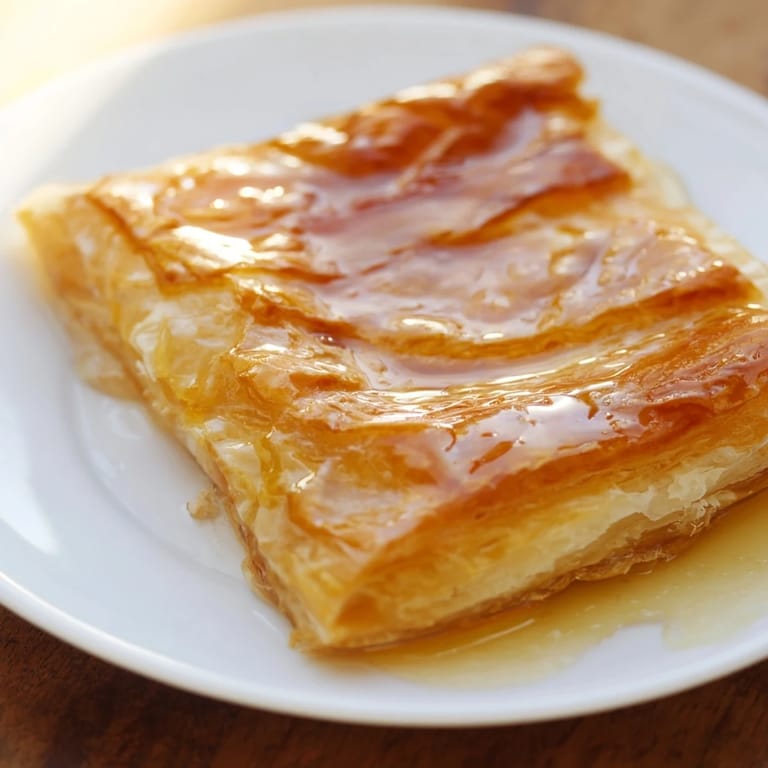
 There's a moment when you pull a perfectly golden msemen from the skillet, still crackling softly, and you realize you've created something that tastes like it came from a bakery in Fez. That's when cooking stops being about following instructions and becomes about honoring a tradition.
The Art of the Stretch
The most intimidating part is actually the simplest once your hands understand what they're doing. The dough won't rip as easily as you fear; it's surprisingly resilient if you're patient and keep your hands oiled. I used to panic thinking I was about to destroy it, but the dough is forgiving—it wants to cooperate. The moment your confidence shifts, your hands move differently, and suddenly you're stretching instead of wrestling.
Why Semolina Matters
Semolina has a coarser grain than regular flour, and when it's toasted against the butter in the pan, it creates this delicate crunch that regular flour simply cannot achieve. It also prevents the layers from fusing together during cooking, which is why each bite feels like a small victory of texture. The first time I made msemen without it, thinking I could substitute fine flour, the pastry came out soft and dense—a cautionary tale I learned so you don't have to.
Serving and Storage
Msemen is best eaten within hours of cooking while it retains that fragile crispness, but life doesn't always cooperate with perfect timing. Leftovers can be gently reheated in a skillet over low heat to restore some of that crackling texture, though they'll never quite match the first eating.
- Serve alongside strong tea or coffee, which cuts through the richness beautifully.
- Warm your honey before serving so it cascades into the cracks instead of sitting on top like an afterthought.
- A small dish of amlou (the almond-honey paste) on the side turns breakfast into a moment worth remembering.
 Pin this
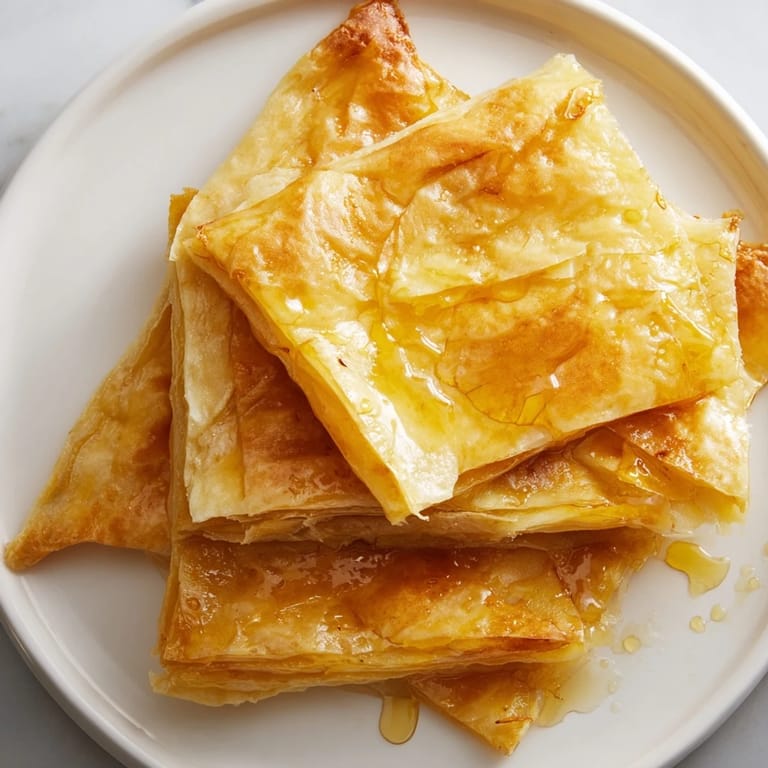
 Msemen is proof that simple ingredients and patient hands create something extraordinary. Make these when you want to feel connected to something older and more generous than yourself.
Recipe Questions
- → What ingredients create the layers in Msemen?
The layering comes from folding the dough with melted butter and sprinkling fine semolina between folds, creating crisp, tender textures when cooked.
- → How is Msemen cooked to achieve its flaky texture?
It is pan-fried in a lightly oiled skillet over medium heat until golden brown on both sides, producing a crispy crust and flaky interior.
- → Can Msemen be flavored differently?
Yes, adding a pinch of cinnamon or orange blossom water to the dough adds aromatic notes that complement the pastry's natural flavors.
- → What are ideal accompaniments for serving Msemen?
Serving warm Msemen drizzled with honey is classic, but it also pairs well with amlou (almond-honey spread) or fresh jam for added richness.
- → How should leftover Msemen be stored and reheated?
Leftovers can be kept in an airtight container and reheated gently in a skillet or toaster to restore crispness and warmth.
- → Is yeast necessary in the dough?
Instant yeast is optional; including it results in a lighter texture, but traditional versions may omit it entirely.