 Pin this
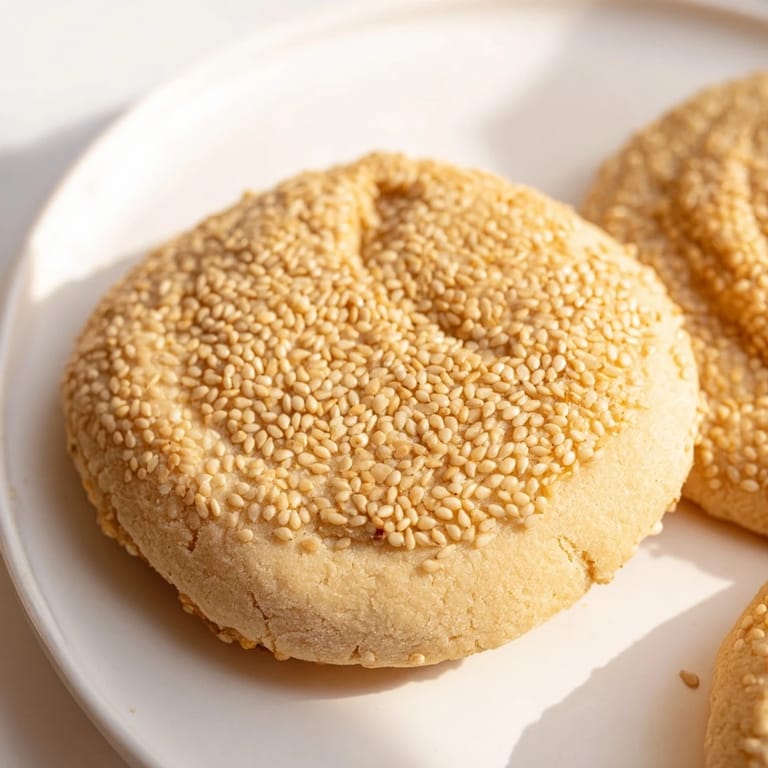
 My grandmother used to make kahk every holiday season, and the kitchen would fill with the smell of butter and dates before dawn. I'd watch her fold the dough with practiced hands, creating perfect little packages that seemed almost too delicate to eat. Years later, when she taught me her technique, I realized these weren't just cookies—they were tiny edible hugs passed down through generations. Now when I make them, I understand why she'd wake up so early; there's something meditative about shaping each one by hand. The sesame seeds catch the light as they bake, and you know something special is happening in the oven.
I made a double batch last winter when my neighbor mentioned missing Middle Eastern sweets from her childhood. Watching her face when she bit into one was everything—that moment when food unlocks a memory. She brought me fresh mint the next day and we sat in my kitchen with coffee, and she told me stories I'd never heard before. That's when I realized kahk does more than satisfy hunger; it opens doors.
Ingredients
- All-purpose flour (3 cups): The foundation of a tender crumb; measure by spooning into the cup and leveling rather than scooping directly, which compacts the flour and makes cookies tough.
- Unsalted butter (1 cup), softened: Use butter at room temperature so it creams properly with sugar, creating air pockets that keep the dough light and the finished cookies delicate.
- Powdered sugar (1/2 cup): Unlike granulated sugar, powdered sugar incorporates smoothly into the butter and dissolves completely, giving the dough a silky texture.
- Milk (1/4 cup, plus more as needed): Add it gradually because humidity affects dough consistency; you might need a touch more or a touch less depending on your kitchen.
- Baking powder (1/2 teaspoon): Just enough to give a gentle lift without making the cookies cake-like or airy.
- Salt (1/4 teaspoon): Enhances the butter flavor and balances the sweetness of both dough and filling.
- Vanilla extract (1 teaspoon): Adds warmth and depth that complements the date filling without overpowering it.
- Medjool dates (1 cup, pitted and chopped): These dates are naturally soft and sweet with a subtle caramel note; dry dates will need a touch more butter to reach paste consistency.
- Unsalted butter for filling (2 tablespoons): Creates a smooth paste and adds richness that elevates simple dates.
- Ground cinnamon (1/2 teaspoon): The classic warm spice that belongs in date filling; use fresh cinnamon if you have it.
- Ground cardamom (1/4 teaspoon, optional): A whisper of cardamom adds complexity and authenticity, but only if you enjoy its floral, slightly minty note.
- Sesame seeds (1/2 cup), untoasted: Untoasted seeds stay pale and mild; if you use toasted, the flavor becomes stronger and more pronounced.
Tired of Takeout? 🥡
Get 10 meals you can make faster than delivery arrives. Seriously.
One email. No spam. Unsubscribe anytime.
Instructions
- Cream butter and sugar into clouds:
- In a large bowl, beat softened butter and powdered sugar together for about 3–4 minutes until the mixture looks pale and fluffy, like clouds. This step incorporates air and sets up the tender crumb you're aiming for.
- Build the dough gently:
- Add vanilla, then gradually mix in flour, baking powder, and salt. The dough should come together but still feel slightly sticky and soft, not stiff.
- Add milk until dough feels right:
- Pour milk in a tablespoon at a time while kneading gently until the dough becomes pliable and soft enough to shape without cracking. If it's too dry, it'll crack when you fold the filling; too wet and it'll stick to your hands.
- Make the date filling:
- In a small saucepan over low heat, stir chopped dates and butter together until the dates soften into a paste, about 5–7 minutes. Add cinnamon and cardamom, mix well, then let it cool completely so it doesn't warm the dough.
- Divide and shape:
- Roll dough into 24 equal portions (about walnut-sized) and flatten each one gently in your palm into a thin disk. The dough should be thin enough to wrap around filling without being papery.
- Fill and seal:
- Place 1 teaspoon of cooled filling in the center of each disk, fold the dough up and over, pinch to seal, then gently roll into a smooth ball between your palms. If filling leaks out, just pinch and smooth.
- Roll in sesame seeds:
- Place each ball into a shallow dish of sesame seeds and roll gently, pressing lightly so seeds stick but don't crush the delicate dough. The seeds should coat all sides.
- Create patterns and bake:
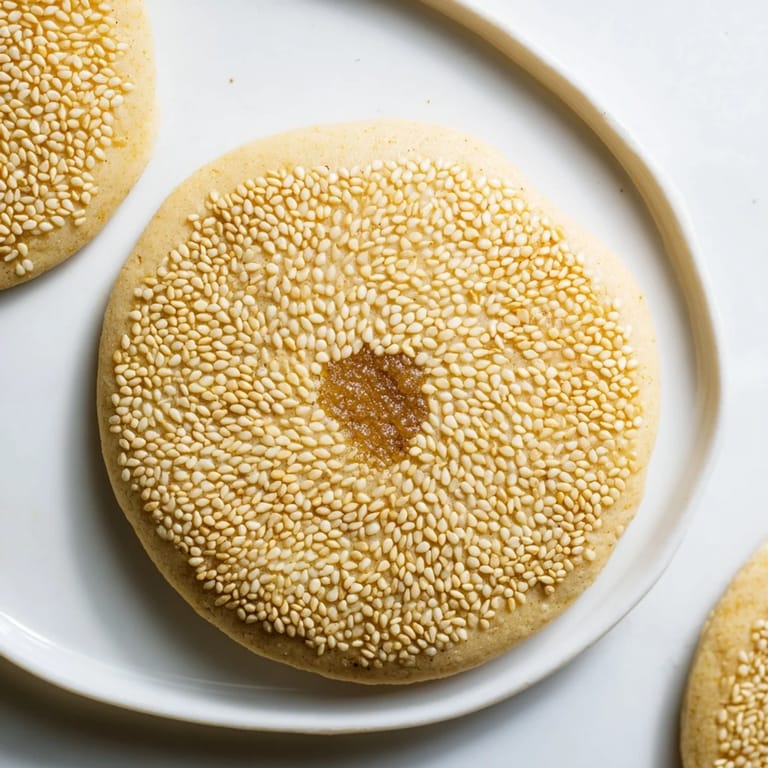
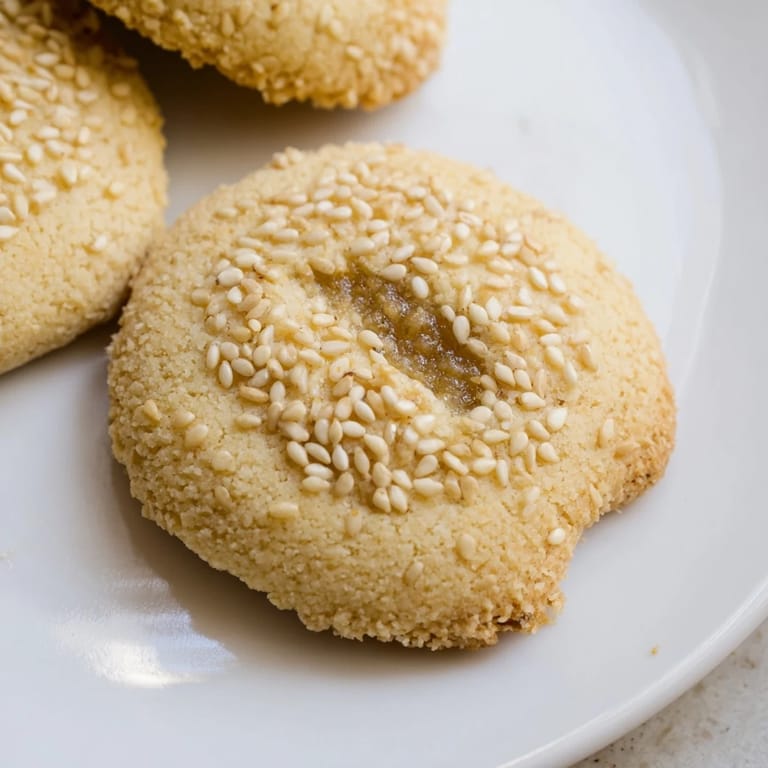
- Arrange on parchment paper and use a fork to gently flatten each ball and create a crosshatch or decorative pattern if desired. This not only looks beautiful but helps them cook evenly.
- Bake until golden:
- Bake at 350°F for 18–20 minutes; the bottoms should turn golden while the tops stay pale. Overbaking will dry them out, so watch closely during the last few minutes.
- Cool completely:
- Transfer to a wire rack and let cool fully before eating or storing. Patience here means they'll stay tender rather than becoming hard.
 Pin this
 The first time someone told me these cookies tasted like home, I understood why my grandmother protected her recipe so carefully. It wasn't about keeping secrets; it was about keeping something sacred. These little cookies hold stories, memories, and the warmth of tables where people linger long after the food is gone.
The Story Behind Kahk
Kahk appears on tables across the Levantine world during holidays, celebrations, and moments when people gather to mark time passing. Each region and family has their own version—some add orange blossom water, others prefer dates alone, and some swear by a hint of anise. What they all share is this idea that something made with care tastes better, and that these cookies are meant to be shared slowly, with tea or coffee and conversation. When you make them yourself, you're joining a long conversation about tradition, adaptation, and the small acts that keep culture alive in everyday kitchens.
Storage and Serving
Store kahk in an airtight container at room temperature for up to one week, and they'll actually taste better on day two as flavors settle and deepen. Serve them slightly warmed with strong coffee or fresh mint tea, and watch how people's faces change when they taste something that feels both familiar and special. If you're gifting them, layer them between parchment paper in a beautiful tin—presentation matters when you're giving something handmade.
Variations to Explore
Once you master the basic version, these cookies invite playfulness. I've added orange zest to the dough for brightness, stirred pistachios into the date filling for crunch, and even made a chocolate version by replacing half the flour with cocoa powder and filling it with dates mixed with dark chocolate. Each variation teaches you something new about how flavors work together and gives you a reason to make another batch. The beauty of kahk is that while tradition matters, so does making it your own.
- Try adding 1 tablespoon of orange zest to the dough for a subtle citrus note that brightens the sweet filling.
- Dust the finished cookies with a light coating of powdered sugar for elegance and extra sweetness.
- Make them ahead and freeze in an airtight container for up to three weeks; thaw at room temperature before serving.
 Pin this
 Baking kahk is an act of slowing down, of choosing to spend time creating something that nourishes both body and the sense of connection. Every cookie you make carries forward a tradition while adding your own signature to it.
Recipe Questions
- → What gives Kahk its tender texture?
The tender texture comes from a balanced dough of softened butter, flour, and milk, gently kneaded to form a soft and pliable consistency before baking.
- → How is the date filling prepared?
Chopped Medjool dates are gently cooked with butter and warm spices such as cinnamon and cardamom until softened into a smooth, paste-like filling.
- → Why are sesame seeds used for coating?
Sesame seeds add a delicate nutty flavor and a pleasing texture that complements the buttery dough and sweet filling.
- → Can Kahk be stored after baking?
Yes, stored in an airtight container, Kahk stays fresh for up to one week, retaining their flavor and tenderness.
- → What variations enhance the filling's flavor?
Adding finely chopped walnuts to the date filling introduces a crunchy, nutty dimension to the soft, sweet center.