 Pin this
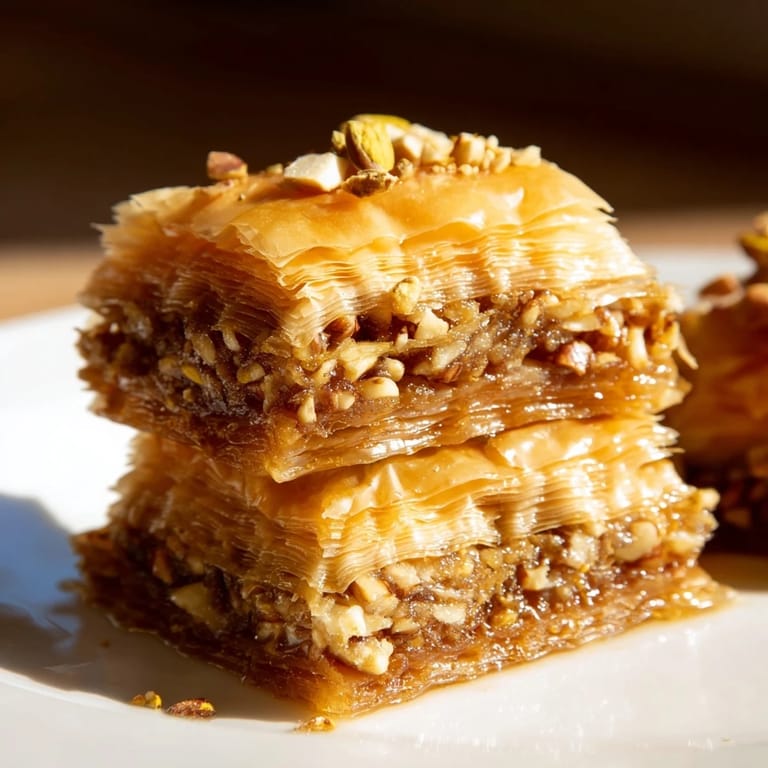
 My first encounter with baklava wasn't in a fancy patisserie but in a cramped Istanbul kitchen, watching my neighbor's hands move through phyllo sheets with the kind of practiced ease that only comes from making something hundreds of times. She moved so quickly I could barely follow, but what stuck with me wasn't the technique—it was the patience of waiting hours for that syrup to sink in, transforming crispy layers into something almost liquid and golden. That afternoon, I learned that baklava isn't about rushing; it's about respect for the waiting.
I made baklava for a dinner party once without telling anyone what it was, just sliding the diamond-shaped pieces onto a plate with strong coffee. The first person who bit into one closed their eyes, and suddenly everyone stopped talking and started reaching. My friend Sarah actually said, "Wait, you made this?" like I'd just performed minor magic. That's when I realized baklava isn't just dessert—it's a conversation starter, a small luxury that somehow feels both fancy and deeply comforting.
Ingredients
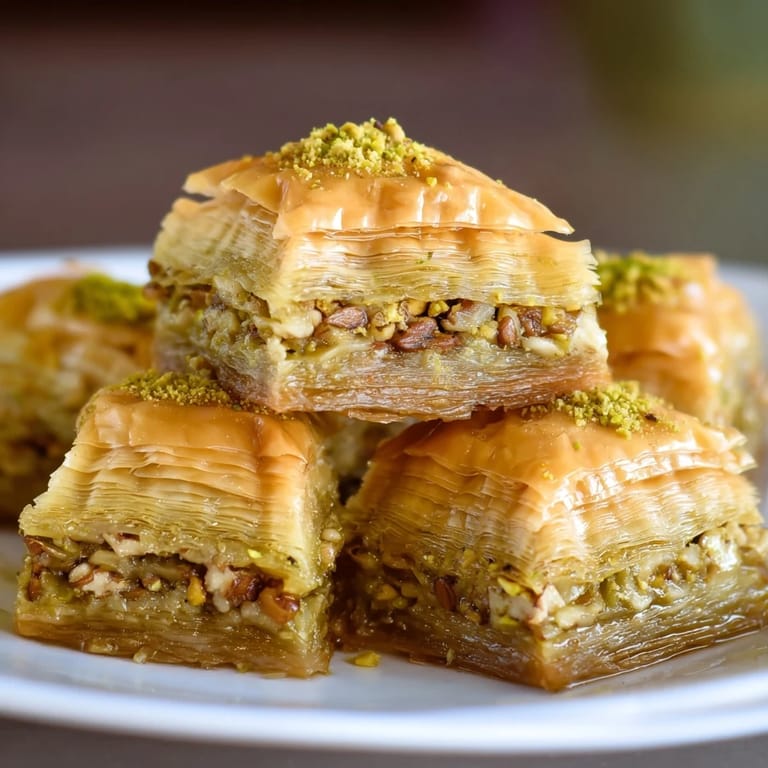
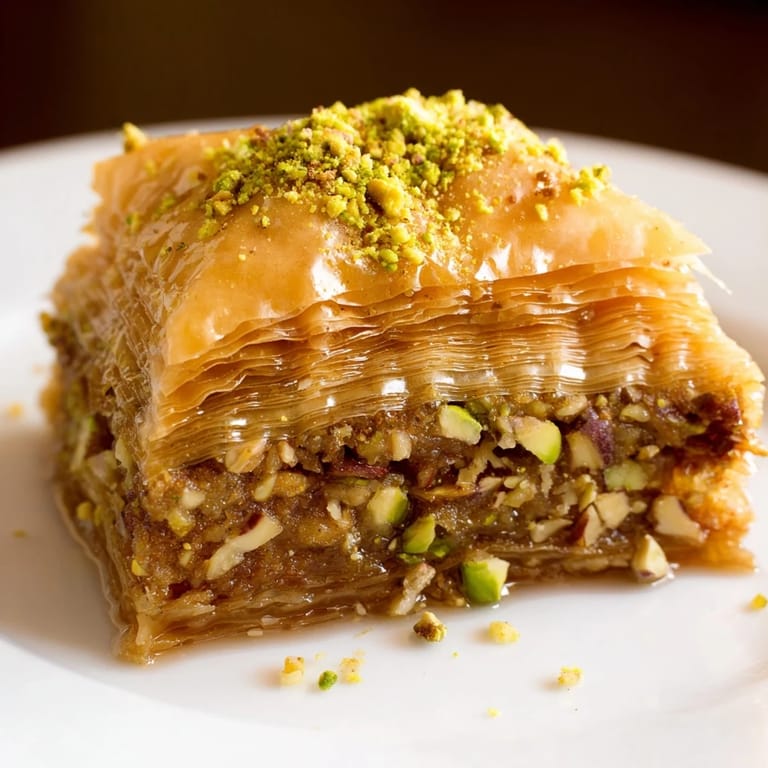
- Walnuts, finely chopped: The backbone of baklava's personality; their slight bitterness plays beautifully against the honey's sweetness, and they stay textured even when syrup-soaked.
- Pistachios, finely chopped: These bring color and a delicate, almost buttery note that walnuts alone can't achieve; they're worth seeking out if you can.
- Almonds, finely chopped: The quieter team player that rounds out the filling with subtle sweetness and helps bind everything together.
- Granulated sugar for the filling: This isn't just sweetness; it helps draw out the nuts' natural oils and creates little pockets of caramel-like texture.
- Ground cinnamon: A pinch transforms the entire filling from pleasant to memorable, warming everything without announcing itself too loudly.
- Phyllo dough, thawed: The soul of baklava; cold phyllo shatters, warm phyllo tears, so thaw it properly and keep it covered with a damp towel like your life depends on it.
- Unsalted butter, melted: Every single layer needs butter; this is not the time to be shy or health-conscious—the butter is what creates those crispy, golden sheets.
- Honey: Use real honey, not the squeeze bottle; it's not just an ingredient, it's the whole point of waiting hours for the final product.
- Water and sugar for syrup: Together they create the base that lets honey coat every layer without pooling or crystallizing.
- Lemon juice and zest: These prevent the syrup from being cloying and add a brightness that cuts through richness beautifully.
- Cinnamon stick: Unlike ground cinnamon, this infuses the syrup gently, creating layers of flavor rather than a single spice note.
Tired of Takeout? 🥡
Get 10 meals you can make faster than delivery arrives. Seriously.
One email. No spam. Unsubscribe anytime.
Instructions
- Set your stage:
- Preheat the oven to 350°F and grease your baking dish thoroughly—baklava will stick if you give it even a tiny opening. Have all your ingredients prepped and within arm's reach because phyllo waits for no one.
- Build your nut mixture:
- Combine the three nuts with sugar and cinnamon in a bowl, stirring until the mixture smells intoxicating. This is your flavor foundation, so taste it and adjust—if it doesn't taste amazing on its own, it won't sing in the final pastry.
- Protect your phyllo:
- Unroll the phyllo sheets and immediately cover them with a damp towel; even five minutes of air exposure will dry them out and turn them into papery, crumbly shards instead of flaky layers.
- Butter the base:
- Lay down one phyllo sheet, brush it generously with melted butter, then repeat this process seven more times—eight layers total at the bottom. You're creating a waterproof base that will hold everything together.
- First nut layer:
- Sprinkle about a third of your nut mixture evenly across the buttered phyllo, breaking up any clumps with your fingers so the distribution is even and no spot gets nuts-heavy.
- Build the middle:
- Layer and butter five more phyllo sheets, then sprinkle another third of the nuts, making sure they're distributed all the way to the edges where they won't dry out.
- Add the final nut layer:
- Repeat the process one more time—five buttered sheets, then the last third of your nuts scattered generously across.
- Crown with phyllo:
- Finish with eight to ten more buttered phyllo sheets, buttering each one as you go; these will be the crispy crown that catches the honey syrup first.
- Cut with intention:
- Using a sharp knife, cut the baklava into diamonds or squares while it's still raw and easy to cut—don't wait until it bakes, or you'll shatter everything. Cut all the way through to the bottom dish so pieces separate cleanly.
- Bake until golden:
- Slide into the oven for 45 minutes; you're looking for deep golden brown and the edges should be bubbling slightly with butter. The phyllo should sound crispy if you give the dish a gentle shake about halfway through.
- Prepare the syrup while baking:
- Combine honey, water, sugar, lemon juice, zest, and cinnamon stick in a saucepan and bring to a boil, then reduce heat and simmer gently for 10 minutes. The syrup should smell floral and warm, and when it cools slightly (which it should before you pour), it will be ready to soak into that hot pastry.
- The critical pour:
- The moment baklava comes out of the oven is when the magic happens—immediately pour the warm syrup slowly over the hot pastry, letting it soak into every crack and crevice. Don't skip the cooling step; you'll hear it crackling and settling as the syrup does its work.
- Practice patience:
- Let the baklava cool completely at room temperature before serving—at least four hours, though overnight is even better. This waiting period is when the syrup fully soaks in and the layers meld into something almost liquid in the center while staying crispy on top.
 Pin this
 There's something almost sacred about serving baklava—the way people slow down, the way a simple bite feels like an event rather than dessert. I once brought baklava to a potluck and watched someone take a piece, close their eyes, and just stand there for a moment, lost in it. That's when I understood that some foods do more than fill you; they make you present.
The Phyllo Technique That Changes Everything
Phyllo intimidates people, but the secret is treating it like something fragile that needs consistent, gentle care. Keep it covered, work quickly but not frantically, and brush every single layer with butter—not because you're being generous, but because that butter is what creates the crispy-yet-tender texture that makes baklava special. Think of it less like cooking and more like building; each layer matters, and the butter is your mortar.
Why the Syrup Must Be Warm and the Pastry Hot
This isn't culinary drama—it's chemistry. When warm syrup hits hot pastry, it soaks in quickly and evenly, creating those pockets of moisture that make each bite feel luxurious rather than dry. If you pour cold syrup over cooled baklava, it sits on top like frosting, and you'll end up with sticky spots and crunchy spots instead of that perfect balance. The speed and temperature difference is what allows the syrup to penetrate all those flaky layers.
Storage and Serving
Baklava improves with time, becoming more tender as the syrup continues to work its way through every layer—wait at least four hours before your first bite, but honestly, overnight is when it truly becomes itself. Store it covered at room temperature for up to a week, though in my experience, it rarely lasts that long once people realize you've made it.
- Pair it with strong Turkish coffee or black tea to cut through the sweetness and cleanse your palate between bites.
- If you want a lighter version, substitute some honey with orange blossom water, which adds florality without extra sugar.
- Baklava is actually more forgiving than it seems—even if your phyllo has a few small tears or your layering isn't perfect, warm syrup and patience will make it sing.
 Pin this
 Making baklava is less about following instructions perfectly and more about understanding the why behind each step. Once you get it, you've got a dessert that tastes like you spent hours in the kitchen when you really only invested a little time and a lot of patience.
Recipe Questions
- → What type of nuts are used in this dessert?
A blend of walnuts, pistachios, and almonds is finely chopped and combined for the nut filling.
- → How is the phyllo dough prepared?
Phyllo sheets are layered and brushed with melted butter between each layer to achieve a flaky texture once baked.
- → What ingredients flavor the honey syrup?
The syrup includes honey, water, sugar, lemon juice, lemon zest, and a cinnamon stick simmered together for a fragrant finish.
- → How long should the dessert soak before serving?
After baking, allow the sweet syrup to soak into the layers for at least 4 hours to fully absorb flavors.
- → Can this dessert be stored, and for how long?
It can be kept covered at room temperature for up to one week while maintaining its freshness.
- → What is the ideal baking temperature and time?
Bake at 350°F (175°C) for approximately 45 minutes until the layers turn golden and crisp.