 Pin this
 I discovered this board during a late-night cooking adventure in a friend's kitchen, inspired by a minimalist Japanese restaurant we'd just left. The memory of arranging those glossy mushrooms and dark seaweed in careful fans stays with me—something about the ritual of it felt meditative, like we were creating edible art. That night, I realized a board could tell a story through layers of umami, each ingredient whispering a different flavor note.
I made this for a dinner party on a rainy autumn evening, and watching my guests lean in with chopsticks, discovering new flavor combinations with each plate they built, reminded me why I love feeding people. One friend turned to me mid-bite and said, 'This tastes like umami,' and we all laughed because that was exactly the point.
Ingredients
- Shiitake mushrooms: These are the foundation of umami magic—buy them fresh and slice them yourself if you can. They'll brown beautifully and develop a deep, almost meaty flavor when sautéed.
- King oyster mushrooms: These substantial beauties hold their texture and develop a golden edge that catches the light on your board. They're structural and visual heroes.
- Enoki mushrooms: A flash of blanching keeps them tender and bright. They add delicate height and airiness to the arrangement.
- Sesame oil: Use toasted sesame oil for its deep, nutty warmth. It's worth buying a good one because you can taste the difference immediately.
- Soy sauce or tamari: The backbone of every savory moment on this board. Tamari is your gluten-free friend.
- Mirin: Optional but honestly, those few grams of sweetness round out the mushroom sauté in a way that feels like a gentle hand.
- Roasted seaweed snacks: Buy the kind that's already seasoned. They're crispy, salty, and they arrange like little green treasures.
- Seaweed salad: This comes dressed already, and it's a salty, umami-packed shortcut that feels homemade.
- Nori strips: Cut them yourself just before serving so they stay crispy and dramatic.
- Pickled daikon radish: The bright acidity cuts through richness. Trust this ingredient to balance the heavier umami players.
- Pickled ginger: A small amount goes far. It's palate-cleansing and adds visual pop with its pink hue.
- Edamame: Steamed and shelled, these little green pops of protein are your textural variety and a nod to the Japanese origins of this idea.
- Black garlic cloves: If you haven't met these yet, they're aged garlic with deep, molasses-like sweetness. They're not sharp, just complex and dark and utterly compelling.
- Fermented black beans: Rinse them well, then let their deep saltiness anchor the board. They're unassuming until you taste them.
- Roasted cashews or peanuts: Whichever you choose, they're your crunch and richness. I lean toward cashews for their buttery calm, but peanuts bring earthiness.
- Fried shallots: These crispy, golden strands are your texture secret. They catch light and add that final flourish that makes guests say 'wow.'
- Fresh coriander and chives: Herbs here aren't just garnish—they're freshness breaking through all that fermented depth. Use them generously.
- Red chili: Optional but encouraged. Thin slices add heat and visual fire to an already dramatic presentation.
- Ponzu and spicy sesame dressing: Make or buy, but have both. They're the conversation starters between the board and your guests.
Tired of Takeout? 🥡
Get 10 meals you can make faster than delivery arrives. Seriously.
One email. No spam. Unsubscribe anytime.
Instructions
- Toast and sauté your mushroom medley:
- Heat sesame oil in your skillet over medium-high heat until it shimmers and smells toasty. Slice your shiitake and king oyster mushrooms and add them all at once. Let them sit undisturbed for a moment—this is when the browning happens, when they develop that golden, almost caramelized edge. After 4 to 5 minutes, toss them, let them cook another minute, then add soy sauce and a teaspoon of mirin if you have it. The pan will smell absolutely incredible. Cook for just one more minute, then transfer to a plate to cool. These will anchor your board with warmth and depth.
- Give the enoki mushrooms their moment:
- Bring a pot of water to a rolling boil and blanch your trimmed enoki mushrooms for exactly 30 seconds. Drain them immediately and let them cool. They'll stay tender and bright, and this brief treatment keeps them from being too raw against the cooked mushrooms.
- Create the first fan:
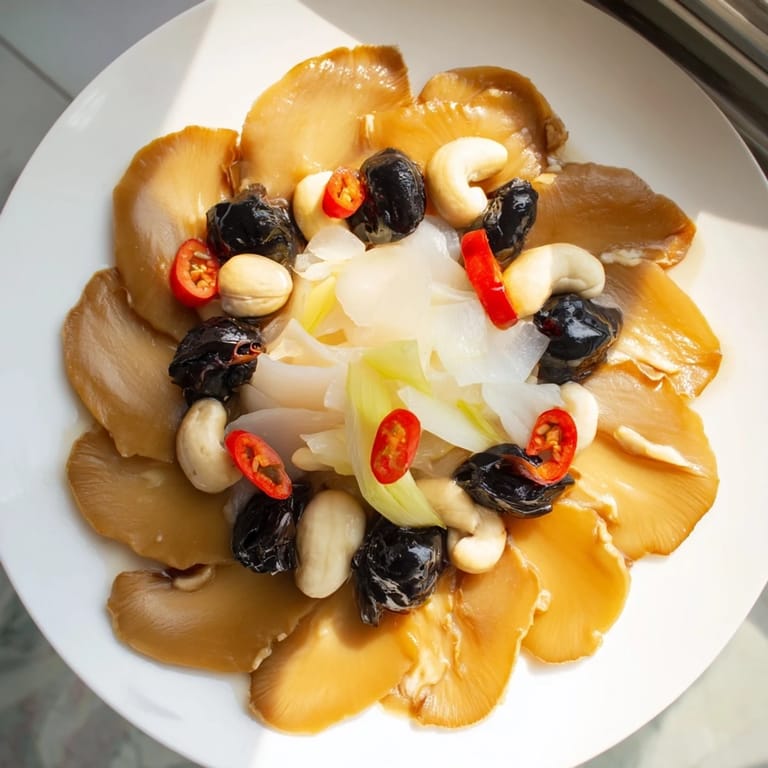
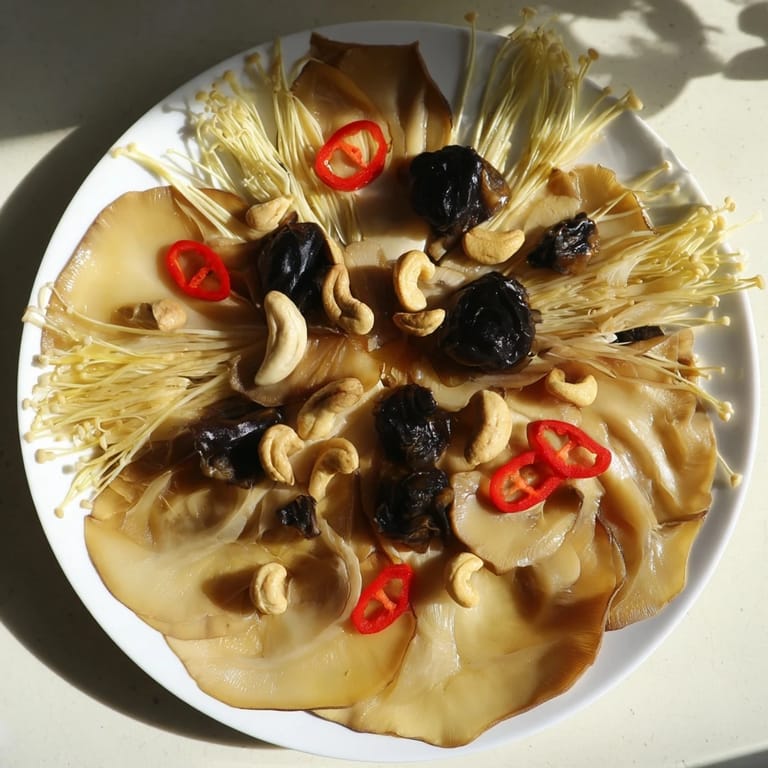
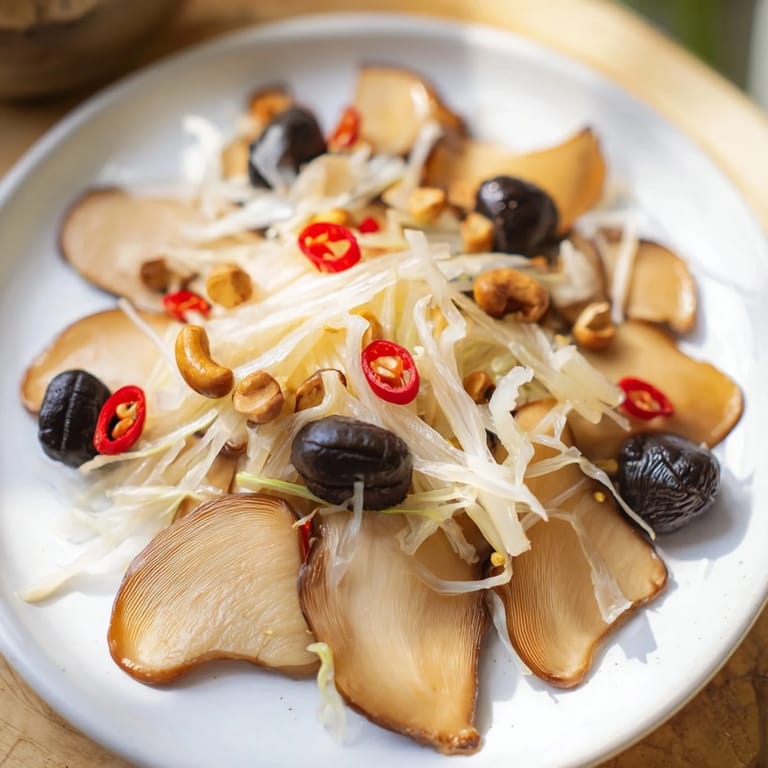
- On your large board or platter, start arranging your cooled mushrooms—shiitake, king oyster, and enoki—in overlapping fans. Overlap each slice slightly, like you're creating a flower that tells a story of texture variety. This is meditative work. Don't rush it. Let the golden browns and cream colors of the mushrooms be your first statement.
- Build secondary fans:
- Now create additional fans using your seaweed snacks, nori strips, and spoonfuls of seaweed salad. Alternate the deep greens and blacks with whatever space you have left. Each fan should feel intentional, like you're painting with ingredients rather than just placing them.
- Fill the spaces with intention:
- This is where the umami accents live. In the remaining spaces, create small piles or clusters of pickled daikon, pickled ginger, steamed edamame, black garlic cloves, and fermented black beans. Think of negative space—you want the board to feel abundant but not crowded, dramatic but balanced.
- Add the final flourishes:
- Scatter roasted cashews or peanuts across the board in small clusters. Sprinkle fried shallots where you see gaps—they'll catch light and add shimmer. Pick fresh coriander leaves and scatter them for green brightness. Chop your chives and add them. Slice your red chili thinly and place it where it will look most striking. This is the moment the board becomes a showstopper.
- Nestle in your sauces:
- Pour ponzu sauce and spicy sesame dressing into small bowls and find little homes for them on the board. They're not afterthoughts—they're the bridge between all these flavors and your guests' palates.
- Serve with intention:
- Bring the board to the table and encourage everyone to combine flavors as they wish. Tell them to try the black garlic with cashews, the pickled ginger with seaweed, the mushrooms with ponzu. Let them make discoveries. This board is meant to be a conversation.
 Pin this
 There's a moment at the start of every dinner party where everyone stops talking and just looks at the food you've placed in front of them. With this board, that moment stretches. I remember watching my guests lean in, their eyes moving across the arrangement like they were reading a map, each person finding a different path through the flavors. That's when I knew I'd created something that was more than just lunch—it was an experience.
The Art of Umami Layering
Umami is often called the fifth taste, but it's really about creating depth through accumulation. This board is a masterclass in umami layering because it combines fermented ingredients (miso, soy, fermented black beans), aged ingredients (black garlic, aged seaweed), and ingredients naturally high in glutamates (mushrooms, edamame). When you combine these on a single board, something magical happens—one flavor amplifies another. The soy sauce isn't just salty; it brings out the earthiness of the mushrooms. The fermented black beans add complexity that makes the sesame oil taste richer. This isn't accident; it's intention. Understanding this principle will change how you cook forever.
Preparing Ahead Without Losing Freshness
The beauty of this board is that most of it can be prepared ahead of time, but timing matters. You can sauté the mushrooms up to 4 hours before serving and keep them covered at room temperature. You can blanch the enoki, prepare all your pickled vegetables, and measure out your black garlic and fermented beans in the morning. The seaweed snacks can be arranged the night before (covered loosely with plastic wrap to maintain some crispness). What you must do last: add the herbs, fried shallots, and chili. These are your freshness guards. They're what keep the board feeling alive and just-made when your guests see it. This is where that final 5 minutes of assembly creates the magic.
Making It Your Own
This board started as inspiration from a restaurant, but it became mine when I started changing it. Some nights I add grilled tofu or marinated tempeh for protein. Other times I swap the mushrooms for whatever looked good at the market—portobello mushrooms, maitake, fresh shiitake with the stems left on for drama. I've made it for carnivores by adding prosciutto tucked between the mushroom fans. I've made it vegan by being careful with every ingredient. I've paired it with sake, with green tea, with cold white wine. The framework stays the same, but your fingerprints should be all over it by the end. That's when a board becomes more than a recipe—it becomes a tradition.
- Don't be afraid to substitute mushrooms based on what's fresh and beautiful at your market.
- Taste your ponzu and spicy sesame dressing before serving; they're your seasonings for the whole board, so they should be exactly how you like them.
- If something doesn't feel right on the board visually, rearrange it. You have full permission to make this beautiful in whatever way speaks to you.
 Pin this
 This board has taught me that feeding people is about more than nutrition—it's about creating a moment where everyone at the table feels like they've been invited into something special. Every time I make it, I'm reminded that the simplest meals are often the ones people remember longest.
Recipe Questions
- → What mushrooms are best for this dish?
Shiitake, king oyster, and enoki mushrooms provide varied textures and deep, earthy flavors ideal for layering umami.
- → How should the mushrooms be prepared?
Sauté shiitake and king oyster mushrooms with sesame oil and soy sauce until golden, and blanch enoki mushrooms briefly to maintain texture.
- → What role do the seaweed elements play?
Roasted seaweed snacks, nori strips, and seaweed salad add oceanic umami notes and a contrasting crisp texture.
- → Can this board be adapted for vegan diets?
Yes, by ensuring all sauces and pickled ingredients are plant-based and optionally adding grilled tofu or marinated tempeh for protein.
- → What dips complement this board best?
Ponzu sauce offers tangy brightness while spicy sesame dressing adds creamy heat, perfectly enhancing the umami layers.
- → Are there common allergens in this dish?
It contains soy, nuts (cashews or peanuts), and sesame, with possible gluten in some seaweed snacks and soy sauce.