 Pin this
 I still remember the first time I created a platter like this for a summer gathering at my apartment. I'd spent the morning at the farmer's market, picking up the most vibrant vegetables I could find—rainbow carrots that looked almost too beautiful to cut, cherry tomatoes in shades I didn't know existed. As I arranged them on my grandmother's old wooden board, something magical happened. The platter became more than just food; it was a conversation starter, a centerpiece that said "everyone belongs at this table." That's when I realized that the simplest meals, arranged with intention and heart, can be the most memorable.
Years ago, I made this for my friend Maya's book club, and she told me later that it was the first time in months she'd felt like she could truly relax at a gathering. Everyone was so focused on the colors, the variety, the joy of it all, that the usual awkwardness just melted away. That's the real magic of this platter—it does the social work for you.
Ingredients
- Rainbow carrots, sliced (1 cup): These beauties aren't just for show—they're sweeter and more tender than regular carrots, and slicing them thin means they stay crisp and are perfect for dipping into creamy dips.
- Baby cucumbers, sliced or quartered (1 cup): Look for the smallest ones you can find; they have thinner skins and fewer seeds, making them perfect for eating raw and staying cool and refreshing throughout the gathering.
- Cherry tomatoes, assorted colors (1 cup): The small ones burst with concentrated flavor and look like little jewels on your platter—mix colors for maximum visual impact.
- Radishes, thinly sliced (1 cup): These add a peppery bite and crisp texture that keeps people coming back; slice them paper-thin just before serving so they stay at their crispiest.
- Baby bell peppers, sliced (1 cup): Sweet and mild, these little peppers add brightness and come in stunning colors—they're the platter's best friends.
- Snap peas (1 cup): These are the crowd-pleasers, especially for people who might be hesitant about raw vegetables; they're naturally sweet and endlessly satisfying.
- Seedless grapes, mixed colors (1 cup): Grapes bridge the gap between vegetable and fruit sections beautifully and add natural sweetness that balances savory dips.
- Strawberries, halved (1 cup): Fresh strawberries with their bright red color and subtle sweetness remind everyone that healthy food can taste like celebration.
- Pineapple chunks (1 cup): The tropical sweetness and golden color add warmth to the platter, and they're sturdy enough to handle dipping without falling apart.
- Kiwi, peeled and sliced (1 cup): The brilliant green and tiny seeds create visual interest, plus the slight tartness cuts through rich dips beautifully.
- Classic hummus (1 cup): The foundation dip—creamy, crowd-pleasing, and packed with protein to keep guests satisfied.
- Beetroot hummus (1 cup): This is your platter's secret weapon; the deep magenta color is stunning and the earthy-sweet flavor surprises people in the best way.
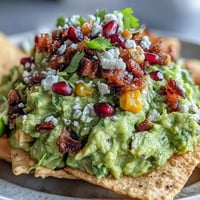
- Guacamole (1 cup): Creamy and luxurious, this dip says "this gathering matters." Keep it fresh by adding lime juice just before serving.
- Cashew tzatziki (1 cup): Tangy and cool, this plant-based take on the classic Greek dip feels fancy but comes together in minutes with a food processor.
- Pomegranate seeds (1/4 cup): These jewel-like seeds aren't just beautiful—they add a burst of tart sweetness and a satisfying pop of texture.
- Fresh herbs—mint, basil, parsley (1/4 cup): A small scatter of fresh herbs right before serving brings everything to life and adds fragrance that makes people want to eat.
- Edible flowers (optional): If you can find them, even a handful of pansies or nasturtiums elevate the whole experience and remind us that eating is sensory magic.
- Gluten-free crackers or pita chips (1 cup): These are the vehicle for dipping and the bridge for guests who might want something more substantial than just vegetables.
Tired of Takeout? 🥡
Get 10 meals you can make faster than delivery arrives. Seriously.
One email. No spam. Unsubscribe anytime.
Instructions
- Start with pristine produce:
- Wash each vegetable and fruit under cool water, then pat them dry thoroughly with clean kitchen towels. Moisture is the enemy of crispness, and you want every bite to be perfectly crunchy. As you dry, feel the weight of each piece in your hands—there's something grounding about this ritual that slows you down and gets you present.
- Slice with intention:
- Using a sharp knife and a steady cutting board, slice each item as indicated, creating pieces that are uniform in thickness. Thin slices mean more surface area for dipping and a more professional presentation. Take your time here; there's no rush. The repetitive motion of slicing becomes meditative.
- Choose your canvas:
- Select a large wooden board, ceramic platter, or even a clean marble slab. The base matters because it sets the stage for everything that comes next. If you don't have something large enough, layer parchment paper over a baking sheet or use two smaller boards pushed together.
- Position your dips strategically:
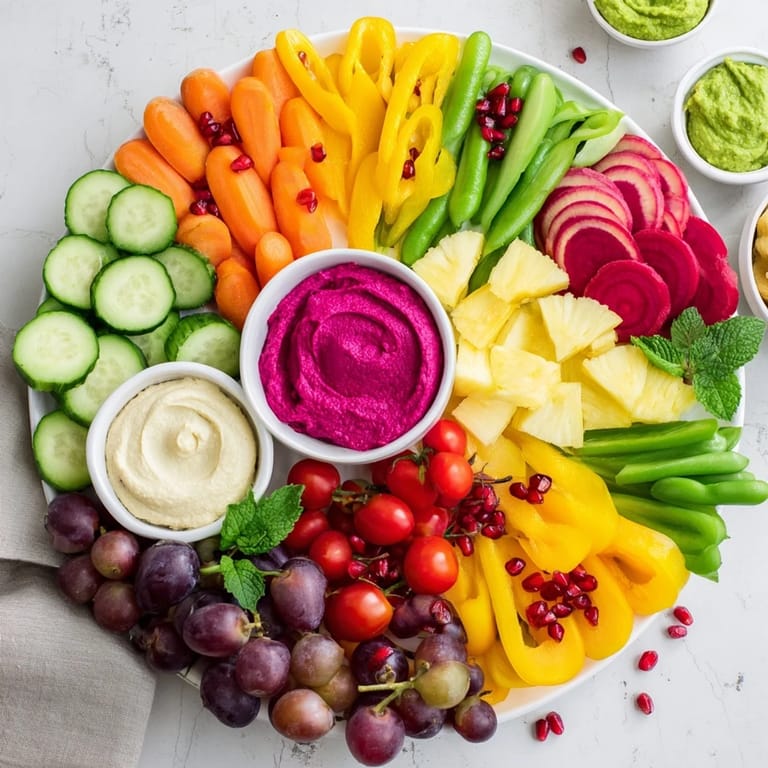
- Place small bowls of each dip at different points around your platter—think of them as anchor points. Position them where they're easily accessible but also where they act as visual breaks in the sea of vegetables and fruits. If your bowls are shallow, you can nest them in slightly larger bowls filled with ice to keep the dips cool and fresh.
- Build color sections like an artist:
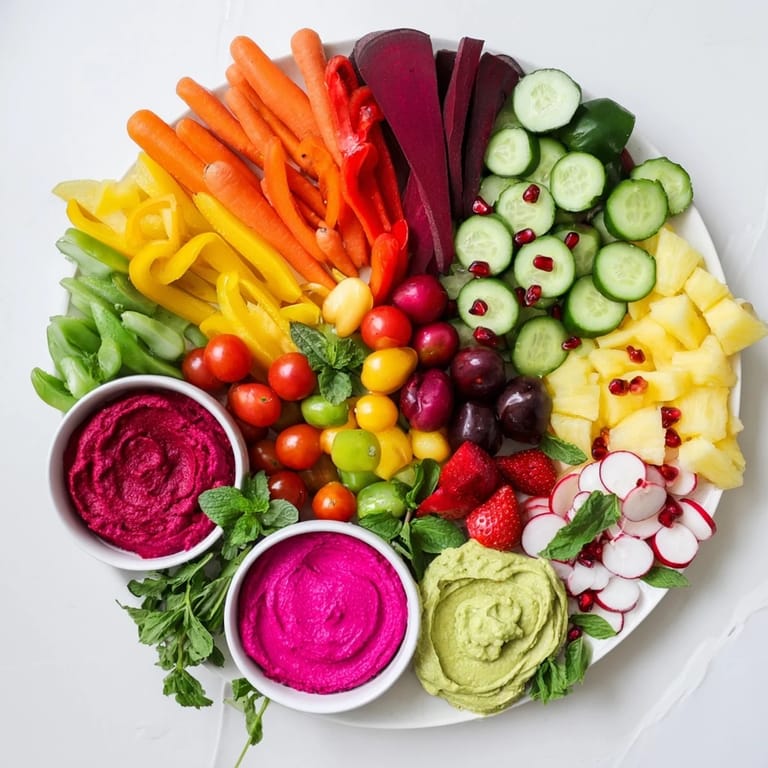
- Start arranging, but think of your platter like a painting. Group similar items together but alternate colors so each section pops against its neighbors. Let orange carrots sit next to purple radishes. Place red tomatoes next to yellow bell peppers. This isn't just food; it's art you can eat. Stand back frequently and look at the overall balance.
- Fill the gaps with generosity:
- Once your main vegetables and fruits are arranged, sprinkle pomegranate seeds into gaps like you're scattering jewels. Toss fresh herbs casually across the platter. Add edible flowers if you have them, placing them where they'll catch the light. Distribute crackers and pita chips so there are little pockets of them throughout, not just in one area.
- Final touch and serve:
- If you're serving immediately, step back and admire what you've created for a moment. If you're preparing ahead, cover the platter loosely with plastic wrap and refrigerate. When it's time to serve, take it out fifteen minutes early so the vegetables come to room temperature and taste their best, then add a final sprinkle of sea salt over the vegetables if desired—it brings everything into focus.
 Pin this
 I learned this lesson when I made a platter for an afternoon gathering and sliced everything the night before. By the time guests arrived, the vegetables had wept into the board and lost their snap. Now I know that a platter is like a moment in time—it's only truly perfect when it's fresh and alive, and that's exactly why it matters. This is food that asks you to be present, to gather now, not later.
Why This Works as Party Magic
A platter like this works because it meets people where they are. The person avoiding sugar has fruit. The person who's vegan has dips that feel indulgent. The person who's stressed about fitting in has something easy to grab without making conversation. It's abundance that feels abundant, not fussy or forced. I've watched shy people light up around this platter because they can take their time, eat at their own pace, and nobody's watching them cut into a slice of something intimidating. It becomes a conversation without words—the vegetables speak for themselves.
Seasonal Flexibility as Your Superpower
The beauty of this platter is that it shifts with the seasons and the farmers market. In summer, lean into heirloom tomatoes and fresh berries. In fall, add roasted root vegetables, apple slices, and dried fruits. In spring, celebrate asparagus and fresh peas. In winter, use sturdy vegetables like Brussels sprouts (raw, thinly shaved) and citrus fruits. This isn't a recipe to follow rigidly; it's a template for celebration. Trust what looks good at the market, trust what makes your eyes light up, and build from there.
The Art of Arrangement and Last-Minute Elevation
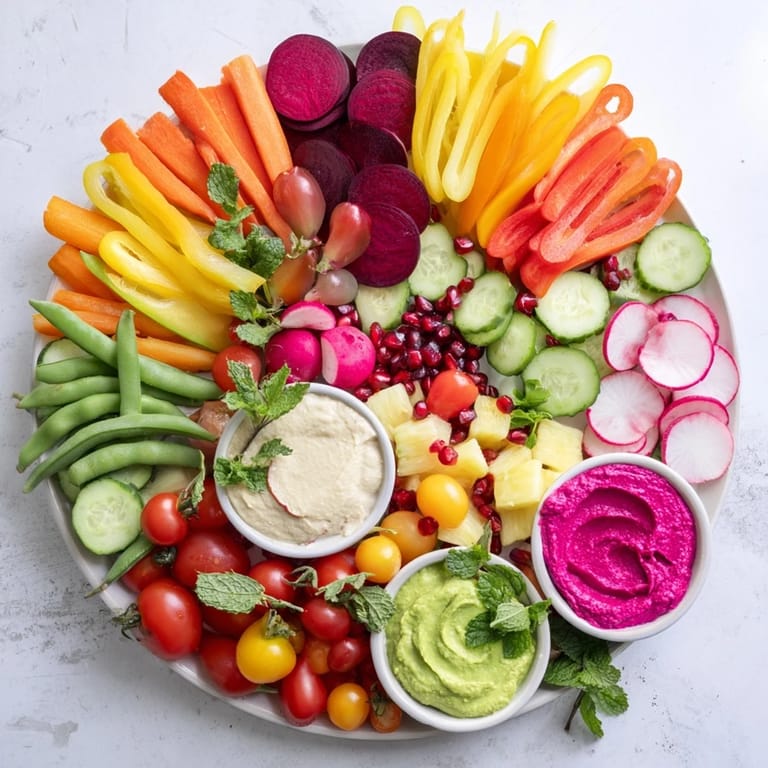
Arrangement is where this platter transforms from ingredients into experience. Think about height variation—pile some items, lay others flat. Think about temperature contrast—cool cucumbers next to colorful piles of warm-hued carrots. Think about repetition—if you have radishes, scatter slices throughout rather than piling them in one corner. The goal is that no matter where someone's hand reaches, they're rewarded with variety and surprise. Remember that your platter will be a little bit different every time you make it, and that's not a failure—it's a success.
- If you want to serve this platter later, prepare all vegetables in advance and arrange them just before guests arrive, keeping dips chilled separately until the last moment.
- A drizzle of your best olive oil over the vegetables with a light sprinkle of fleur de sel thirty minutes before serving adds a sophisticated touch that feels effortless.
- Play with color theory—complementary colors make each other pop, so let purples dance with yellows and reds glow against greens.
 Pin this
 This platter asks you to slow down and celebrate what grows in our gardens and on our farms. Every time you make it, you're saying yes to abundance, to sharing, to the simple pleasure of eating well together. That's worth showing up for.
Recipe Questions
- → What vegetables are best for this platter?
Use a variety of fresh vegetables like rainbow carrots, baby cucumbers, cherry tomatoes, radishes, baby bell peppers, and snap peas for diverse colors and textures.
- → Can the fruit selection be customized?
Absolutely! Seasonal fruits or favorites like strawberries, pineapple chunks, kiwi, and mixed grapes can be swapped in to keep the platter fresh and interesting.
- → How should the dips be prepared or served?
Plant-based dips like classic hummus, beetroot hummus, guacamole, and cashew tzatziki are best served chilled in small bowls arranged on the platter for easy dipping.
- → What garnishes enhance the platter’s presentation?
Adding pomegranate seeds, fresh herbs such as mint, basil, and parsley, along with edible flowers and gluten-free crackers, elevates both look and taste.
- → Are there allergen considerations to keep in mind?
Yes, cashew tzatziki contains nuts and hummus may have sesame. Gluten-free crackers should be verified for allergens. Adjust ingredients as needed for dietary restrictions.
- → What are ideal serving suggestions for this platter?
Serve it as a centerpiece for parties or light gatherings, paired with crisp white wine or sparkling water with citrus to complement the fresh flavors.