 Pin this
 I still remember the moment I decided to host a celebration without the traditional champagne tower. A dear friend mentioned she'd just quit drinking, and instead of making her feel out of place, I thought: what if everyone could gather around something equally festive and meaningful? That afternoon, I created this vibrant spread, and watching everyone clink glasses filled with sparkling grape juice felt just as special—maybe even more so. The secret, I learned, was making it look and feel celebratory enough that no one would miss a thing.
Last summer, I made this for my sister's promotion party, and what struck me most wasn't just how beautiful it looked on the table—it was how people lingered. They weren't rushing through appetizers waiting for the main event; they were genuinely enjoying the moment, the flavors, each other's company. One guest said it was the first time at a celebration where she felt completely at ease. That's when I knew this spread was about so much more than just food.
Ingredients
- Non-alcoholic sparkling white grape juice (750 ml), chilled: This is your foundation—pick a quality brand that doesn't taste overly sweet. The bubbles carry all the festivity here, so don't skimp on the carbonation.
- Non-alcoholic sparkling rosé (750 ml), chilled: The pink is pure party aesthetics, and it adds a subtle fruity complexity that makes guests feel they're experiencing something special.
- Alcohol-free sparkling apple cider (750 ml), chilled: This brings warmth and familiarity—many people have memories tied to apple cider, which adds an emotional layer to the gathering.
- Fresh raspberries (1 cup): These float beautifully in the drinks and add color that photographs like a dream. Buy them a day ahead and keep them in the back of your fridge where they're coldest.
- Fresh mint leaves (1 cup): Release the oils gently by rolling each leaf before adding to drinks—this is the sensory detail that makes people pause and notice.
- Lemon, thinly sliced (1): The acidity is essential; it brightens every single flavor on this spread and keeps everything from feeling heavy.
- French baguette, thinly sliced and toasted (1): Toast it yourself rather than buying pre-toasted—homemade toast has a better texture and never tastes stale. The slight char matters.
- Fresh goat cheese (8 oz): This is your star ingredient for the cheeses. Its tanginess provides contrast that makes everything else taste better. Room temperature spreads more easily, so pull it out thirty minutes before serving.
- Ricotta cheese (8 oz): Creamier than goat cheese, it offers a different texture and pairs beautifully with honey. Some people skip this thinking goat cheese is enough, but the two together create a dynamic tasting experience.
- Honey (1/2 cup): Use something you actually enjoy tasting—your favorite varietal matters here. Drizzle it generously; it's the glue that ties sweet and savory together.
- Chopped pistachios (1/4 cup): Toast them lightly yourself if you have time; it awakens their flavor. Their green color is also unexpectedly elegant on a platter.
- Seedless red grapes, halved (1/2 cup): The sweetness here balances everything salty and tangy. Halving them makes them easier to eat standing up with a drink in hand.
- Cucumber, thinly sliced (1/2 cup): These are your cool, refreshing element—they're the reason people don't feel weighed down eating and drinking all evening.
- Cherry tomatoes, halved (1 cup): Buy them at peak ripeness from a farmers market if possible. The quality difference is remarkable and worth planning ahead for.
- Marinated artichoke hearts, quartered (1 cup): This is the ingredient that makes people pause and say 'what is that?' in the best way. Don't skimp on good quality preserved ones.
- Mixed olives (1/2 cup): Different varieties—Castelvetrano, Kalamata, mixed—create visual interest and flavor variety. They're small enough that people will keep reaching for them.
- Roasted almonds (1/2 cup): The crunch factor that makes the whole experience feel more substantial. Keep them in a small bowl slightly separate so people can grab them intentionally.
- Dried apricots (1/2 cup): The chewiness provides textural contrast. Their natural sweetness bridges the gap between savory and sweet elements on the platter.
- Fresh strawberries, halved (1/2 cup): Buy these last, just before serving. They oxidize quickly, and vibrant red color is essential to the visual impact.
- Microgreens or edible flowers: These are optional but worth it—they add an air of thoughtfulness that guests genuinely appreciate and remember.
- Flaky sea salt and black pepper: Don't use table salt here; the flakiness and mineral quality of sea salt make a noticeable difference. Grind fresh pepper over the cheeses right before serving.
Tired of Takeout? 🥡
Get 10 meals you can make faster than delivery arrives. Seriously.
One email. No spam. Unsubscribe anytime.
Instructions
- Chill everything early:
- This step is non-negotiable. At least two hours before guests arrive, place your sparkling beverages in the coldest part of your fridge. Cold drinks taste crisper and feel more celebratory. If you have room, chill your serving glasses too—this small gesture changes everything about how the drinks taste and how the experience feels.
- Prepare the sparkling drink pitchers:
- About thirty minutes before serving, fill glass pitchers or carafes with each sparkling beverage. Take a handful of fresh raspberries, a few mint leaves, and a few lemon slices and add them to each pitcher. Watch how the raspberries float and the mint unfurls—this is the moment your spread starts looking like a celebration. Keep everything chilled until the moment guests arrive.
- Toast your baguette slices:
- While your drinks are chilling, slice your baguette on a sharp bias—about a quarter-inch thick. Toast them in a 350-degree oven for about five to seven minutes until they're golden and crispy but still have a slight give when you bite them. The kitchen will smell incredible. Let them cool on a rack; they'll crisp up further as they cool.
- Prepare your cheeses:
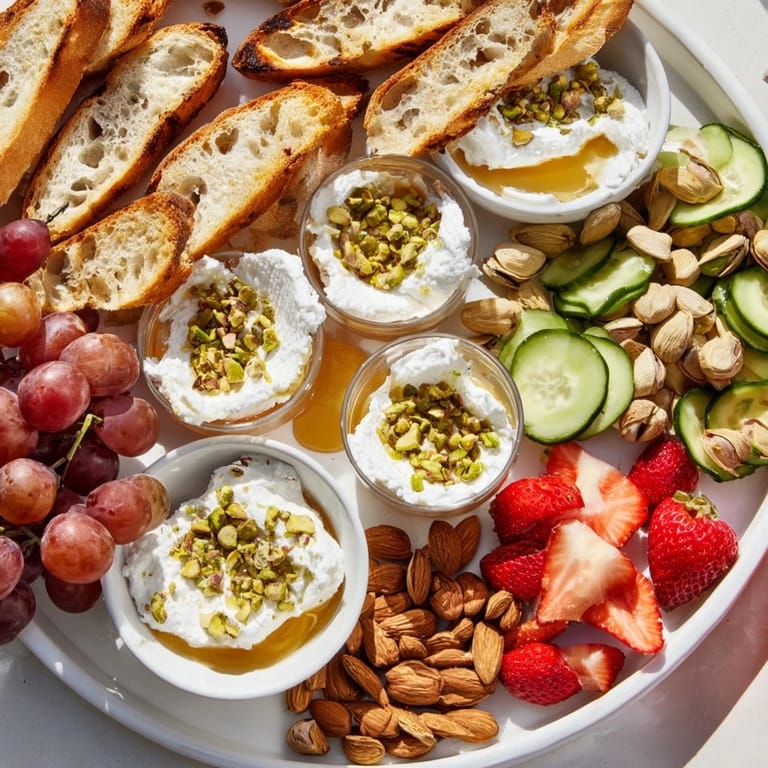
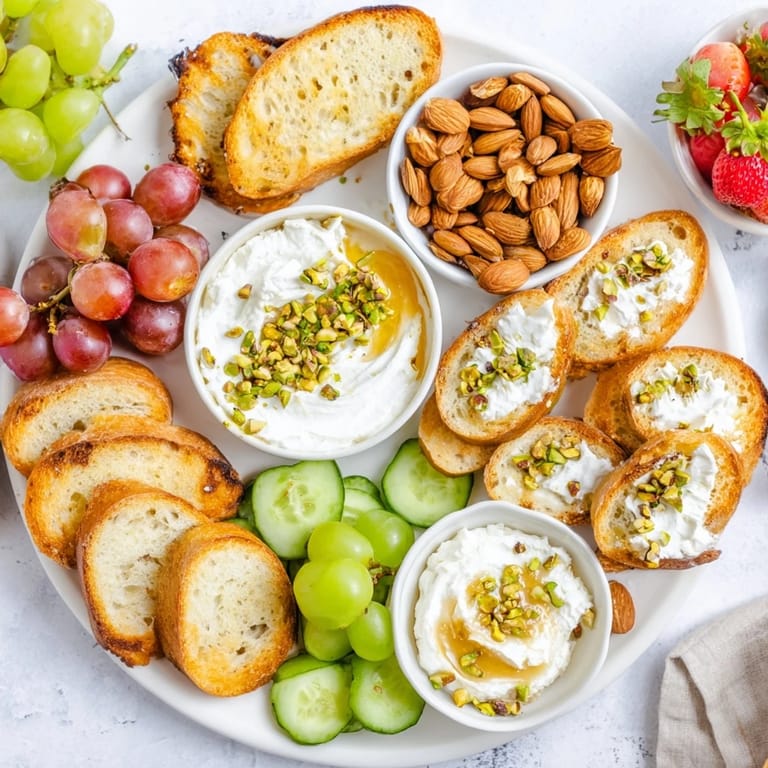
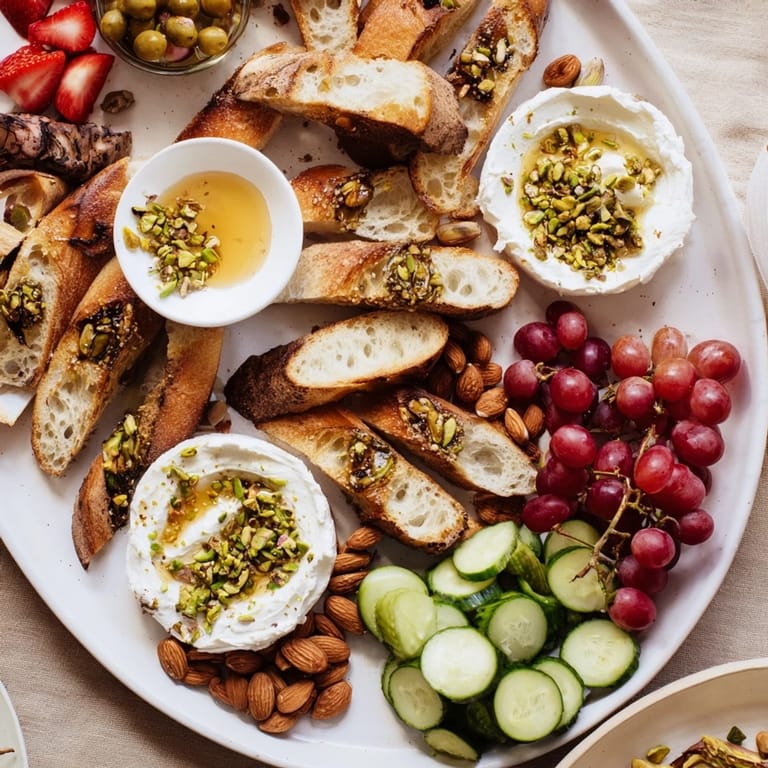
- Remove your goat cheese and ricotta from the fridge about thirty minutes before you'll serve. In a small bowl, place the goat cheese and drizzle it generously with honey, then scatter the pistachios over the top. The honey should create little pools of golden sweetness. In another bowl, place the ricotta and leave it as is—its simplicity is its appeal. These creamy, cool elements will be the anchor points of your platter.
- Arrange the foundation of your platter:
- Use a large wooden board, marble platter, or beautiful serving dish. Start by fanning your toasted baguette slices along one section. This creates height and visual interest immediately. Place your two bowls of cheese on the platter where they feel balanced—not in the exact center, but offset slightly for a more natural, gathered feeling.
- Add the fresh fruits:
- Scatter your halved grapes, strawberries, and apricots around the cheese. Think about color distribution—you want little pops of red and orange throughout. Don't arrange them in rows; let them tumble slightly naturally. This is where your platter starts looking like something people photographed before eating.
- Place the savory elements:
- In small groups or bowls, arrange your cucumber slices, halved cherry tomatoes, quartered artichoke hearts, and mixed olives. Think of these as little flavor stations—each group tells a slightly different story. Keep roasted almonds in a small separate pile; they're meant to be grabbed as a little crunch element between bites of cheese.
- Final garnish and finishing touches:
- If using microgreens or edible flowers, scatter them artfully across the platter just before guests arrive. Their delicate nature means they'll wilt if added too early. Sprinkle a small pinch of flaky sea salt over the cheeses and vegetables. Grind fresh black pepper over everything right before people gather. These final gestures show care and make the whole thing feel intentional.
- Serve with warmth and presence:
- As guests arrive, invite them to pour their own sparkling drinks from the pitchers. There's something magical about the ritual of pouring and clinking glasses together. Stand near the platter for the first few minutes—not to hover, but to be present. Watch people discover flavors, pair their bites intentionally, and most importantly, enjoy the togetherness that a beautiful table creates.
 Pin this
 One moment stands out from hosting this spread: a guest who rarely drinks alcohol stood beside someone who doesn't drink at all, and they were equally excited about their choices, clinking glasses with the same joy. That's when I realized this isn't just about removing something—it's about creating a space where everyone belongs completely.
The Art of Building a Beautiful Platter
The real secret to this spread isn't any single ingredient—it's the principle of creating visual rhythm and flavor variety across your serving surface. Think of it like painting: you want your eye to travel across the board and discover something new in each corner. The creamy elements anchor the platter, the bright fresh pieces provide contrast, and the textural elements keep people engaged. I learned this by watching my guests linger longer over platters that had this balance versus those that felt cluttered or monotonous. The spacing matters as much as the selection.
Choosing Quality Sparkling Beverages
Not all non-alcoholic sparkling drinks are created equal, and this is worth your attention. Some taste aggressively artificial or overly sweet, which completely undermines the elegance of your gathering. I've learned to taste-test a few brands beforehand. The ones I keep coming back to are brands that focus on real fruit juice and proper carbonation levels. Check the ingredient lists—you want juice, not just flavoring and sugar. The slight cloudiness of fruit juice-based options is actually a sign of quality, not a flaw. This one decision elevates the entire experience.
Seasonal Variations and Flexibility
The beauty of this spread is that it adapts beautifully to what's in season. In spring, swap in fresh asparagus tips and softer cheeses. Summer calls for more berries, stone fruits, and light vegetables. Fall begs for dried figs, roasted grapes, and nuttier elements. Winter allows you to lean into preserved items and root vegetables. The framework stays the same—cold drinks, creamy elements, fresh fruit, savory items, textural crunch—but the specific ingredients can shift with your market's offerings.
- Spring variation: add fresh peas, creamy burrata, soft herbs like dill and tarragon
- Summer variation: increase berries significantly, add fresh herbs in profusion, include heirloom tomatoes if available
- Fall variation: introduce roasted grapes, dried figs, candied nuts, darker greens like kale chips
 Pin this
 This spread works because it honors everyone at the table equally. Whether someone is sober, sober-curious, pregnant, driving, or simply making a choice, they're celebrating with the same sophistication and joy as everyone else. That's the real magic here.
Recipe Questions
- → What sparkling beverages are included in the spread?
The spread features non-alcoholic sparkling white grape juice, rosé, and apple cider, each chilled and accented with raspberries, mint, and lemon slices for freshness.
- → Which cheeses complement the light bites?
Fresh goat cheese and ricotta provide creamy richness that pairs beautifully with toasted baguette slices and fresh fruits.
- → Can the fruits and nuts be substituted?
Yes, seasonal fruits and nuts can be swapped according to preference, enhancing the platter’s variety and crunch.
- → How should the platter be garnished?
Garnish with microgreens or edible flowers and sprinkle flaky sea salt and black pepper over the cheeses and vegetables for added flavor and presentation.
- → Is there a vegan alternative for this spread?
Plant-based cheese alternatives and maple syrup can replace dairy and honey to create a vegan-friendly version without sacrificing flavor.
- → What tools are helpful for assembling this spread?
Using a large serving platter or wooden boards alongside small bowls for dips and garnishes, and utensils like bread knives and cheese spreaders, helps with neat presentation and ease of serving.